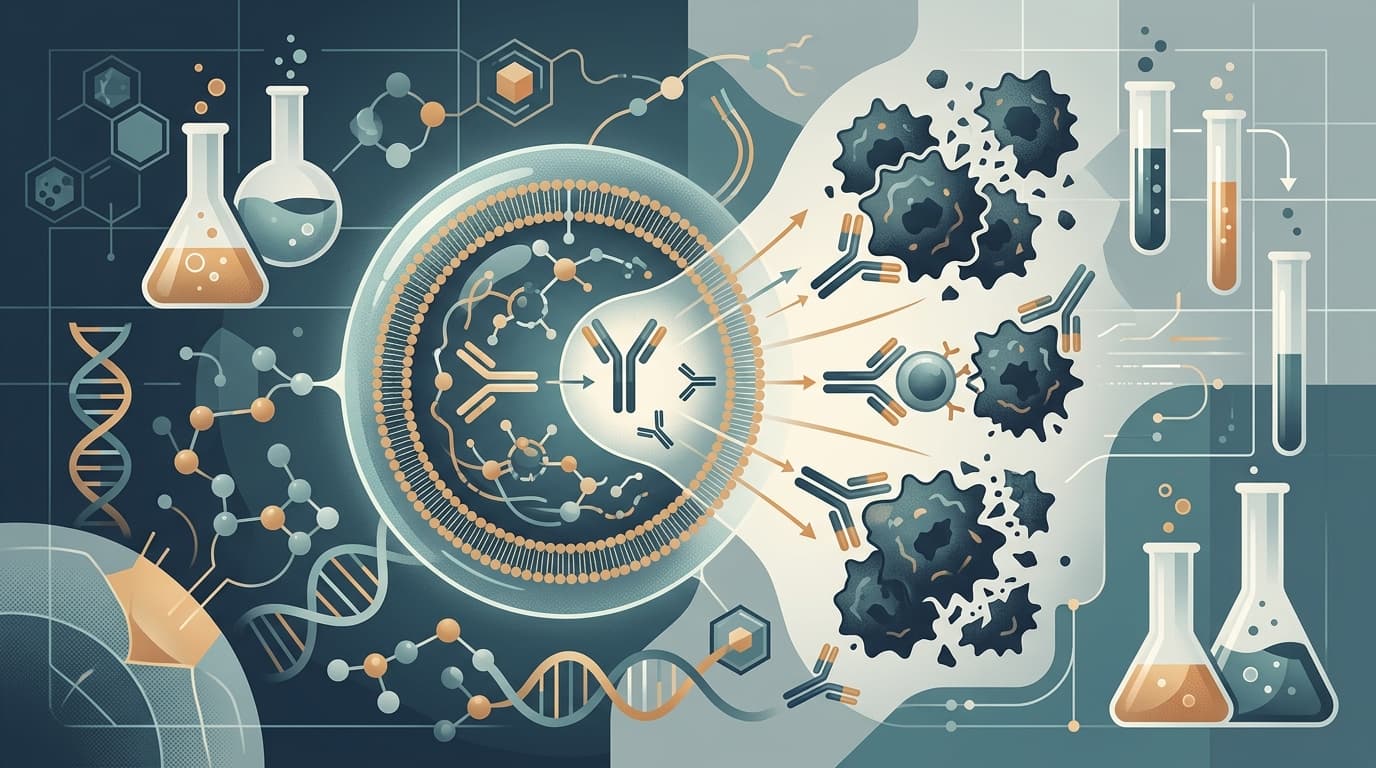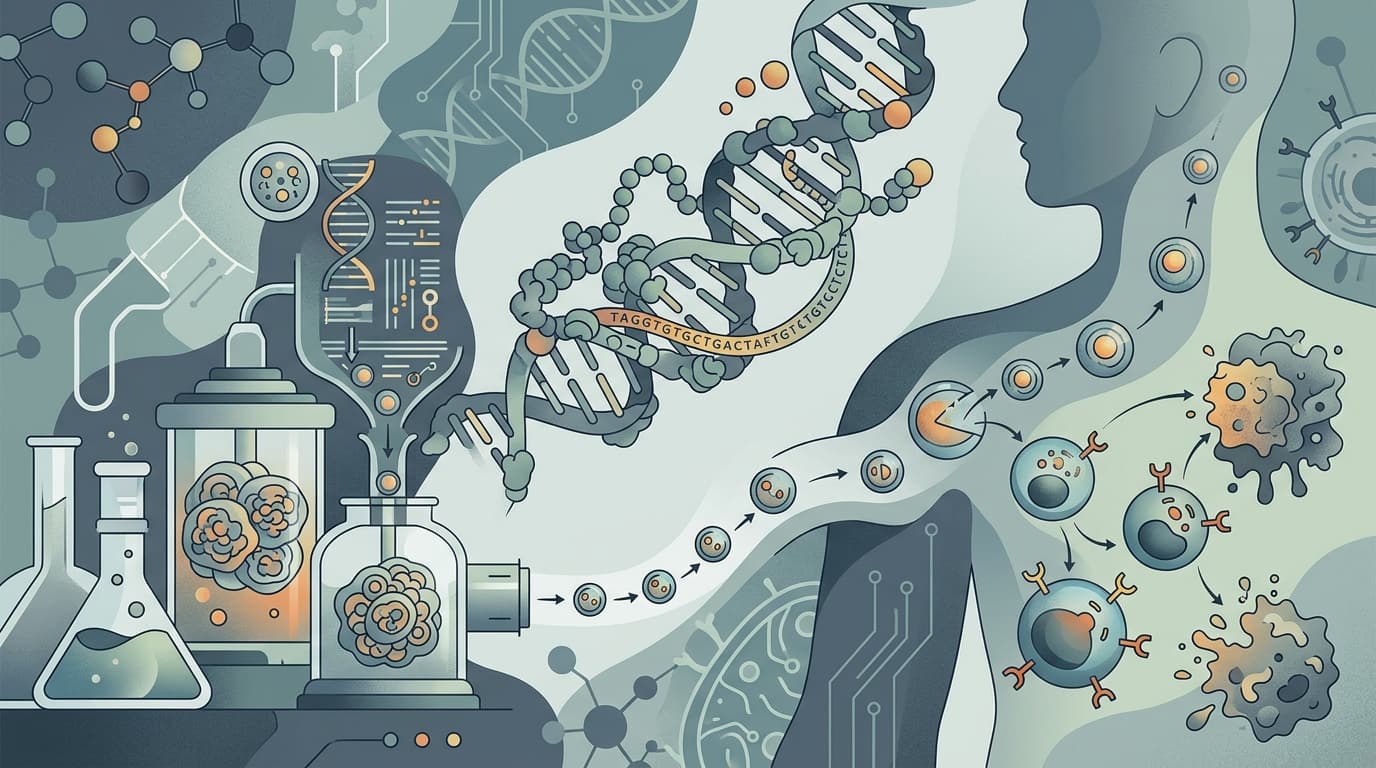

MIT engineers built nanoparticles that reprogram immune cells inside the body, skipping the brutal factory process that makes cell therapy so expensive. The mouse data is stunning, but the road to humans is long.
Imagine ordering a custom-built car, but instead of waiting months at the factory, a team of tiny robots showed up at your house and assembled it in your driveway. That's roughly what MIT engineers just pulled off with immune cells.
A team led by Daniel G. Anderson and Robert Langer figured out how to reprogram natural killer (NK) cells directly inside the body, skipping the expensive, time-consuming factory step that makes cell therapy so painful to deliver. The results, published in Nature Biotechnology in October 2026, could reshape how we think about cancer treatment and autoimmune disease.
Cell therapy is one of the most exciting ideas in medicine. You take a patient's immune cells, engineer them to hunt cancer, and put them back in. It works remarkably well for certain blood cancers. But the manufacturing process? Absolute nightmare.
Right now, making CAR-T cells (chimeric antigen receptor T cells, basically T cells with a GPS for tumors) costs roughly $500,000 to $810,000 or more per patient when accounting for total episode costs. Each batch is custom-made for one person. The cells have to be removed, shipped to a lab, genetically modified, expanded, quality-tested, and shipped back. It can take weeks.
CAR-NK cells offer a better path because they can be made from donor cells rather than the patient's own, creating an "off-the-shelf" product. But even that approach has serious headaches: NK cells are notoriously hard to genetically modify, batches vary wildly from donor to donor, and the cells often lose potency when frozen and thawed. Every one of those problems adds cost and complexity.
So what if you could skip the factory entirely?
The MIT team built what are essentially lipid nanoparticles (the same basic technology behind mRNA COVID vaccines) decorated with antibody fragments that act like homing devices. These fragments lock onto receptors found specifically on NK cells, so the nanoparticles ignore most other cells in the body and deliver their cargo to the right target.

Legend Biotech just got FDA clearance to test a therapy that could turn patients into their own CAR-T cell factories, no lab required. If it works, it could blow open access to a cancer treatment that today reaches only a fraction of eligible patients.

Join thousands of biotech professionals who start their day with our free, daily briefing.

That cargo? mRNA instructions that tell NK cells to build chimeric antigen receptors on their surface. Once those receptors are in place, the NK cells become guided missiles, programmed to seek and destroy specific threats.
Think of it like this: instead of flying soldiers to a distant training camp, equipping them, and flying them back to the battlefield, you airdrop the equipment directly onto the soldiers already stationed where you need them.
In mouse experiments, the system reprogrammed about 80% of targeted NK cells. That's a striking efficiency for an in vivo approach, where you're competing with the chaos of a living body.
The team didn't just test this in one disease model. They went three for three.
In a melanoma model, some treated mice achieved complete remission. In a humanized T-cell lymphoma model, repeated dosing eliminated tumors and performed comparably to conventionally manufactured CAR-NK cells (the ones built in the factory). And in a mouse model of autoimmune hepatitis, a single dose cleared out the autoreactive T cells causing liver damage.
That last result is particularly interesting. Most CAR-cell therapies have focused on cancer, but the autoimmune angle opens a massive new door. By programming NK cells to hunt rogue immune cells instead of tumor cells, the same platform could potentially treat conditions like lupus, rheumatoid arthritis, or multiple sclerosis.
The autoimmune space is already warming to this idea. An iPSC-derived CAR-NK therapy even showed promising results in a patient with systemic sclerosis. MIT's in vivo approach could simplify delivery for all of these.
Before anyone gets too excited, a few important caveats.
First, this is mouse data. Mice are not people. The history of oncology is littered with therapies that cured mice and flopped in humans. The jump from preclinical proof-of-concept to a working human therapy involves biodistribution questions, dose optimization, potential immune reactions to the nanoparticles themselves, and the ever-present issue of off-target effects.
Second, the CAR expression is temporary. Because the system delivers mRNA (not DNA that integrates permanently), the reprogramming wears off. That could actually be a feature for safety; you don't want permanent changes if something goes wrong. But it also means patients would likely need repeat dosing, which raises questions about long-term tolerability and cost.
Third, the competitive landscape is crowded. Multiple groups are working on in vivo cell engineering using viral vectors, other nanoparticle platforms, and entirely different approaches like bispecific antibodies that redirect immune cells without any genetic modification at all. Being first to publish a cool paper doesn't guarantee being first to the clinic.
Even with those caveats, the significance is hard to overstate. The biggest bottleneck in cell therapy isn't the biology; it's the logistics. If you can eliminate the need to extract cells, ship them to a cleanroom, engineer them under strict GMP conditions, expand them, freeze them, thaw them (losing potency along the way), and infuse them back into the patient, you fundamentally change the economics.
You also change the geography. Right now, cutting-edge cell therapies are mostly available at major academic medical centers in wealthy countries. An injectable nanoparticle that reprograms cells in vivo? That could work in a community hospital. It could work in a rural clinic. It could work in places where a $500,000 personalized cell product will never be practical.
The Anderson and Langer labs at MIT are among the most prolific translational groups in the world, so the chances of this platform actually moving toward clinical development are better than average. But "moving toward" and "arriving at" are two very different things.
For now, file this under: brilliant proof-of-concept that could matter enormously if the biology holds up in humans. The factory-free future of cell therapy just got a little more real. Whether it gets all the way real is the billion-dollar question.
The FDA just widened Anktiva's bladder cancer label to include high-grade papillary tumors, and it could reshape ImmunityBio's entire commercial story. Here's why a seemingly incremental regulatory update is actually a franchise-defining moment.