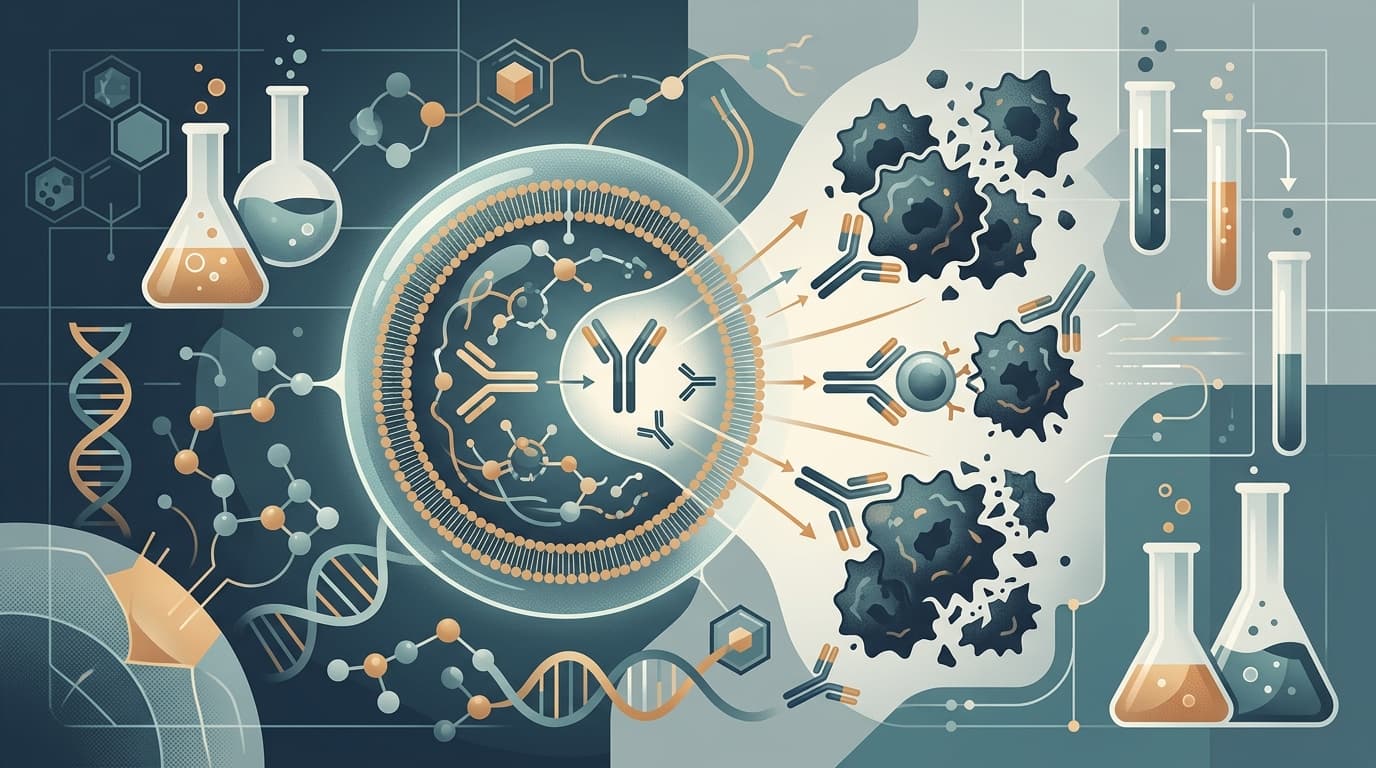

An Oxford spinout just pulled in $310 million in one of Europe's largest private biotech rounds this year, and the investor list reads like a venture capital all-star team. OMass Therapeutics wants to become Britain's first homegrown Big Biotech, but can it turn a clever drug-hunting platform into actual approved medicines?
Most university spinouts follow a familiar script. A few professors license some IP, raise a modest seed round, and quietly plug away for years before anyone outside academia notices. OMass Therapeutics just ripped that script in half.
The Oxford-born biotech announced a $310 million Series C on October 15, making it one of the largest private biotech rounds in Europe this year. The financing was oversubscribed, meaning more investors wanted in than there was room for. And the names on the cap table read like a who's who of life sciences venture capital: Bain Capital Life Sciences, Forbion, and Novo Holdings co-led the round, with Janus Henderson Investors, SV Health Investors, and Jefferson Life Sciences joining as new backers.
Existing shareholders like Syncona, GV (Google's venture arm), Sanofi Ventures, and even the University of Oxford itself doubled down. Total funding now sits at roughly $475 million. For a UK biotech that started life in 2016 as a small research outfit, that's a remarkable trajectory.
So what makes OMass worth nearly half a billion dollars in accumulated capital? It starts with a technology called native mass spectrometry, and it's genuinely clever.
Traditional drug discovery often works like trying on shoes one at a time. You take a protein target, strip it down to its simplest form, then test thousands of compounds to see what sticks. The problem: proteins don't exist in isolation inside your body. They're part of messy, crowded neighborhoods of other proteins and molecules. Studying them alone is like evaluating a football player by watching them jog in an empty stadium.
OMass's platform, called OdyssION, keeps those protein complexes intact. Think of it as scouting the player during an actual game. By using mass spectrometry to watch whole protein assemblies interact with potential drug molecules, OMass can spot not just which compounds bind to a target, but which ones actually . That's the difference between finding a key that fits a lock and finding one that opens the door.

Legend Biotech just got FDA clearance to test a therapy that could turn patients into their own CAR-T cell factories, no lab required. If it works, it could blow open access to a cancer treatment that today reaches only a fraction of eligible patients.

Join thousands of biotech professionals who start their day with our free, daily briefing.
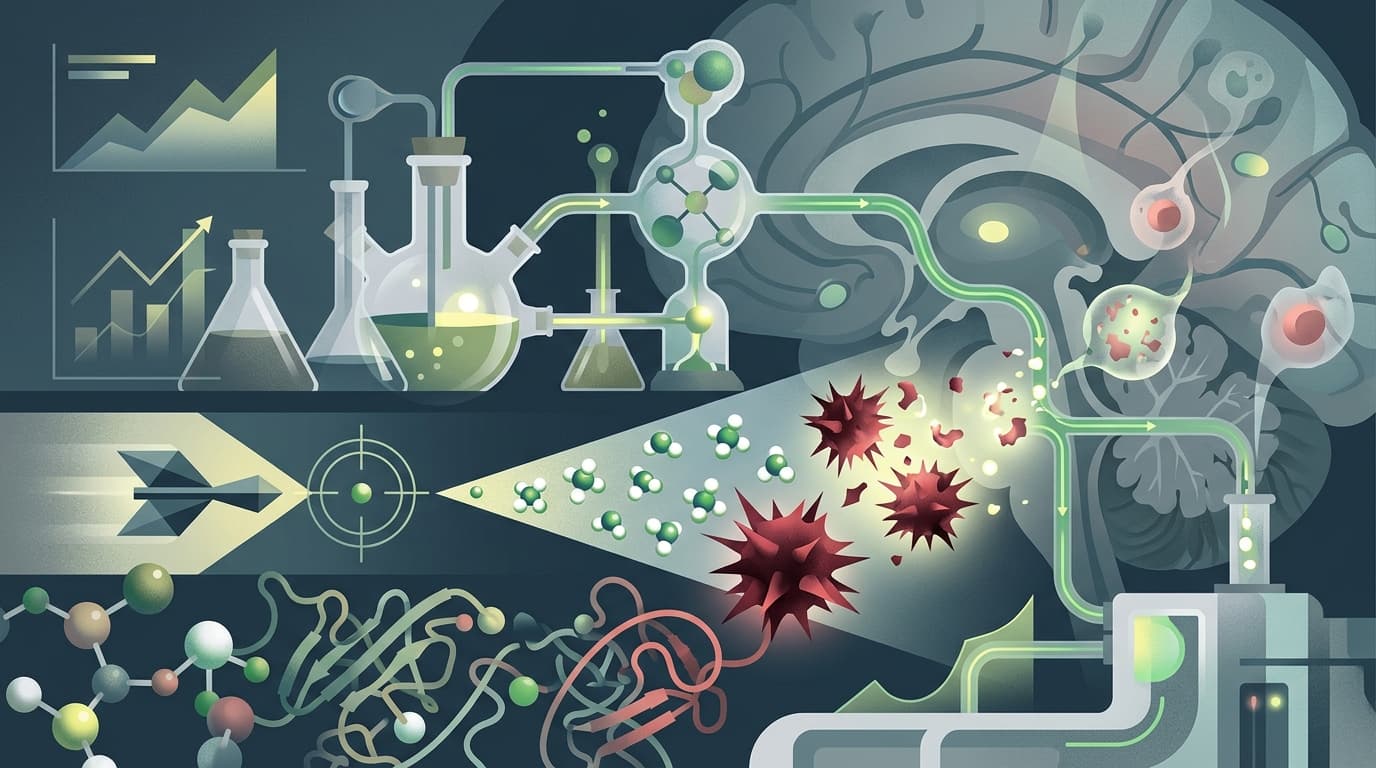
This approach is especially useful for targets that have historically been a nightmare for small-molecule drugs: membrane proteins, intracellular complexes, and targets with hidden (allosteric) binding sites that only appear when the protein is in its natural environment.
OMass isn't just sitting on a cool platform. It's building a real pipeline, and the Series C cash has specific destinations.
The headline program is OMS1620, which the company plans to push into Phase 2 trials for two endocrine disorders: congenital adrenal hyperplasia and ACTH-dependent Cushing's syndrome. Both are conditions where the body's hormonal signaling goes haywire, and current treatments leave a lot to be desired. Congenital adrenal hyperplasia affects about 1 in 15,000 newborns, and patients often need lifelong steroid replacement therapy with significant side effects.
Beyond endocrinology, OMass also has a discovery-stage SLC15A4 inhibitor program (targeting a specific protein transporter) for lupus and related autoimmune diseases. SLC15A4 has emerged as a hot target in immunology because it plays a key role in how immune cells ramp up inflammation. If OMass can drug it effectively, the commercial opportunity is enormous.
The money will also fund the kind of boring-but-essential infrastructure that separates a scrappy startup from a company that can actually get drugs approved: manufacturing, regulatory operations, and team expansion.
Let's zoom out for a second. European biotech has spent years watching enviously as U.S. companies inhale nine-figure venture rounds like they're ordering coffee. The gap has been narrowing, but slowly.
In 2025, Germany's Tubulis raised a €308 million Series C, which was the biggest European private biotech round of the year. Switzerland has been particularly active in 2026, with Windward Bio pulling in CHF 186 million and several others clearing the CHF 75 million mark. OMass's $310 million raise is among the largest private biotech rounds in Europe in 2026, with Isomorphic Labs' massive $2.1 billion haul leading the way.
For the UK specifically, this is a statement. British biotech has long had the science (Oxford, Cambridge, and the Francis Crick Institute are world-class) but has struggled to keep its most promising companies from being acquired early or relocating to the U.S. for better capital access. OMass staying put and raising at this scale sends a signal that the UK ecosystem can support homegrown biotechs through late-stage development.
CEO Ros Deegan called the round a "fantastic milestone" on the company's journey toward becoming a "Big Biotech," and industry observers are taking the ambition seriously. Scrip and pharmaphorum both framed the deal as positioning OMass as a potential UK biotech bellwether.
Money talks, but board seats tell you who's really committed. Evan Greif of Bain Capital Life Sciences and Audrey Cacaly of Forbion are joining OMass's board of directors, while Max Klement of Novo Holdings and Ali Jazayeri of SV Health Investors will take board observer seats.
The existing board is chaired by Jonathan Montagu, who stepped into the role in January 2026. Having Bain Capital and Forbion at the table isn't just symbolic; these are firms with deep experience shepherding biotechs through pivotal trials and toward exits, whether that's an IPO or a big pharma acquisition.
All of this is undeniably impressive. But the market's reaction has been more strategic than celebratory, and for good reason.
OMass now has the capital to run multiple clinical programs simultaneously. That's great. The harder question is whether the company can convert a brilliant discovery platform into actual approved drugs. Plenty of biotechs have raised eye-popping sums on the strength of novel technology, only to stumble when their candidates hit the unpredictable chaos of human biology in Phase 2 and beyond.
The OMS1620 data in Phase 2 will be the real test. If it works in congenital adrenal hyperplasia and Cushing's, OMass will have validated not just one drug, but an entire approach to finding medicines. If it doesn't, $475 million in total funding becomes a very expensive science experiment.
For now, though, OMass has earned the benefit of the doubt. The investors are top-tier, the pipeline is diversified across endocrinology and immunology, and the underlying technology is genuinely differentiated. Britain's bid to build a biotech heavyweight is officially underway. The next 18 to 24 months will tell us whether it's a coronation or a cautionary tale.
The FDA just widened Anktiva's bladder cancer label to include high-grade papillary tumors, and it could reshape ImmunityBio's entire commercial story. Here's why a seemingly incremental regulatory update is actually a franchise-defining moment.