The Eye Drug That Took Three Rejections to Finally Win Over the FDA
After three FDA rejections and a dramatic appeal that went over the review division's head, Outlook Therapeutics' Lytenava just became the first FDA-approved ophthalmic bevacizumab for wet AMD. Now comes the harder part: selling it in an $8.5 billion market where doctors have used the off-label version for decades.
Imagine asking someone out three times, getting rejected each time, and then appealing to their boss, who says yes on your behalf. That's basically what just happened between Outlook Therapeutics and the FDA.
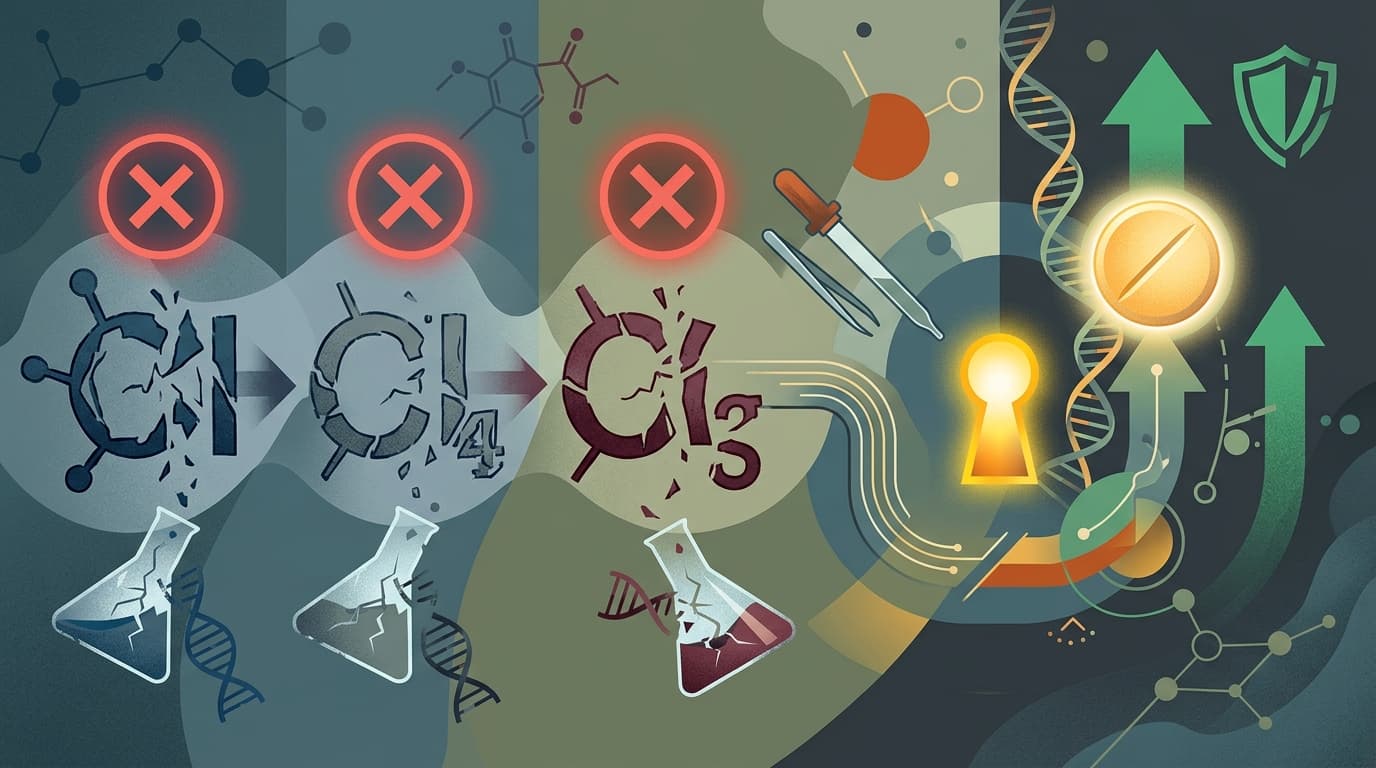
After three Complete Response Letters (the FDA's polite way of saying "no"), a formal dispute, and an appeal that overturned years of regulatory resistance, Lytenava (bevacizumab-vikg) has been approved as the first FDA-authorized ophthalmic bevacizumab for wet age-related macular degeneration. The PDUFA target date was July 29, 2026, and the agency came through.
This isn't just another eye drug approval. It's a story about stubbornness, bureaucratic reversals, and a decades-old pricing war that finally has a new weapon.
Why One Drug Caused So Much Drama
To understand why this took so long, you need to know about bevacizumab's weird double life. The molecule has been FDA-approved since 2004, but for cancer, not eyes. Doctors figured out pretty quickly that injecting tiny doses into the eye could treat wet AMD, a condition where abnormal blood vessels leak fluid behind the retina and destroy central vision.
The catch? Every one of those eye injections was off-label. Pharmacies had to take the cancer drug, split it into tiny vials, and hope nothing got contaminated along the way. It worked remarkably well (multiple large trials showed it matched the efficacy of pricier competitors), but the compounding process introduced real risks: contamination, infections, and occasional clusters of endophthalmitis that could cost patients their sight.
Meanwhile, the branded alternatives, ranibizumab (Lucentis) and aflibercept (Eylea), came in sterile, single-use packaging with proper FDA labeling. They also came with dramatically higher price tags. About half of U.S. ophthalmologists still chose compounded bevacizumab as their first-line treatment anyway, largely because the cost difference was enormous.
Outlook Therapeutics set out to bridge that gap: build a purpose-made, FDA-approved ophthalmic bevacizumab that would be cheaper than Lucentis and Eylea, but safer and more standardized than the compounded stuff.
Get tomorrow's biotech intelligence before your competitors.
Join thousands of biotech professionals who start their day with our free, daily briefing.
Simple idea. Brutal execution.
Three Nos and a Plot Twist
The first rejection came in August 2023. The FDA hit Outlook with a CRL citing manufacturing problems and insufficient evidence that the drug actually worked. That second part stung, because Outlook's pivotal trial, NORSE TWO, had shown strong results: 41% of patients gained at least 15 letters of vision (about three lines on an eye chart) compared to just 23% on ranibizumab. The difference was statistically significant at p = 0.0052.
But the FDA wanted confirmatory evidence. One trial wasn't enough.
Outlook resubmitted in fall 2025 with data from a second study called NORSE EIGHT. The FDA accepted the resubmission, classified it as a Class 2 review, and set a new deadline.
Then came CRL number three on December 31, 2025. Happy New Year, indeed. This time, the manufacturing concerns were gone. The only remaining problem: the FDA still didn't think the efficacy evidence was substantial enough. NORSE EIGHT had missed its primary endpoint, and the agency wasn't satisfied that the totality of data cleared the bar.
Three rejections deep, most companies would start exploring "strategic alternatives" (biotech-speak for giving up). Outlook did something different. They filed a Formal Dispute Resolution with the FDA's Office of New Drugs, essentially going over the review division's head.
The Appeal That Changed Everything
On May 26, 2026, the Office of New Drugs sided with Outlook. Their conclusion: substantial evidence of effectiveness had been established. The office looked at NORSE TWO's results alongside NORSE EIGHT data, natural history comparisons, and mechanistic evidence, and decided the package was sufficient.
This was a genuine reversal. The same agency that twice said "not enough evidence" now agreed the evidence was there all along. The Office of New Drugs directed the review division to work with Outlook on final labeling and classified the next submission as a Class 1 resubmission, which meant a decision within 60 days.
Outlook resubmitted on June 1, 2026, with a PDUFA date of July 29. And this time, the answer was yes.
The Numbers Behind the Win
NORSE TWO enrolled 228 patients across 39 U.S. sites and ran for 12 months. The results told a compelling story. On the key secondary endpoint, patients on Lytenava gained an average of roughly 11 letters of vision versus about 6 letters for the ranibizumab group. That's nearly double the improvement, with a p-value of 0.0043.
Safety looked clean, too. Ocular side effects were similar between groups (45.1% vs. 41.7%), and across all three NORSE registration trials, only one case of intraocular inflammation was reported after Lytenava injections. That works out to roughly 0.05% incidence; a reassuring number for a drug class where inflammation is always on the radar.
What This Means for the Anti-VEGF Market
The U.S. anti-VEGF retina market sits at approximately $8.25 billion today, with projections pushing toward $12.59 billion by 2033. Lytenava doesn't need to dominate that market to matter. Even single-digit market share would be transformative for a company Outlook's size.
The value proposition is straightforward. For physicians who've been using compounded bevacizumab (and worrying about contamination lawsuits), Lytenava offers FDA-approved labeling, standardized manufacturing, and proper pharmacovigilance. For payers tired of footing the bill for premium-priced anti-VEGFs, it offers a lower-cost branded alternative backed by real clinical data.
Lytenava is already on the market in Germany and the UK as of June 2025, following EU approval in May 2024 and MHRA authorization in July 2024. NICE recommended it in December 2024, giving it the UK's stamp of cost-effectiveness. Outlook says U.S. availability is expected before the end of 2026.
The Hard Part Starts Now
Getting FDA approval after three rejections is a great story. But stories don't pay the bills; prescriptions do.
Outlook now faces the classic small biotech commercialization challenge. Can they convince retina specialists to switch from compounded bevacizumab they've used for years? Can they price Lytenava attractively enough to undercut Lucentis and Eylea while still beating the rock-bottom economics of compounding pharmacies? Can they build the distribution and sales infrastructure to actually reach doctors' offices?
These are execution questions, not science questions. And frankly, they're harder. The FDA approval removes the biggest binary risk, but it replaces it with something more grinding: the slow, unglamorous work of launching a drug into a market where the cheap alternative has been available (illegally, technically) for two decades.
Shares were halted during trading when the approval news hit, which tells you the market still sees this as a significant inflection point. Whether it's a beginning or a peak depends entirely on what happens next.
Clinical & Regulatory4 min read
The Cell Therapy That Couldn't Convince 9 Out of 12 Experts
An FDA advisory panel voted 9–3 against Capricor's deramiocel for Duchenne heart disease, citing "fragile" data and suspicious statistical changes. With the PDUFA decision three weeks away, the odds of approval just got a lot worse.