Eli Lilly Just Paid $2.25 Billion for a Gene Editor That Doesn't Exist in Nature
Eli Lilly just committed $2.25 billion to a four-year-old startup that uses AI to invent gene-editing tools nature never dreamed of. The Profluent deal is Lilly's latest billion-dollar bet in a genetic medicine shopping spree that's reshaping its entire pipeline.
A Robot Wrote the Recipe
Imagine hiring a chef who's never tasted food but has memorized every recipe ever written. Then imagine that chef inventing a dish better than anything a human cook has ever made. That's roughly what Profluent Bio does, except instead of recipes, it designs molecular scissors for editing human DNA.
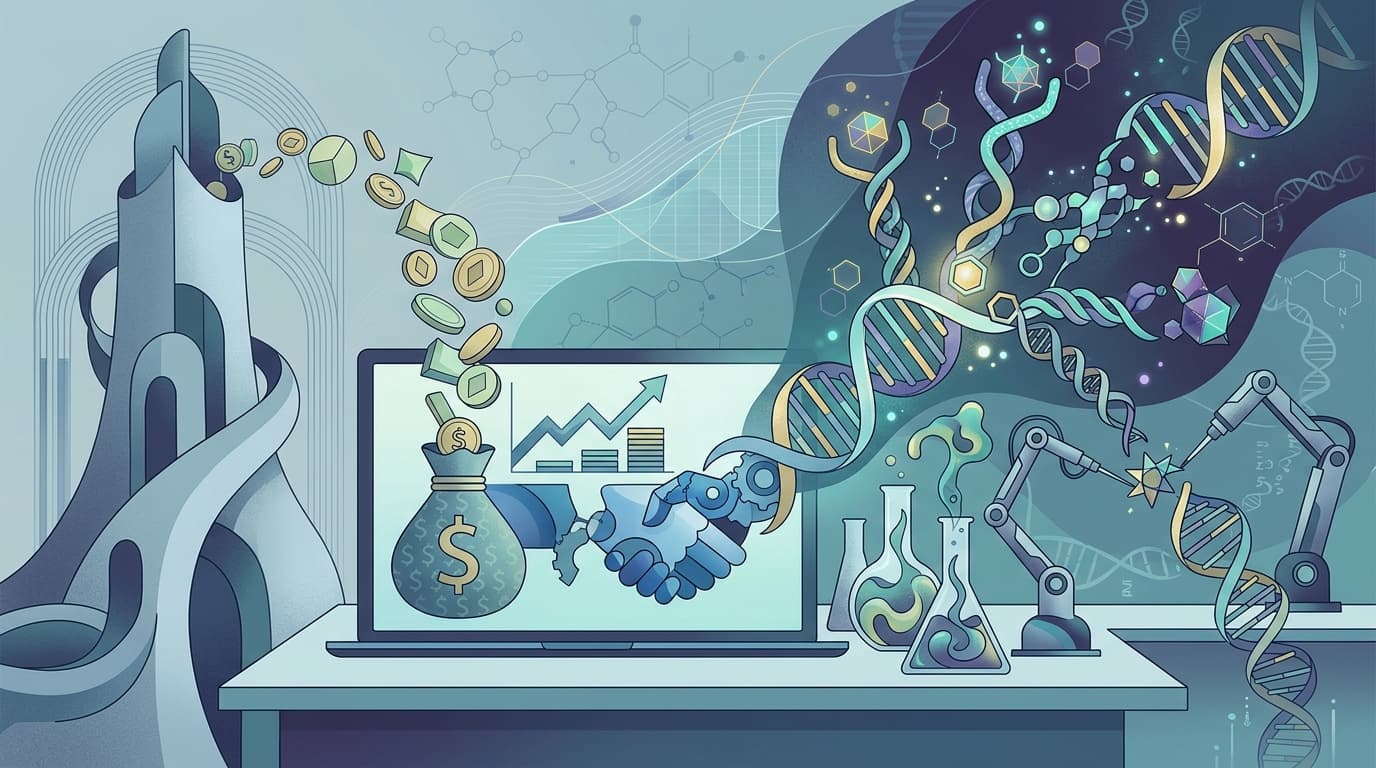
On April 28, Eli Lilly signed a research collaboration with Profluent worth up to $2.25 billion. The deal gives Lilly exclusive rights to AI-designed recombinases, a class of enzymes that can cut and rearrange DNA with surgical precision. Lilly gets to advance those enzymes through lab studies and into clinical trials. Profluent gets upfront payments, research funding, and milestone payments that could stack up to that eye-popping total.
It's the latest in a string of billion-dollar bets Lilly has placed on genetic medicines. And it signals something bigger: big pharma isn't just experimenting with AI-designed biology anymore. It's writing nine-figure checks for it.
The Company Bezos Bet On
Profluent was founded in 2022 by Ali Madani, Ph.D., and it's grown fast. The company has raised roughly $150 million, with the most recent being a $106 million venture round in late 2025 co-led by Altimeter Capital and Bezos Expeditions, Jeff Bezos's personal investment vehicle.
The core idea is deceptively simple. Profluent trains large language models (the same type of AI behind ChatGPT) on massive databases of protein sequences. Instead of predicting the next word in a sentence, these models predict the next amino acid in a protein chain. Feed them enough examples of naturally occurring gene-editing proteins, and they start generating entirely new ones that nature never invented.
Their flagship creation, OpenCRISPR-1, is a synthetic protein that sits about 400 mutations away from any known natural gene editor. Think of it like this: if natural CRISPR proteins are cover songs, OpenCRISPR-1 is an original composition written by an AI that studied every song ever recorded.
Get tomorrow's biotech intelligence before your competitors.
Join thousands of biotech professionals who start their day with our free, daily briefing.
And it works. In lab tests using human cells, OpenCRISPR-1 matched traditional CRISPR-Cas9 in editing accuracy while cutting off-target mistakes by up to 95% at certain genomic sites. It also showed lower immunogenicity, meaning the human immune system is less likely to attack it. That matters a lot when you're injecting these tools into patients.
Profluent published these results in Nature and open-sourced the protein on GitHub, which is a bold move for a company that could have kept the IP locked down.
Why Recombinases, Not CRISPR?
The Lilly deal focuses specifically on recombinases, not the CRISPR-style editors Profluent is best known for. This distinction matters.
Traditional CRISPR works like a pair of scissors: it cuts both strands of DNA at a target site, then relies on the cell's own repair machinery to fix the break. That repair process is messy and unpredictable, like asking a toddler to glue a broken vase back together. Sometimes you get a perfect fix. Sometimes you get a disaster.
Recombinases take a different approach. They can cut, swap, and reinsert DNA segments without depending on the cell's repair pathways. The result is cleaner, more precise edits with fewer unintended consequences. For therapeutic applications where you need to insert a whole gene (not just snip one), recombinases offer a significant advantage.
By applying its AI platform to recombinase design, Profluent is essentially using the same playbook that produced OpenCRISPR-1 but aiming it at a different class of molecular tool. Lilly is betting that AI-optimized recombinases can do what traditional ones can't: work reliably enough for real drugs.
Lilly's Genetic Medicine Shopping Spree
This deal doesn't exist in a vacuum. Lilly has been on an absolute tear, spending billions to build a genetic medicines pipeline almost from scratch. Consider what they've done in just the past year or so:
They acquired Verve Therapeutics for $1.3 billion, gaining in vivo CRISPR therapies that target cholesterol by editing PCSK9 (a gene responsible for high LDL levels). One treatment, potentially for life. They also entered a research and licensing collaboration with Rznomics for RNA-based hearing loss treatments.
On the partnership side, Lilly struck a deal with Seamless Therapeutics worth up to $1.12 billion for programmable recombinase-based therapies targeting hearing loss. They inked a collaboration with SanegeneBio worth up to $1.2 billion in milestones for tissue-selective RNA interference delivery. And they licensed gene therapy assets from MeiraGTx for ophthalmology, paying $75 million upfront with up to $400 million in milestones.
Add the Profluent deal, and Lilly has committed well over $5 billion in potential milestone payments across genetic medicine partnerships and acquisitions. That's not a side project. That's a strategic pivot.
The thesis is clear: Lilly wants "one-and-done" therapies that fix genetic problems permanently, diversifying beyond the GLP-1 drugs (like tirzepatide) that currently drive much of its revenue. If weight loss drugs are Lilly's present, genetic medicines are its future.
The AI Arms Race in Gene Editing
Profluent's AI-first approach puts it in a different lane than most gene editing companies, but the broader landscape is getting crowded.
Intellia Therapeutics is the furthest along clinically, with its in vivo CRISPR treatment for hereditary angioedema completing Phase 3 enrollment and targeting a regulatory filing in the second half of 2026. The drug kept patients 97% attack-free at three years, which is a remarkable number.
Beam Therapeutics pioneered base editing (think of it as a pencil eraser that changes one DNA letter without cutting both strands) and is tracking toward a regulatory filing for its sickle cell disease treatment by the end of 2026. Prime Medicine takes yet another approach with prime editing, which can theoretically correct about 89% of known disease-causing mutations. Its lead program showed 69-83% correction rates in patients with a rare immune disorder.
Each of these companies has a different editing philosophy, and each is years ahead of Profluent in clinical development.
So why is Lilly paying Profluent $2.25 billion for something still in preclinical stages? Because Profluent isn't selling a single drug. It's selling a factory that can design an unlimited number of gene editors on demand, each one tailored to a specific therapeutic need. The bet isn't on one molecule; it's on the platform.
The Bigger Picture: When AI Meets DNA
Lilly's Profluent deal follows its earlier $2.75 billion partnership with Insilico Medicine, which was reported as the largest deal ever for AI-generated drug candidates. The company also struck a $2.4 billion deal with Orna Therapeutics. A pattern is forming: Lilly is systematically layering AI capabilities across its entire R&D engine.
This makes strategic sense. Drug development is brutally expensive (roughly $2 billion per approved drug, on average) and painfully slow (10-15 years from lab to pharmacy). If AI can cut even a fraction of that time or cost, the return on investment is enormous. And gene editing is arguably the area where AI has the most to offer, because the design space is so vast. There are millions of possible protein configurations that could serve as gene editors, and no human team could test them all. An AI can explore that space in weeks.
The risk, of course, is that none of this has been proven in patients yet. Profluent's AI-designed proteins look great in lab dishes. They've been validated in Nature. But human biology has a long track record of humbling even the most promising preclinical results.
What Happens Next
Lilly now holds exclusive rights to advance Profluent's AI-designed recombinases from the lab bench into animal studies and eventually human trials. The upfront payments are undisclosed, but the $2.25 billion ceiling suggests Lilly expects multiple programs to emerge from this collaboration, not just one.
For Profluent, the deal is transformative. Going from a $150 million startup to a company with a $2.25 billion pharma partnership in roughly four years is the kind of trajectory that makes venture capitalists very happy (especially one named Bezos).
For the broader industry, the message is unmistakable. The era of AI-designed biology isn't coming. It's here, and it's being valued in the billions. The question is no longer whether these tools work in theory; it's whether they'll work in the clinic.
Lilly is betting they will. To the tune of $2.25 billion, that's not a hedge. That's conviction.
Funding & Financings4 min read
Two Biotechs Just Rang the IPO Bell on the Same Day
Two clinical-stage biotechs filed for IPOs on the same day, both targeting over $200 million. After a brutal drought that saw only 11 biotech listings in 2025, the twin filings may signal the public markets are finally warming up again.