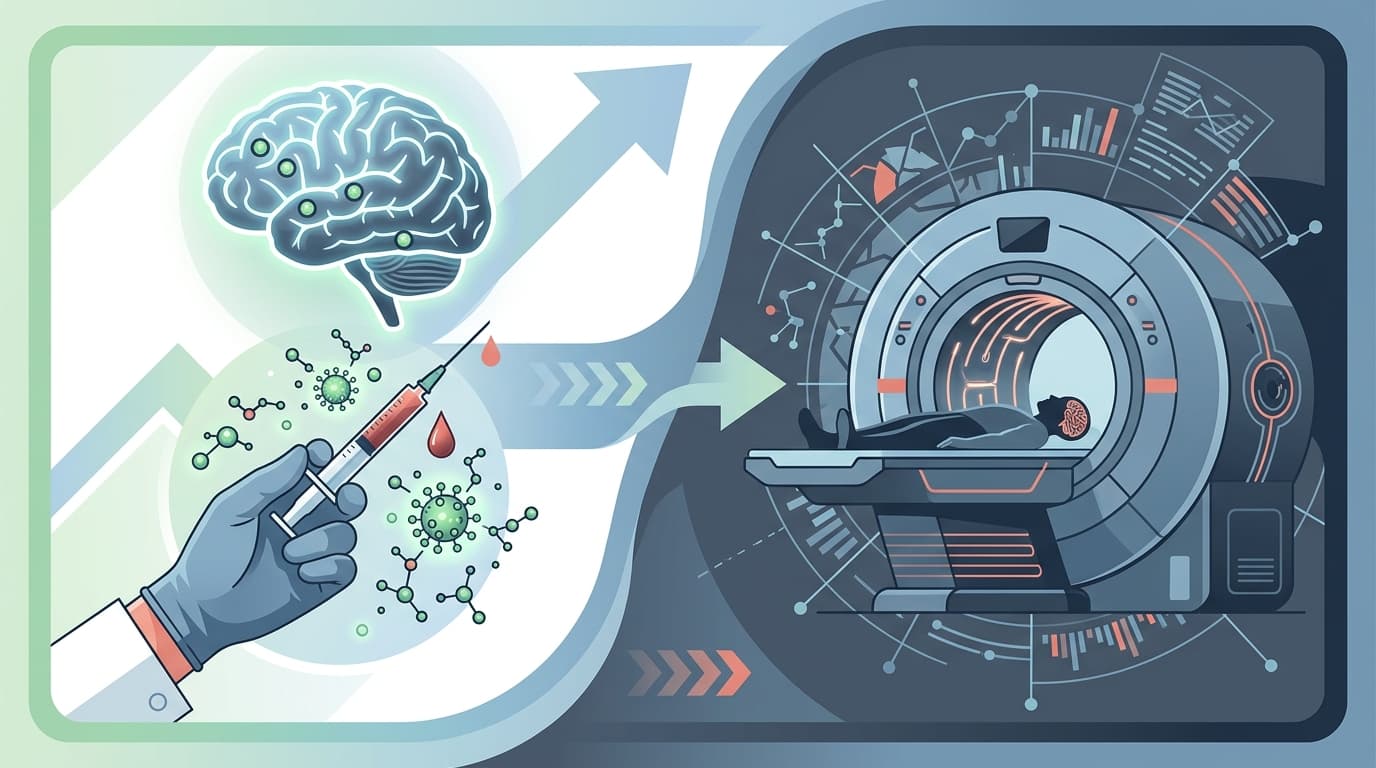

Eli Lilly's new blood test matched the gold-standard brain scan for detecting Alzheimer's pathology in people with no symptoms. If a $500 blood draw can do the job of a $5,000 PET scan, the entire playbook for Alzheimer's screening is about to get rewritten.
Right now, finding out if someone has Alzheimer's pathology in their brain requires a PET scan. That means a radioactive tracer injected into a vein, a trip to one of the relatively few hospitals with the right equipment, and a hefty bill. It's like needing an MRI just to check if you have strep throat.
Eli Lilly wants to replace that whole ordeal with a blood draw.
At a major Alzheimer's conference this week, Lilly presented new data on its P-tau217 plasma test, a blood-based biomarker that detects a specific form of the tau protein linked to Alzheimer's pathology. The headline finding: in cognitively unimpaired individuals (people who seem perfectly fine), the blood test performed comparably to an amyloid PET scan at identifying underlying Alzheimer's disease.
That's a big deal. PET scans have been the gold standard for detecting amyloid plaques, the sticky protein clumps that accumulate in Alzheimer's brains. Matching PET-level accuracy with a simple blood test is like building a home pregnancy test that's as reliable as a lab workup.
The numbers back it up. Across multiple validation studies, P-tau217 blood tests have consistently hit an AUC above 0.91 (a statistical measure of diagnostic accuracy where 1.0 is perfect). At optimized thresholds, Lilly's test achieved roughly 95% positive predictive value for ruling patients in and 84% negative predictive value for ruling them out. In plain English: when the blood test says someone has Alzheimer's pathology, it's almost always right.
The economics here are almost as important as the science.
An amyloid PET scan costs around $3,000 per patient without insurance, and that's before the 20% coinsurance many Medicare patients still owe. The infrastructure requirements are brutal: specialized scanners, short-lived radioactive tracers, trained nuclear medicine staff. Most of this equipment lives in major medical centers, which means rural and underserved communities are largely locked out.

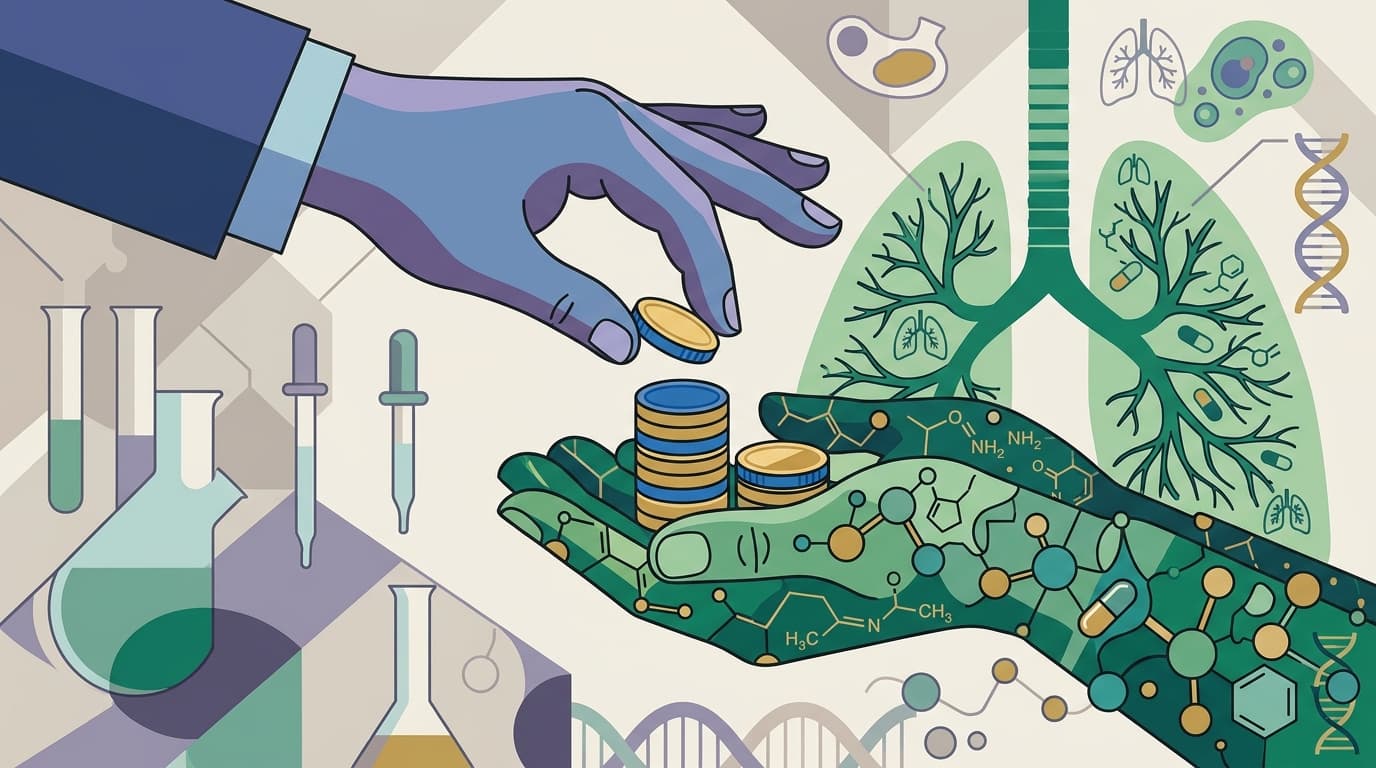
AstraZeneca just dropped $200 million upfront (with $1.9 billion more on the table) for a Chinese-developed COPD drug that might outperform the one Merck paid $10 billion for. The deal is the latest sign that China's biopharma pipeline has become Big Pharma's favorite shopping mall.


Join thousands of biotech professionals who start their day with our free, daily briefing.
A blood test, by contrast, costs roughly $200 to $300 and can be done at any clinic with a phlebotomist. No scanner. No tracer. No three-hour appointment. Economic modeling shows that using a blood test to triage patients (and reserving PET scans for confirmation) could drop the average cost per positive diagnosis from $10,345 to $8,868. Multiply that across millions of potential patients and you're talking about a seismic shift in healthcare spending.
But it's not just about money. It's about access. The United States has a finite number of PET scanners, and they're already stretched thin. When PET capacity can't keep up with demand, a blood-first screening strategy identifies more amyloid-positive patients than PET alone under the same constraints. That's the difference between catching the disease and missing it entirely.
Before you start imagining P-tau217 tests at your annual physical, there's a critical caveat. Lilly itself was careful to note that neither the blood test nor PET scans are currently indicated for cognitively unimpaired people. The data show research-level performance, not a green light for mass screening.
About 20% of samples fall into an indeterminate "gray zone" where the test can't confidently say yes or no. Those patients would still need further evaluation, likely including PET or cerebrospinal fluid testing. Think of it like a home COVID test that sometimes shows a faint line: useful, but not the final word.
There's also the uncomfortable reality that 20 to 40% of cognitively normal older adults are amyloid-positive. Telling a healthy 70-year-old they have Alzheimer's pathology in their brain raises enormous ethical questions. Will they develop symptoms? Maybe. Maybe not. The psychological and insurance implications of that conversation are far from resolved.
This isn't just a diagnostics story. It's a therapeutics story.
Lilly's Alzheimer's drug Kisunla (donanemab) and Eisai's Leqembi (lecanemab) both require confirmation of amyloid pathology before treatment. Right now, that confirmation mostly comes from expensive PET scans or invasive spinal taps. A reliable, cheap blood test would dramatically expand the pool of patients who can be screened, diagnosed, and potentially treated.
It also enables smarter treatment decisions. By combining P-tau217 levels with APOE ε4 genetic testing (a gene variant that increases both Alzheimer's risk and the risk of a dangerous side effect called ARIA, or brain swelling and microbleeds), doctors could build personalized risk profiles. High pathology plus high ARIA risk? Enhanced monitoring. Low pathology? Skip the expensive drug entirely.
Lilly is clearly thinking about this integration. At the same conference, the company presented long-term extension data from Kisunla's TRAILBLAZER trials, exploring whether modified dosing and steroid pretreatment can reduce ARIA risk. The vision is a full pipeline: screen with blood, confirm with imaging if needed, treat with the right drug at the right dose, and monitor response with follow-up blood draws. PET scans become the specialist's tool, not the front door.
The FDA is already on board with blood-based Alzheimer's diagnostics, at least for symptomatic patients. In May 2025, it cleared Fujirebio's Lumipulse G pTau217/β-Amyloid 1-42 Plasma Ratio test (the first of its kind) for adults aged 50 and older presenting with signs and symptoms of cognitive decline. That test showed 91.7% positive percent agreement and 97.3% negative percent agreement versus PET and cerebrospinal fluid. Roche followed in October 2025 with a cleared P-tau181 blood test designed for primary care rule-out.
Both went through the 510(k) pathway, which requires showing your test is substantially equivalent to an already-approved device. For any future P-tau217 test aimed at preclinical screening of asymptomatic people, the FDA would likely require the more rigorous De Novo pathway, with longitudinal data showing the test actually predicts who will develop disease.
The trajectory is clear: Alzheimer's diagnosis is moving from the imaging suite to the blood lab. The science is there. The economics favor it. The regulatory framework is taking shape.
But the hardest questions aren't scientific. They're human. When do you tell someone they're biologically positive for a disease they can't feel yet? Who pays for the treatment that follows? And what do you do with the 20% of results that land in the gray zone?
Lilly's data just made these questions a lot more urgent. The blood test works. Now society has to figure out what to do with it.
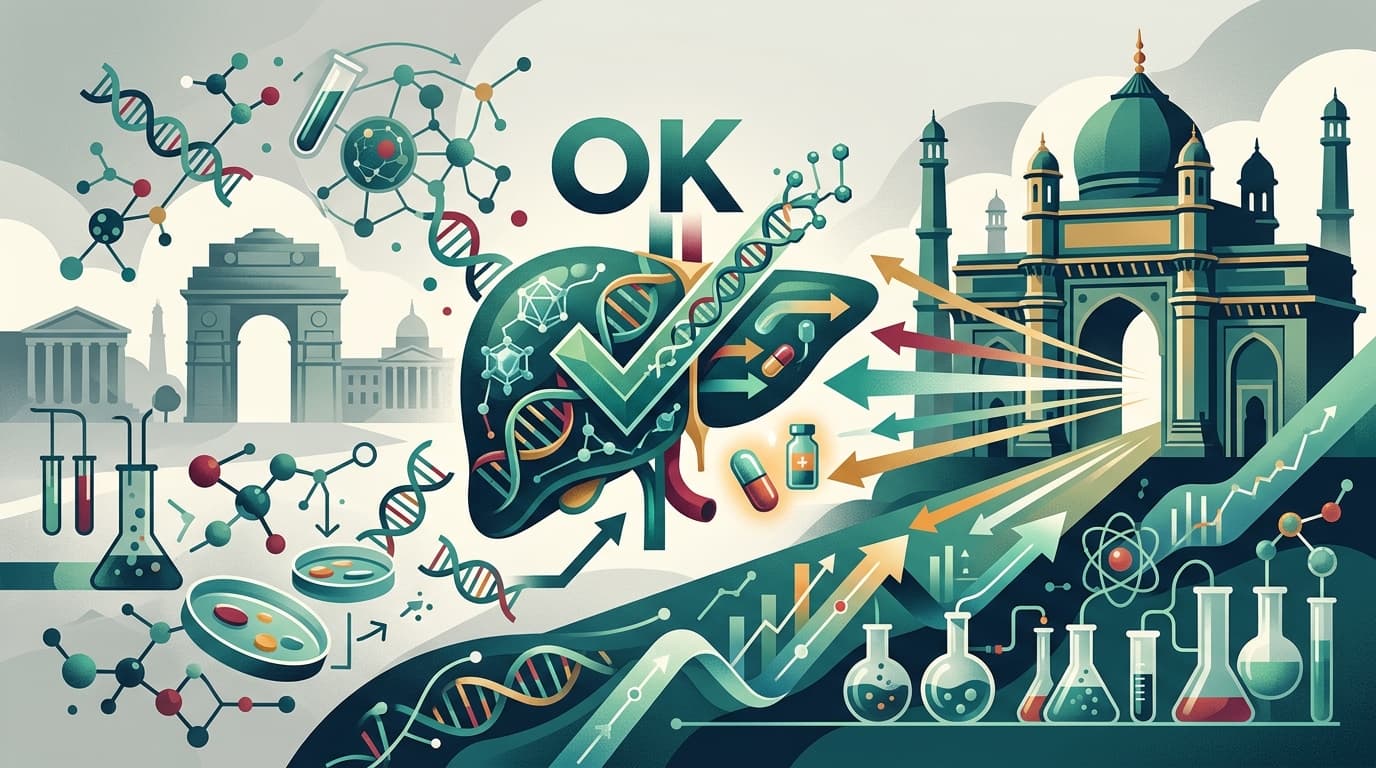
India just approved Wegovy for fatty liver disease, making it the second country to clear a GLP-1 drug for MASH. With nearly 40% of Indian adults affected by fatty liver and zero prior approved treatments, Novo Nordisk's latest label expansion could reshape both the Indian pharma market and the global MASH treatment landscape.