Lilly Just Bet $1.9B on an Editing Trick That Doesn't Touch DNA
Eli Lilly just committed up to $1.9 billion to Ascidian Therapeutics for a technology that fixes genetic errors without ever touching DNA. The target: inherited kidney diseases that currently have almost no treatments. Here's why two pharma giants are now betting billions on the same platform.
The Biggest Deal You've Never Heard Of
Imagine you're editing a movie. One scene is ruined because an actor flubbed a line. You could reshoot the whole film (expensive, risky), or you could splice in a corrected scene and leave the rest untouched. That second option? It's basically what Ascidian Therapeutics does, except the "movie" is your genetic code and the "scenes" are chunks of RNA called exons.
On June 3, Eli Lilly signed a deal worth up to $1.9 billion to use Ascidian's RNA exon editing technology against genetic kidney diseases. The collaboration includes an undisclosed upfront payment, development and commercial milestones, and tiered royalties on worldwide sales. Lilly gets exclusive rights to specific kidney disease targets. Ascidian keeps the freedom to chase other kidney targets on its own.
This isn't a small bet. It's one of the largest preclinical platform deals in the RNA editing space, period.
Wait, RNA Exon Editing? Isn't That Just CRISPR?
Not even close. And the distinction matters.
CRISPR edits your DNA directly. Think of it as rewriting the blueprint for a building. Powerful, but permanent. If the construction crew makes a mistake, that mistake is baked into the foundation forever. CRISPR also requires foreign bacterial enzymes (the Cas proteins), which can trigger immune reactions.
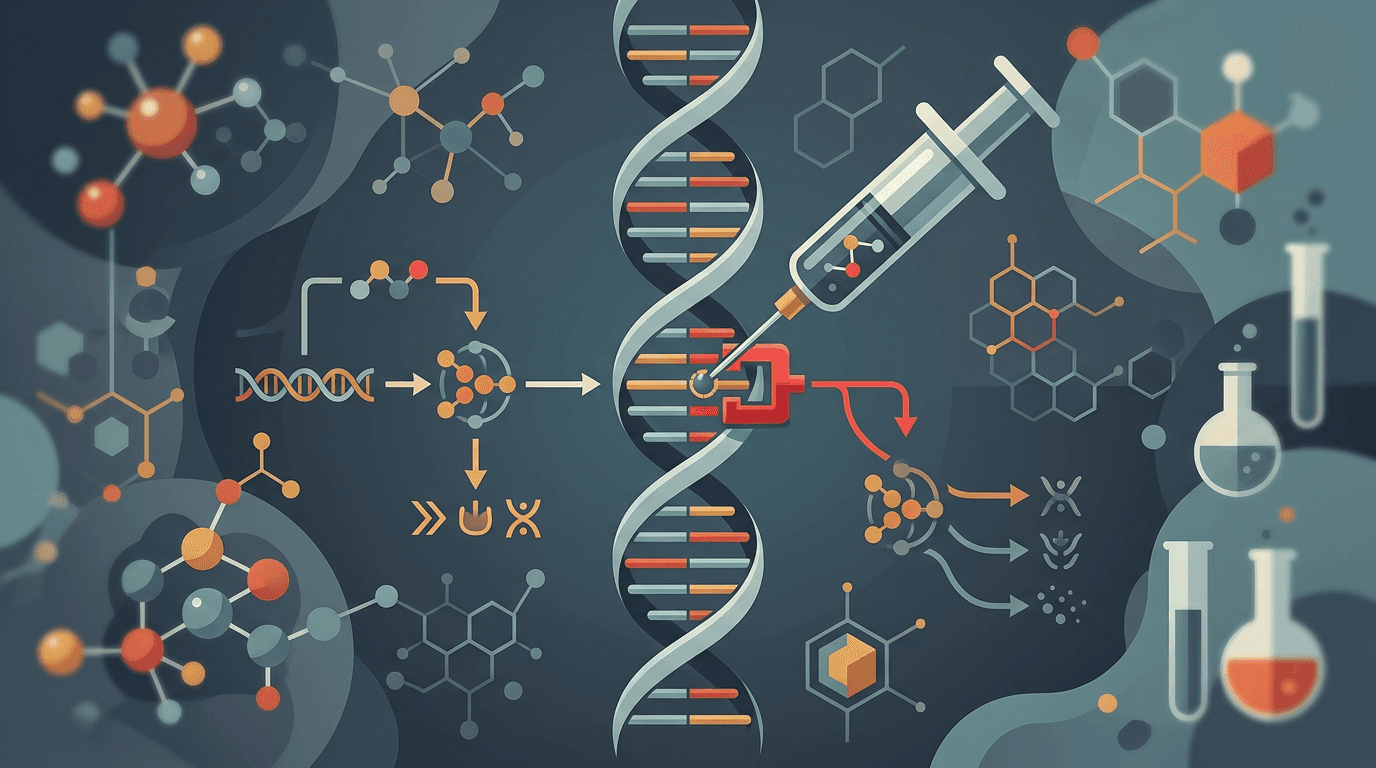
RNA exon editing takes a completely different approach. Instead of touching the blueprint, it intercepts the work orders (the RNA transcripts your cells use to build proteins). Ascidian's technology swaps out defective exons on the pre-mRNA and replaces them with corrected versions, using the cell's own splicing machinery. No foreign enzymes. No permanent changes to your genome.
The result: a corrected protein, built from a repaired RNA template, at the levels your body naturally produces. If something goes wrong, the edit washes out as the RNA naturally degrades. Your DNA stays untouched.
There's another superpower here. A single Ascidian editor can replace more than 20 exons at once. That means one therapy could potentially cover dozens of different mutations scattered across the same gene region. CRISPR base editors, by contrast, typically need a custom guide for each individual mutation. For diseases where hundreds of patients each carry slightly different genetic typos, that's a game-changer.
Get tomorrow's biotech intelligence before your competitors.
Join thousands of biotech professionals who start their day with our free, daily briefing.
Why Kidneys, and Why Now?
Genetic kidney diseases are a graveyard of unmet need.
There are at least 150 different rare kidney diseases, many of them genetic. An estimated 10% of the 37 million Americans with kidney disease may carry a genetic mutation driving their condition. That's roughly 3.7 million people in the U.S. alone who might benefit from a genetically targeted treatment.
Yet the options are grim. Autosomal dominant polycystic kidney disease (ADPKD), the most common inherited kidney disease, affects about 1 in 1,000 people and accounts for roughly 10% of end-stage kidney disease in patients under 65. It has exactly one disease-modifying drug: tolvaptan. Autosomal dominant tubulointerstitial kidney disease (ADTKD), the second most common, has zero approved treatments. Alport syndrome, a hereditary condition causing kidney failure, hearing loss, and eye problems? Also no disease-specific therapy.
For most of these patients, the treatment plan is the same depressing playbook: manage blood pressure, slow the decline, wait for dialysis, hope for a transplant.
RNA exon editing could change that equation. Many genetic kidney diseases involve large, complex genes with mutations spread across multiple exons. Traditional gene therapy struggles here because the full gene is too big to stuff into a viral delivery vehicle (like AAV vectors). Ascidian's approach sidesteps that problem entirely; it only needs to deliver the corrected exons, not the whole gene.
Lilly's Genetic Medicine Shopping Spree
This deal didn't happen in a vacuum. Lilly has been on an absolute tear in genetic medicines.
The company acquired Verve Therapeutics (base editing for cardiovascular disease). It struck a deal with Rznomics for RNA editing worth up to $1.3 billion. It picked up Engage Bio, partnered with Seamless Therapeutics and MeiraGTx, and acquired Orna for in vivo CAR-T technology.
The pattern is clear: Lilly isn't betting on one modality. It's building an entire toolkit, collecting different types of genetic scissors, tape, and splicing equipment so it can match the right tool to the right disease. The Ascidian deal adds RNA exon editing to that arsenal, specifically aimed at the kidney.
Under the deal's terms, Ascidian leads discovery and early preclinical work, then hands programs to Lilly for later-stage development, manufacturing, and commercialization. It's a classic big pharma playbook: let the nimble biotech do the creative science, then deploy your massive clinical trial infrastructure and global sales force when it's time to scale.
Ascidian's Second Big Dance
For Ascidian, this is validation on top of validation.
In 2024, the company inked a deal with Roche focused on neurological diseases, worth up to $1.8 billion with a $42 million upfront payment. Now Lilly is paying a premium for the same platform in a different organ system. Two of the world's largest pharma companies, two billion-dollar-scale collaborations, all built on the same core technology.
Ascidian also has its own internal pipeline. Its lead program targets Stargardt disease, an inherited form of macular degeneration caused by mutations in ABCA4 (a gene so large that conventional AAV gene therapy can't deliver it). The company reports that a single exon editor could potentially correct mutations across 22 exons, covering up to 70% of Stargardt patients with one therapy.
That retinal program, called ACDN-01, represents the first RNA exon-editing candidate tested in humans. Early safety and feasibility data from that trial could ripple across both the Roche and Lilly partnerships, providing proof-of-concept for the entire platform.
The Fine Print (and the Risks)
Let's not get carried away just yet.
RNA exon editing is still early. Really early. The specific kidney disease targets in this deal haven't even been disclosed publicly. We're talking about discovery-stage programs that are likely years away from a first-in-human kidney trial.
The technology also faces real scientific hurdles. Trans-splicing (where the editor RNA and the patient's own pre-mRNA are joined together) has to compete with the cell's natural, highly efficient cis-splicing. Getting enough of the corrected RNA to produce therapeutic protein levels, consistently, across different patients and cell types, remains a major challenge.
Then there's delivery. Like most genetic medicines, Ascidian's editors rely on viral or non-viral vectors to reach target tissues. Kidney-specific delivery brings its own complications; it's a notoriously tricky organ to target.
And the deal economics deserve scrutiny. The $1.9 billion headline is an "up to" number, meaning most of that value is locked behind milestones that may never be hit. The upfront payment wasn't disclosed. For context, Ascidian's Roche deal included a $42 million upfront on a $1.8 billion headline. The ratio of guaranteed cash to aspirational milestones in these deals is often humbling.
The Bottom Line
Lilly is making a calculated, long-dated bet that RNA exon editing will become a cornerstone of genetic kidney disease treatment. The science is elegant. The unmet need is enormous. The commercial potential, if it works, could be transformative for millions of patients stuck on the dialysis-and-prayer plan.
But "if it works" is doing a lot of heavy lifting in that sentence. This is a platform-stage investment in a modality that has barely touched human patients. The payoff, if it comes, is measured in years, not quarters.
Still, when two of the world's five largest pharma companies both write billion-dollar checks for the same technology within two years of each other, that's not a coincidence. That's a signal.
5 min read
One Shot to Silence a Gene Forever
Intellia just delivered the first successful Phase 3 trial for an in vivo CRISPR therapy, cutting hereditary angioedema attacks by 87% with a single infusion. The results could reshape how we think about treating genetic diseases forever.