
Intellia just delivered the first successful Phase 3 trial for an in vivo CRISPR therapy, cutting hereditary angioedema attacks by 87% with a single infusion. The results could reshape how we think about treating genetic diseases forever.
Imagine a world where one IV drip rewrites your DNA so precisely that a disease just… stops. No daily pills. No monthly injections. One afternoon in a clinic, and the condition that haunted you for decades goes quiet permanently.
That world got a lot closer last week.
Intellia Therapeutics just reported Phase 3 results for lonvo-z, a one-time CRISPR gene-editing therapy for hereditary angioedema (HAE). It's the first time an in vivo CRISPR therapy (meaning the editing happens inside your body, not in a lab dish) has aced a Phase 3 trial. And the numbers are genuinely striking.
The trial, called HAELO, hit its primary endpoint and every single key secondary endpoint. Patients who got lonvo-z experienced an 87% reduction in HAE attacks compared to placebo over a six-month evaluation period. Their average monthly attack rate dropped to just 0.26, versus 2.10 for placebo. For context, that's the difference between having a serious swelling episode roughly every four months versus roughly every two weeks.
But the stat that really jumps off the page: 62% of patients on lonvo-z were completely attack-free and medication-free during those six months. Only 11% of placebo patients could say the same.
Hereditary angioedema is one of those rare diseases most people have never heard of, but that can be genuinely terrifying for the ~1 in 50,000 people who have it. Patients experience sudden, unpredictable episodes of severe swelling in the face, gut, hands, feet, or airway. When swelling hits the throat, it can be life-threatening.
The root cause is a runaway biochemical chain reaction. A protein called plasma kallikrein chops up another molecule to release bradykinin, which triggers the swelling. In HAE patients, a natural brake on this system (called C1 inhibitor) doesn't work properly. So kallikrein goes haywire, bradykinin floods the tissues, and attacks happen.
Current treatments are a grab bag of injectable drugs and oral pills that patients take regularly to prevent attacks, or use on-demand when one strikes. They work reasonably well, but they require . That's the fundamental problem lonvo-z is trying to solve.

Legend Biotech just showed it can build CAR-T cells inside a patient's body with a single injection, no factory required. The early data are stunning, the implications are enormous, and the race to replace today's six-week manufacturing nightmare just got very real.


Join thousands of biotech professionals who start their day with our free, daily briefing.

Lonvo-z's approach is elegant in its simplicity: if plasma kallikrein is the villain, just stop your body from making it. Permanently.
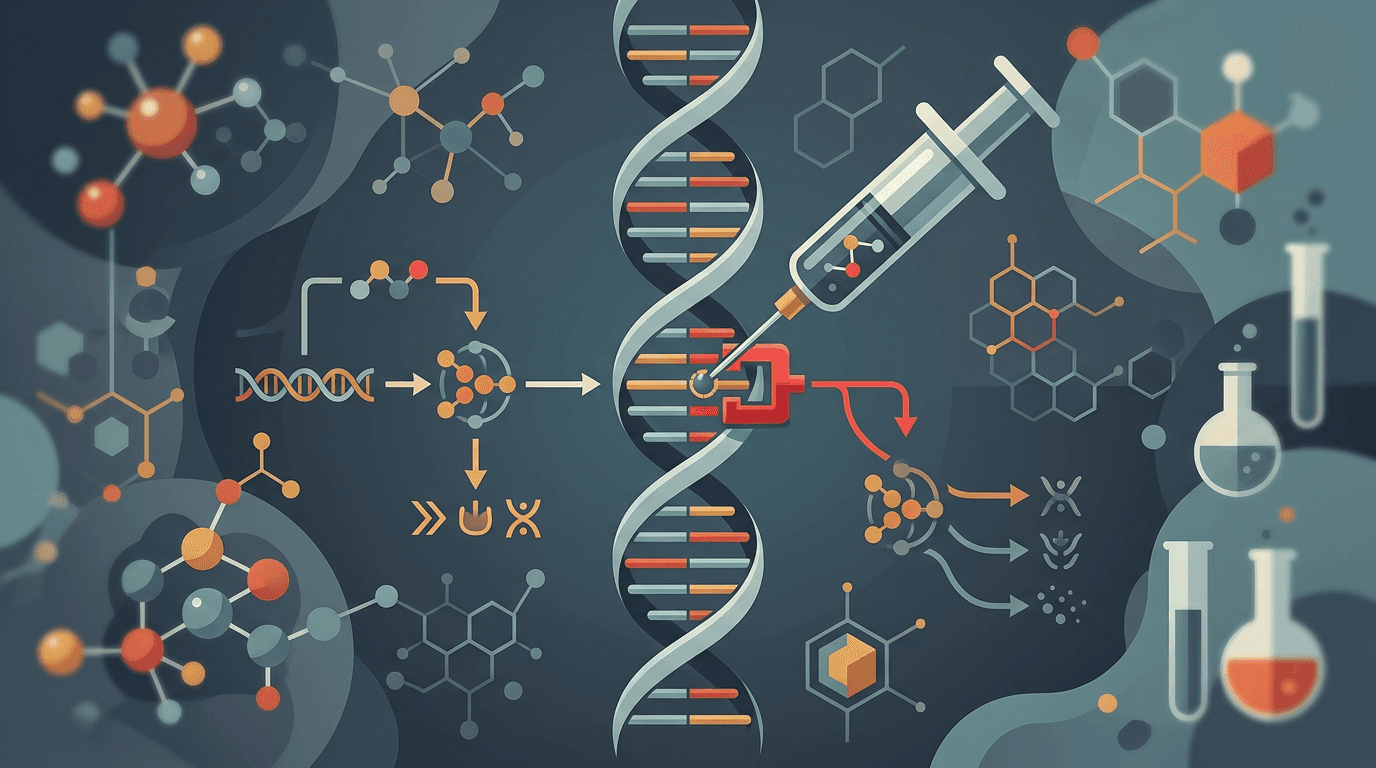
The therapy delivers two key ingredients into the bloodstream via lipid nanoparticles (tiny fat bubbles designed to slip into liver cells). Inside those bubbles: an mRNA blueprint for the Cas9 protein (the molecular scissors) and a guide RNA that acts like GPS coordinates for a specific gene called KLKB1.
Once inside liver cells, the Cas9 protein follows the guide RNA to KLKB1, the gene responsible for producing prekallikrein (the precursor to plasma kallikrein). Cas9 snips the DNA at that precise spot. When the cell tries to repair the break, it fumbles the repair job, essentially scrambling the gene. Think of it like cutting a sentence out of a cookbook: even if you tape the pages back together, that recipe is gone for good.
The Cas9 machinery itself degrades within hours. But the edit? It's written into the cell's DNA permanently. The liver cell passes that broken gene to every daughter cell when it divides. One infusion, lasting effect.
These Phase 3 results didn't come out of nowhere. Intellia had been building toward this moment for years with increasingly impressive earlier-stage data.
In the Phase 2 portion of its initial trial, a remarkable 73% of patients at the 50 mg dose were completely attack-free. The therapy also crushed plasma kallikrein levels by 86%, confirming the gene edit was doing exactly what it was designed to do.
Then came the three-year follow-up from Phase 1. Every single patient was still attack-free and medication-free for a median of nearly two years after their single dose. Over the full follow-up period, patients saw a 98% mean reduction in monthly attacks compared to their pre-treatment baseline. Three years out, with one infusion. That's not a treatment; it's closer to a functional cure.
On the safety front, the Phase 3 profile held up well. The most common side effects were infusion-related reactions, headache, and fatigue, all mild or moderate. No serious adverse events were reported in the lonvo-z arm as of the data cutoff.
You might expect the first successful Phase 3 for an in vivo CRISPR therapy to send a stock into orbit. Instead, the market reaction was muted.
Why the lukewarm reaction? Analysts at William Blair had set their base-case expectation at an 80% attack reduction; the bull case was 90%. Lonvo-z's 87% landed right in between, which they called a "compelling one-time option" but not a jaw-dropping surprise. The science delivered, but the Street had already partially priced it in.
The bigger questions keeping investors cautious are commercial ones. How do you price a one-time gene-editing cure competing against chronic therapies that generate recurring revenue? Will payers (insurance companies) embrace the upfront cost? And in a small rare-disease market, how big can the revenue opportunity really get? Analyst price targets range widely, from Morgan Stanley's $15 to Citizens' $33, reflecting genuine uncertainty about the business model rather than the biology.
Zoom out, and the significance of this trial stretches far beyond one rare disease. Lonvo-z is the first in vivo CRISPR therapy to succeed in Phase 3, which is a landmark for the entire gene-editing field.
Intellia already has another in vivo CRISPR program (NTLA-2001) targeting transthyretin amyloidosis, a more common disease. CRISPR Therapeutics is running early trials against cardiovascular targets like ANGPTL3 and Lp(a). Verve Therapeutics is testing base editing (a more precise cousin of CRISPR cutting) against PCSK9 for high cholesterol, though its program hit a speed bump with an enrollment pause.
All of them have been waiting for someone to prove that you can safely and effectively edit genes inside a living human being and get through a pivotal trial. Intellia just did that. It's like the first airplane crossing the Atlantic: now everyone knows the trip is possible, and the race to build better planes is on.
Intellia is now conducting a rolling BLA submission to the FDA, which means it's filing approval paperwork in chunks rather than waiting to submit everything at once. If approved, lonvo-z wouldn't just be the first in vivo CRISPR medicine for HAE. It would be the first approved in vivo CRISPR medicine, period.
For a technology that barely existed in therapeutic form a decade ago, that's not just a clinical milestone. It's the opening chapter of a new era in medicine.
Roche's oral SERD giredestrant failed to beat the first-line breast cancer standard in a 992-patient phase 3 trial, and Wall Street is already repricing the drug's future. But two other positive trials mean giredestrant's story isn't over; it's just a very different story than Roche planned.