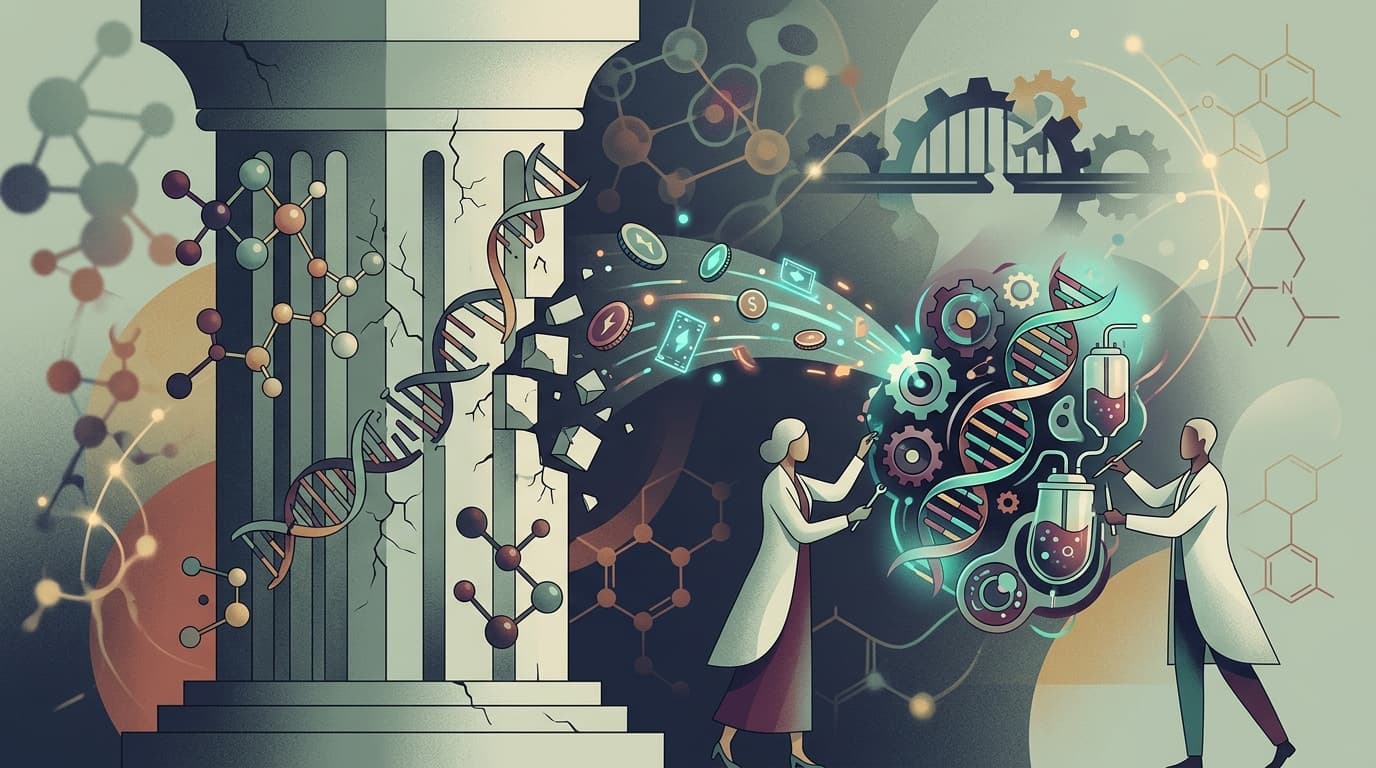

J&J is paying $1 billion in cash for Firefly Bio, a four-year-old startup with zero drugs in clinical trials. The target: a platform that combines antibody targeting with protein degradation to go after KRAS, cancer's most infamous "undruggable" protein.
KRAS has been the white whale of cancer drug development for over 40 years. Scientists identified it as a major cancer driver back in the 1980s, and for most of that time, the protein was considered completely undruggable. No pockets to bind. No handles to grab. It was like trying to pick up a bowling ball covered in grease.
Johnson & Johnson just bet $1 billion that a tiny startup has finally figured out how to destroy it.
J&J announced it will acquire Firefly Bio for $1 billion in cash. No milestones. No earn-outs. No contingent value rights. Just a clean, all-cash buyout of the entire company, expected to close later this year pending regulatory clearance.
What makes this wild: Firefly Bio is roughly three years old. It raised just under $100 million in venture capital (a $94M Series A in February 2024). It has zero clinical-stage programs. Everything is preclinical. There is no drug in human testing.
So what exactly is J&J buying? A platform. Specifically, Firefly's proprietary Firelink degrader antibody conjugate (DAC) technology, which the company believes could unlock a new class of cancer medicines.
To understand why J&J opened its wallet, you need to understand what a DAC actually is. Think of it as a remix of two of biotech's hottest technologies.
Antibody-drug conjugates (ADCs) are one of the biggest success stories in oncology. They work like guided missiles: an antibody finds the cancer cell, locks onto a surface marker, gets pulled inside, and releases a toxic payload that kills the cell. ADCs have generated billions in revenue and dozens of approved drugs.
Targeted protein degradation is a newer approach. Instead of blocking a troublesome protein (the way most drugs work), degraders trick the cell's own garbage disposal system into chewing it up entirely. The most famous version is called a PROTAC. The beauty: one degrader molecule can destroy many copies of the target protein because it works catalytically, recycling itself over and over. It's the difference between putting your hand over someone's mouth versus removing them from the room.

Merck is dropping $6.7 billion on a CML drug still in early trials, and Wall Street can't decide if it's a heist or a gamble. With Keytruda's $25 billion patent cliff looming in 2028, the deal reveals just how aggressively Big Pharma's biggest player is scrambling to reinvent itself.


Join thousands of biotech professionals who start their day with our free, daily briefing.
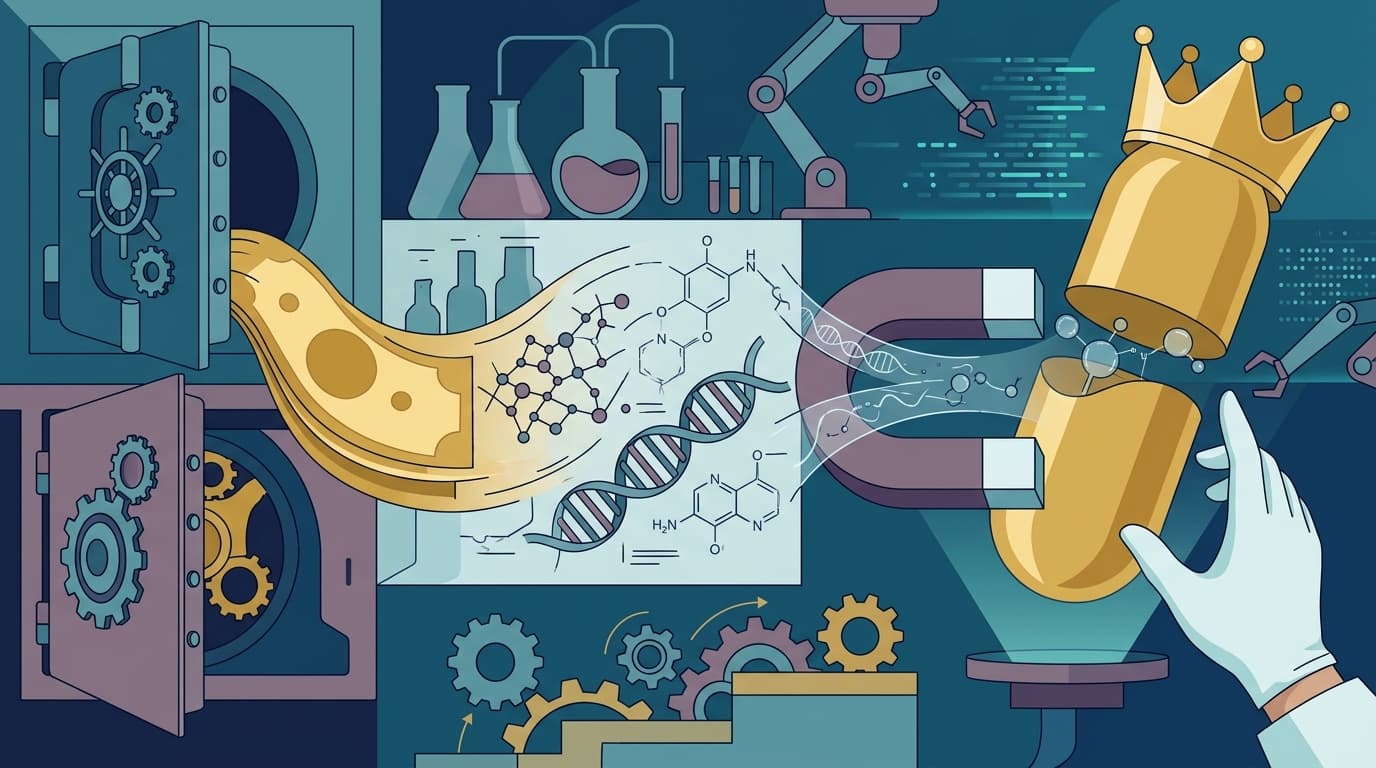
Firefly's DAC platform combines both ideas. The antibody finds the tumor cell and gets internalized. Once inside, a specialized linker (that's the "Firelink" part) releases the protein degrader payload. That payload then recruits the cell's protein disposal machinery to eliminate the cancer-driving protein.
The result: you get the precision targeting of an ADC with the total protein elimination of a degrader. And because the degrader is delivered directly into cancer cells via the antibody, you avoid the messy systemic exposure problems that plague standalone degraders (poor solubility, limited permeability, off-target effects in healthy tissue).
Firefly's lead focus is pan-KRAS degradation, and that's the real headline here.
KRAS mutations drive some of the deadliest cancers on Earth: pancreatic, colorectal, and lung adenocarcinomas. Small-molecule inhibitors like sotorasib and adagrasib have finally cracked one specific KRAS mutation (G12C), but there are at least 4–5 other common KRAS variants. Most of them remain untouchable with today's drugs.
A pan-KRAS degrader doesn't need to fit neatly into one mutation's binding pocket. It eliminates the entire KRAS protein, regardless of which specific mutation is driving the cancer. Preclinical data from Firefly's platform has shown substantial tumor-volume reductions at very low doses in both solid and liquid tumor models.
If that translates to humans, the implications are enormous.
This deal doesn't exist in a vacuum. J&J has been on an aggressive oncology acquisition binge, aiming for more than $50 billion in annual oncology revenue by 2030.
Consider the recent spree: the company grabbed Ambrx Biopharma for roughly $2 billion to secure next-generation ADC technology with site-specific conjugation. It's paying $3.05 billion for Halda Therapeutics and its oral oncology pipeline. And it's inked more than 50 licensing deals and smaller acquisitions since January 2024, deploying approximately $50 billion across R&D and inorganic growth combined.
Firefly slots into this strategy perfectly. J&J already has ADCs (via Ambrx), bispecific antibodies (teclistamab, talquetamab), and CAR-T cells (Carvykti). Adding DACs gives the company a complete toolkit of antibody-based modalities. It's like collecting every weapon in the video game before the boss fight.
The consensus? Strategically smart, financially painless, scientifically risky.
Analysts note that $1 billion is pocket change for a company with nearly $94.2 billion in 2025 sales.
The word "platform" keeps coming up. J&J isn't buying a single drug; it's buying the ability to generate an entire portfolio of DACs against multiple intracellular targets. If the technology works, the $1 billion looks like a bargain. If it doesn't, J&J can absorb the loss without breaking a sweat.
But the risks are real. No DAC has ever been approved. Across the entire industry, only about 20 DAC candidates exist in development globally. Just one (Orum Therapeutics' ORM-6151, a CD33-targeting DAC licensed to Bristol Myers Squibb) has entered human trials. Other early DAC programs have already been discontinued, including Orum's ORM-5029 and AbbVie's ABBV-787.
This deal is a signal. Big pharma is placing increasingly large bets on the idea that traditional ADCs are just the beginning, not the end, of antibody-conjugate innovation.
Traditional ADCs kill cells with brute-force cytotoxicity. DACs are more surgical: they remove specific proteins that drive cancer growth. The tradeoff is complexity. DAC payloads are large, lipophilic molecules that are hard to manufacture and load onto antibodies. Getting the linker chemistry right, ensuring proper intracellular release, confirming that the degrader actually reaches its target inside the cell; all of this adds layers of technical risk that traditional ADCs have already solved.
For J&J, the calculus is straightforward. The company wants to be the top oncology player by 2030. It needs differentiated early-stage assets to backfill a pipeline facing eventual patent cliffs (hello, Stelara). And at $1 billion for an entire platform with pan-KRAS potential, the price of admission is relatively cheap.
Now comes the hard part: proving it works in humans. Firefly's preclinical data is promising, but every oncologist alive has seen beautiful mouse data evaporate in Phase 1. J&J is betting that this time, the science holds up.
A billion dollars says they believe it will.
Eli Lilly is paying up to $7.8 billion for Centessa Pharmaceuticals and its experimental sleep disorder drugs. It's the biggest signal yet that the GLP-1 king is building a second empire, and the orexin agonist race just got a lot more interesting.