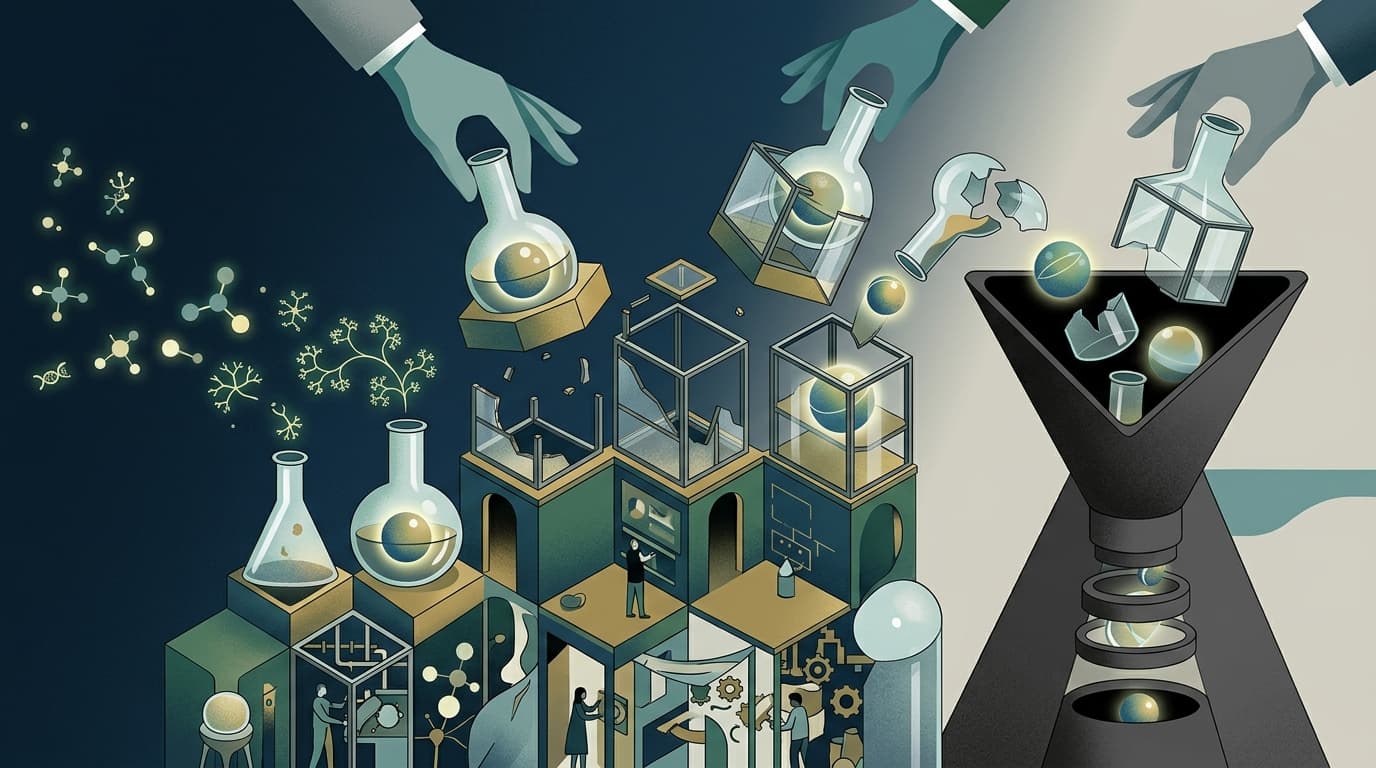

Johnson & Johnson is closing its New York JLABS incubator, the fourth shutdown in a year. With $32 billion deployed on deals and acquisitions instead, J&J's message to early-stage startups is clear: we'd rather buy the winners than grow them.
In 2018, Johnson & Johnson opened a gleaming 30,000-square-foot incubator in SoHo, backed by $17 million in New York State funding. It was supposed to be a launchpad for the next generation of biotech startups. Eight years and over 100 companies later, J&J is handing the keys back.
The closure of JLABS New York, announced on March 17, isn't an isolated event. It's the latest in a string of incubator shutdowns that's starting to look less like pruning and more like a full retreat.
New York joins a growing list. Over the past year, J&J has closed JLABS locations in Houston, Toronto, and Washington, D.C. That leaves just three U.S. sites standing: San Diego, San Francisco, and Boston. The company still operates international locations in Belgium, Singapore, South Korea, and Shanghai, but the domestic footprint has been cut nearly in half.
Think of JLABS like a chain of co-working spaces, except instead of freelance designers and podcast bros, the tenants are scientists trying to cure diseases. Each site offered lab equipment, mentorship, and access to J&J's network of experts. The best part? J&J didn't take any equity. It was, by startup incubator standards, a remarkably generous deal.
Since its founding, the JLABS network has supported more than 1,000 companies. By its fifth anniversary in 2017, alumni had already pulled off 5 IPOs and 8 acquisitions. These aren't vanity metrics. Real companies got real traction here.
So why shut it down?
J&J's official statement hit all the expected notes. The company said it remains committed to "accelerating early-stage innovation with partners through strategic collaborations, our global incubation program and venture investments." If you've spent any time reading corporate communications, you know that sentence is doing a lot of heavy lifting while saying very little.
The real story is simpler: J&J is reshuffling its entire innovation playbook. The company poured $32 billion into R&D and M&A in 2025 alone, including a $14.6 billion acquisition of Intra-Cellular Therapies and 40 other collaborations and licensing deals. CEO Joaquin Duato called 2025 a "catapult year."

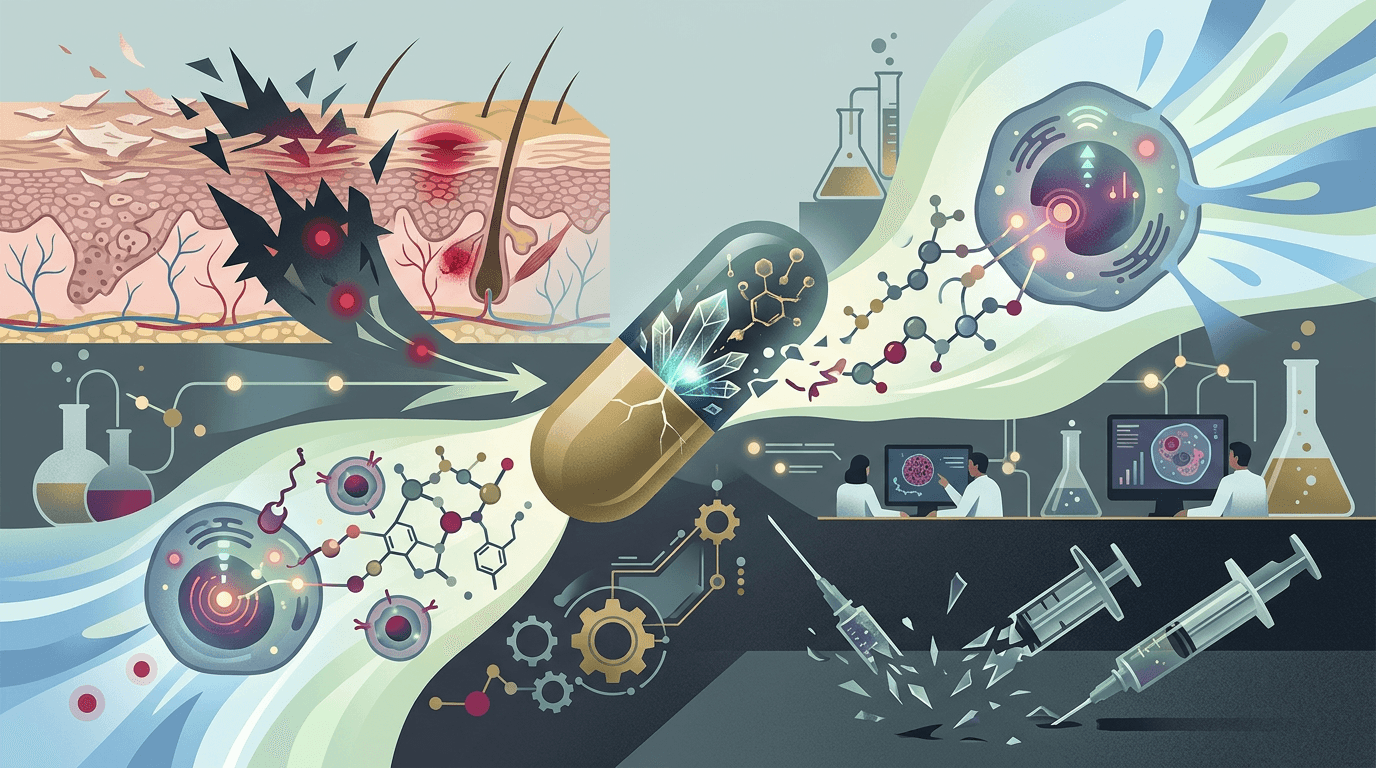
J&J just got FDA approval for the first oral pill that rivals injectable biologics in clearing psoriasis. ICOTYDE beat the only other oral option head-to-head, and it's gunning for three more diseases next.


Join thousands of biotech professionals who start their day with our free, daily briefing.
When you're writing checks that big, a network of small incubators starts to look like a rounding error. J&J generated over $25 billion in oncology sales last year and is planning to spin off its entire orthopedics business by late 2026. The company is clearly betting that concentrated, high-dollar bets on proven science will deliver more than nurturing dozens of seed-stage startups.
It's the difference between planting a thousand seeds in a garden and buying a fully grown orchard.
J&J isn't the only giant pulling back from the startup nursery. Pfizer recently shut down its Ignite business unit, which provided R&D services to early-stage biotechs. Meanwhile, the early-stage biotech landscape is littered with casualties: Rampart Bioscience ceased operations in recent months. Even well-funded companies aren't immune; Arena BioWorks cut 30% of its staff just 19 months after launching with $500 million.
The pattern is hard to miss. When funding gets tight, the ecosystem that supports young companies starts to crack. Incubators close. Startups fold. The pipeline of future drugs gets a little thinner.
There's an ironic twist here. Eli Lilly is moving in the opposite direction, expanding its incubator presence with a new site in South Korea. One pharma giant's trash, apparently, is another's strategic priority.
The New York Genome Center (NYGC), which houses the JLABS space, will take over management of the facility. But NYGC hasn't said a word about what happens next: whether current residents can stay, whether the space will remain a biotech incubator, or whether it'll be converted into something else entirely.
That silence is deafening for the startups currently working out of the SoHo location.
New York does have alternatives, though none carry J&J's brand or network. BioInc at New York Medical College in Westchester offers wet lab space on a health sciences campus. SUNY Downstate's Biotechnology Incubator in Brooklyn provides labs for early-stage firms. Upstate, the CNY Biotech Accelerator at Syracuse recently expanded its capacity. And just across the river in New Jersey, the Incubator at North Brunswick offers 46,000 square feet of plug-and-play lab space (alumni include Advaxis).
The infrastructure exists. But losing a JLABS site isn't just about square footage; it's about losing a direct pipeline to one of the world's largest pharmaceutical companies.
J&J's projected 2026 revenue sits around $100 billion. The company secured 51 regulatory approvals in 2025, filed 32 new submissions, and kicked off 11 new Phase 3 programs. By any measure, the innovation machine is running hot.
But innovation at J&J increasingly looks like it happens through acquisition, not incubation. Buy the winners instead of growing them. It's a perfectly rational strategy for a company of J&J's size. It's also a strategy that assumes someone else will do the messy, expensive work of getting startups from napkin sketch to Series A.
The question nobody at J&J seems eager to answer: if every big pharma company adopts this approach, who exactly is going to build the companies they want to buy?
For now, the SoHo lights stay on under new management. But the name on the door has changed, and the phone number that connected scrappy founders to one of the world's largest pharmaceutical companies no longer rings.
Aldeyra Therapeutics just received its third FDA rejection for dry eye drug reproxalap, with regulators once again citing inconsistent efficacy data. The stock plunged over 70%, and Wall Street is running out of patience for a drug that keeps failing the same test.