

Japan just granted full approval to Telomelysin, the world's first oncolytic adenovirus for esophageal cancer. It's a genetically engineered virus that hunts and destroys tumor cells from the inside, and it could reshape how we think about virus-based cancer therapy.
For about two decades, scientists have chased a wild idea: what if you could engineer a virus to hunt and destroy cancer cells while leaving healthy tissue alone? On June 8, 2026, Japan said the idea works.
The Japanese Ministry of Health granted full marketing approval to Telomelysin, an oncolytic (cancer-killing) adenovirus designed to treat esophageal cancer patients who can't undergo surgery or standard radiation. It's the world's first approved oncolytic adenovirus for esophageal cancer, and it marks a turning point for an entire class of therapies that the industry has been betting on for years.
This isn't a conditional approval or a "let's see how it goes" license. It's the real deal.
Telomelysin (also known as OBP-301 or suratadenoturev) is a modified version of a common human adenovirus, the same family of bugs that gives you a cold. But this one has been reprogrammed with a clever molecular trick.
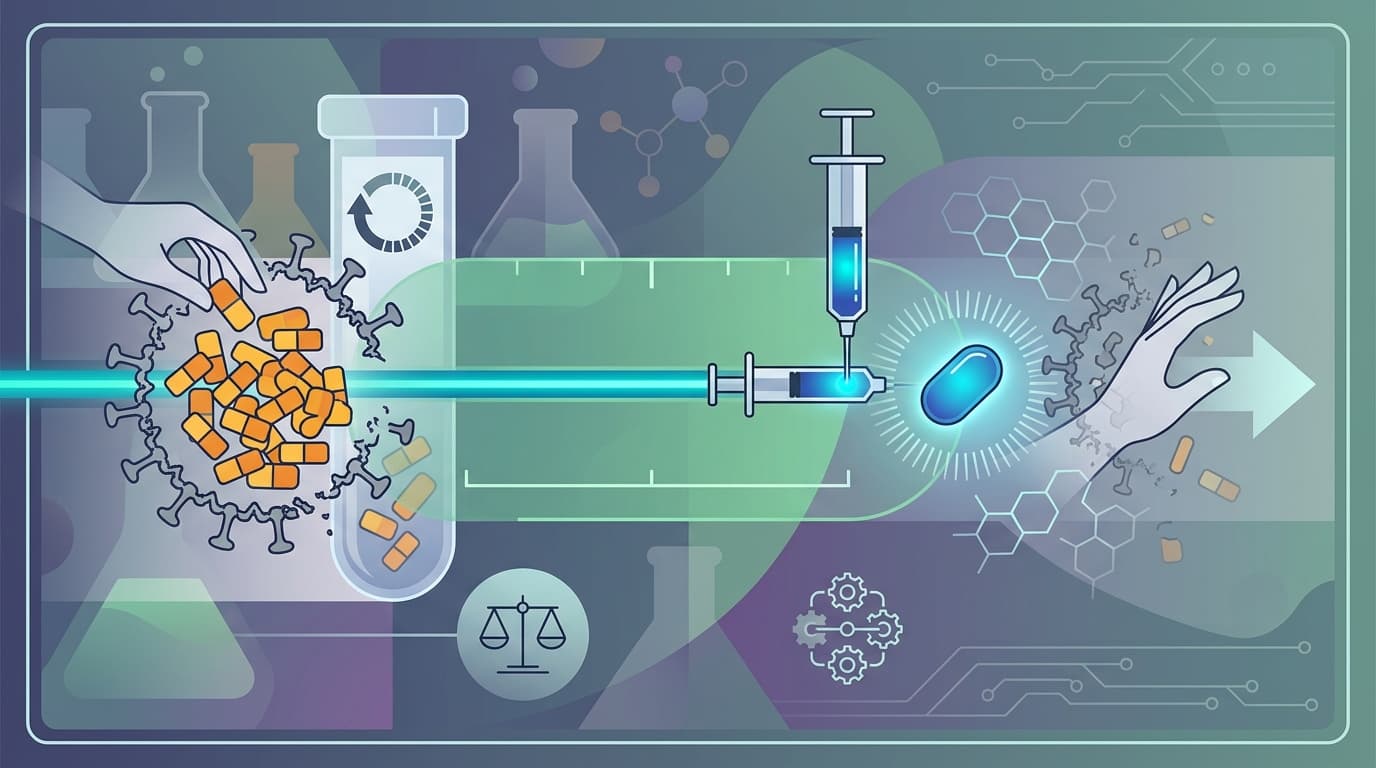
Nearly all cancer cells rely on an enzyme called telomerase to achieve immortality; it's basically the reason tumors can keep growing without hitting a natural expiration date. Normal adult cells barely produce it. So the scientists at Okayama University in Japan swapped out the virus's ignition switch and replaced it with a telomerase-sensitive one. In cancer cells, where telomerase is cranking, the virus fires up, replicates, and blows the cell apart. In normal cells, the engine never turns over.
Think of it like a lock and key. The virus only "unlocks" inside cancer cells. Once inside, it multiplies until the cell bursts, spilling out more copies to infect neighboring tumor cells. And the destruction doesn't stop there: the dying cancer cells release proteins that alert the immune system, essentially turning the tumor into its own vaccine.
There's a bonus, too. When combined with radiation therapy, the virus degrades a key DNA repair system inside cancer cells (called the MRN complex), making them far more vulnerable to the radiation. It's a one-two punch.
The clinical evidence comes from studies across 17 sites in Japan, plus a notable Phase I trial run by NRG Oncology in the United States.

A two-in-one cancer drug just did something unprecedented: it beat an established immunotherapy on overall survival in a head-to-head Phase 3 lung cancer trial. The results could reshape how we treat one of oncology's toughest cancers.


Join thousands of biotech professionals who start their day with our free, daily briefing.
That U.S. trial enrolled 15 patients with advanced esophageal or gastroesophageal junction cancer. Two patients died before doctors could assess their tumors (one from respiratory failure deemed unlikely related to the virus, one from a pre-existing fistula that worsened during treatment). Of the 13 patients who made it to evaluation, every single one achieved a complete clinical response at the treated tumor site, based on endoscopy and biopsy.
A 100% response rate in 13 patients is a small number, and scientists are rightly cautious about reading too much into it. But for context, a comparable group of patients receiving standard chemoradiation alone in a previous Phase III trial (NRG/RTOG 0436) saw a complete response rate of roughly 58%. That's a significant gap.
In an earlier Japanese Phase I study, 8 out of 13 esophageal cancer patients achieved complete responses when Telomelysin was combined with radiotherapy. The safety profile was manageable: no dose-limiting toxicities in the U.S. trial, though expected side effects from the chemotherapy backbone (like drops in white blood cell counts) were common.
Japan is ground zero for esophageal squamous cell carcinoma. Over 90% of esophageal cancers in the country are this subtype, driven largely by alcohol and tobacco use. The nation sees roughly 24,500 new cases per year, and about 11,500 patients die from it annually.
Most patients who are fit enough get surgery or aggressive chemoradiation. But a meaningful number of patients, often elderly or burdened with heart or lung problems, simply can't tolerate those treatments. Their options have been limited to palliative care: stents to keep the esophagus open, low-dose radiation for pain, and systemic chemotherapy with modest benefits.
For this group, Telomelysin offers something genuinely new. It's delivered directly into the tumor via endoscopy (a camera threaded down the throat), which means it avoids much of the systemic toxicity that makes conventional treatment impossible for frail patients. Japanese experts have described the approach as compatible with outpatient cancer care, allowing patients to maintain daily routines during treatment.
Telomelysin isn't the first oncolytic virus to reach the market. Amgen's Imlygic (T-VEC) won FDA approval for melanoma back in 2015. Japan approved Delytact for brain cancer in 2021. But both were based on herpes simplex virus. Telomelysin is the first approved product built on an adenovirus backbone, and its success in a solid tumor like esophageal cancer opens different doors.
Japan is quietly becoming the global capital of oncolytic virus approvals. With two approved products and a regulatory framework (the SAKIGAKE accelerated review system) that can move from submission to approval in about six months, the country is positioning itself as the place where virus-based therapies go to prove themselves.
Japanese biopharma analysts are calling this a "tailwind for the entire development of oncolytic viruses," predicting it will boost investor confidence and partnership interest across the field. The logic is straightforward: every time a new modality gets a clean, unconditional approval in a major market, the perceived risk for similar therapies drops. It's the same dynamic that played out with mRNA vaccines after COVID; once regulators said yes, the floodgates opened for mRNA cancer vaccines and rare disease programs.
Oncolys BioPharma, the Tokyo-based company behind Telomelysin, plans to launch commercially in Japan during fiscal year 2026 after securing reimbursement pricing. FUJIFILM Toyama Chemical will handle sales under a partnership struck in 2024. Telomelysin also carries orphan drug designation in Japan, granting it 10 years of market exclusivity.
Near-term revenue will be modest. The eligible patient population is a niche within a niche: esophageal cancer patients who can't get surgery or chemoradiation. But the real play is expansion. Oncolys has already licensed marketing rights in Taiwan to Medigen Biotechnology. Clinical work is advancing in hepatocellular carcinoma, and combination studies pairing Telomelysin with checkpoint inhibitors like pembrolizumab and stereotactic radiation are underway in multiple solid tumors.
The vision is to turn Telomelysin from a single-indication therapy into a platform technology: a virus that can be injected into any accessible tumor, blow it up, wake up the immune system, and make other cancer drugs work better.
It took about 20 years to get from concept to approval. If the combination data hold up, the next 5 could be where things get really interesting.
The Pentagon just labeled WuXi AppTec a "Chinese military company," and the ripple effects could force hundreds of biotech and pharma companies to rethink how their drugs get made. The world's largest CDMO is now at the center of a geopolitical earthquake.