The 6-Month Shot That Could Let Millions Ditch Daily Hep B Pills
For the first time ever, a Phase 3 trial shows a finite therapy can functionally cure chronic hepatitis B, with one in four selected patients staying virus-free after stopping all treatment. The 300-million-patient hep B market just got its biggest shakeup in decades.
A Disease That Forgot How to Lose
For decades, hepatitis B has been one of medicine's most frustrating stalemates. Roughly 254 million people carry the virus worldwide. The standard treatment, daily antiviral pills called nucleos(t)ide analogues, works beautifully at keeping the virus quiet. But quiet isn't gone. Patients take those pills for life, and only around 3–5% ever achieve what doctors call a "functional cure," meaning the virus stays undetectable even after you stop treatment.
Think of it like holding a beach ball underwater. Works great, as long as you never let go.
Now GSK says it has data showing some patients can finally let go.
One in Four Walked Away Virus-Free
Pooled results from two large Phase 3 trials (B-Well 1 and B-Well 2) show that bepirovirsen, a 24-week injectable therapy, delivered a functional cure in 19% of treated patients versus exactly 0% on placebo. That's the overall number. In a pre-selected group of patients with lower levels of a key viral protein at the start, the rate climbed to 26%.
To be clear: one in four patients in that subgroup stopped all treatment and remained virus-free at week 72, nearly a year after their last dose. Nobody on placebo pulled that off. The results hit statistical significance with a p-value below 0.001 in both trials.
If those numbers don't sound revolutionary, consider context. The current standard of care produces a cumulative functional cure rate of roughly 3–5% over many years of treatment. Going from that to 26% in a selected subgroup after just six months of therapy isn't incremental improvement; it's a different sport entirely.
What Bepirovirsen Actually Does (in English)
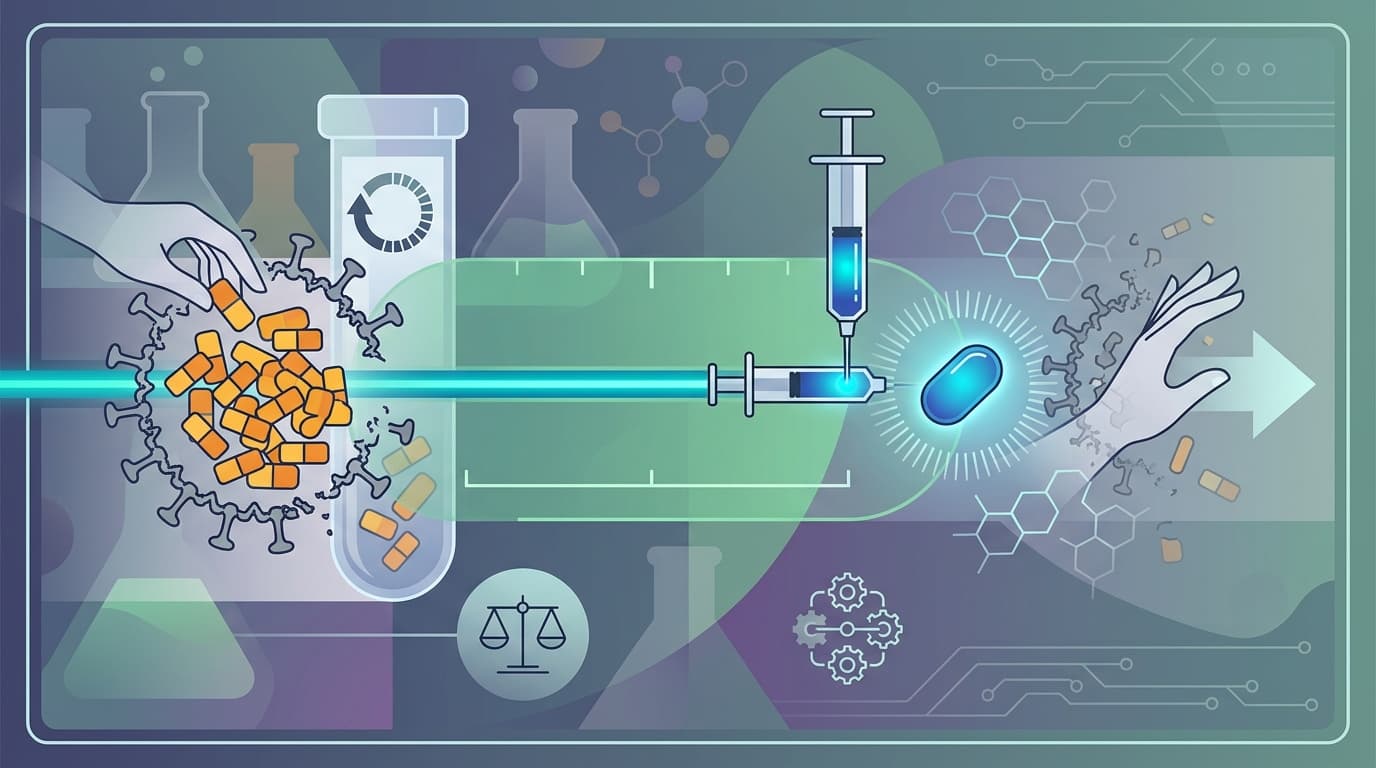
Bepirovirsen is an antisense oligonucleotide, which is a fancy way of saying it's a tiny piece of synthetic genetic material designed to stick to the virus's RNA and flag it for destruction. Your cells have a built-in shredder called RNase H. Bepirovirsen essentially grabs every copy of the virus's instruction manual and feeds it into that shredder.
Get tomorrow's biotech intelligence before your competitors.
Join thousands of biotech professionals who start their day with our free, daily briefing.
The result is a triple punch. First, it cuts viral replication by destroying the template the virus uses to copy itself. Second, it slashes levels of hepatitis B surface antigen (HBsAg), a protein the virus pumps out to confuse the immune system. Third, by clearing that protein fog, it lets the patient's own immune system finally "see" and attack infected cells.
GSK describes this as a "triple-action" mechanism, and the clinical data backs it up: patients who experienced bigger spikes in liver enzymes (a sign of immune-mediated cell killing) were actually more likely to achieve a functional cure.
The Biomarker That Picks the Winners
Not everyone responds equally, and the trials were designed around that reality. The secret sauce is baseline HBsAg level, that surface antigen protein the virus uses as camouflage.
Patients were stratified into groups based on how much HBsAg was floating in their blood before treatment started. The pattern is stark:
HBsAg >3,000 IU/mL: not even enrolled in the trials
The lower the antigen burden at baseline, the better the odds.
This means bepirovirsen isn't a one-size-fits-all drug. It's a precision tool. Doctors will likely need a simple blood test to identify who should get it, which is exactly how the trials were run. The good news: patients with HBsAg ≤1,000 IU/mL represent roughly 45% of diagnosed chronic hep B cases globally. That's a massive addressable population.
What the Skeptics Are Saying (And They're Not Wrong)
The hepatology community is cautiously optimistic, emphasis on "cautiously." An accompanying editorial in the New England Journal of Medicine by hepatologist Anna Lok called the results "impressive" but noted they can't be generalized to patients with cirrhosis, HIV co-infection, or high baseline antigen levels.
She's right. The majority of treated patients still didn't achieve a cure. And 254 million people carry this virus globally, but only about 5% are even on treatment today. A drug that works in a biomarker-selected subset of already-treated patients, while groundbreaking, won't bend the global curve alone.
Wall Street analysts struck a similar tone. William Blair called bepirovirsen an "underappreciated opportunity" for Ionis (GSK's antisense technology partner), noting expectations had been low after mixed Phase 2 data. Most models project a sizeable but niche commercial opportunity rather than a mega-blockbuster, at least until combination data arrive.
The Competitive Landscape Is Heating Up
Bepirovirsen won't be alone for long. A crowded pipeline of siRNA drugs (JNJ-3989, xalnesiran, imdusiran), capsid inhibitors, therapeutic vaccines, and even gene-editing approaches are all chasing the same goal. Most are still in Phase 2, and none have posted Phase 3 functional cure numbers like these yet.
The emerging consensus is that the future of hepatitis B treatment looks like combination therapy: stack an antigen-lowering drug (like bepirovirsen or an siRNA) with an immune booster (interferon, a vaccine, or a checkpoint inhibitor) on top of standard antivirals. Early combo data from competitors show promising signals; one siRNA plus interferon regimen pushed over half of patients below critical antigen thresholds.
Bepirovirsen's first-mover advantage is real, though. GSK has FDA Breakthrough Therapy Designation, a PDUFA date of October 26, 2026, and filings underway in Europe, Japan, and China.
Why This Actually Matters
Step back from the numbers for a moment. Hepatitis B kills hundreds of thousands of people every year through cirrhosis and liver cancer. The current treatment works but requires lifelong daily pills, ongoing liver cancer screening, and constant vigilance. Most people who carry the virus globally don't even know they have it, and the vast majority never get treated.
A finite, six-month treatment that can functionally cure roughly one in four well-selected patients? That's not the end of hepatitis B. But it might be the beginning of the end. For the first time in the history of this disease, "cure" isn't just a research aspiration. It's a measurable, reproducible clinical outcome.
The beach ball, for some patients at least, can finally stay down on its own.
Clinical & Regulatory4 min read
The Pentagon Just Dropped a Bomb on Biotech's Favorite Supplier
The Pentagon just labeled WuXi AppTec a "Chinese military company," and the ripple effects could force hundreds of biotech and pharma companies to rethink how their drugs get made. The world's largest CDMO is now at the center of a geopolitical earthquake.