
Isomorphic Labs, the Google DeepMind spinoff, just raised $2.1 billion in the largest AI drug discovery financing ever. With Nobel Prize-winning science, $3 billion in pharma deals, and zero approved drugs, the company is making the biggest bet the field has ever seen.
Two billion dollars is a lot of money for a company that has never put a drug into a human being.
Isomorphic Labs, the AI drug discovery company spun out of Google's DeepMind, just closed a $2.1 billion Series B round. That makes it the largest private financing in the history of AI drug discovery, by a wide margin. The previous record holder? Xaira Therapeutics, which raised roughly $1 billion in its 2024 Series A. Isomorphic more than doubled that.
The round was led by Thrive Capital, which also led Isomorphic's $600 million Series A just last year. Joining them: Alphabet (Google's parent company), GV (Google Ventures), CapitalG (Alphabet's growth fund), Abu Dhabi's MGX, Singapore's Temasek, and the newly launched UK Sovereign AI Fund. When sovereign wealth funds start showing up, the thesis has graduated from "interesting bet" to "national strategic priority."
If you know anything about AlphaFold, you already know the origin story. DeepMind's AI famously cracked one of biology's oldest puzzles: predicting how proteins fold into 3D shapes. That breakthrough earned co-founder Demis Hassabis a Nobel Prize in Chemistry in 2024.
But predicting protein shapes is like having a really good map. Useful? Absolutely. Enough to find buried treasure? Not on its own. You still need to figure out which molecules can latch onto those proteins and change their behavior, which is the whole game in drug discovery.
That's why Hassabis created Isomorphic Labs in 2021: to turn DeepMind's map into a full-blown treasure-hunting operation. The company's name reflects a core belief that biology and information share deep structural patterns ("isomorphisms") that AI can exploit.
The crown jewel is what the company calls its Drug Design Engine, unveiled in February 2026. According to the company, this system doubles AlphaFold 3's performance on predicting how drugs bind to their targets. It can estimate how tightly a molecule grabs onto a protein faster and more accurately than traditional physics-based methods. Perhaps most impressively, it can identify new binding sites on a protein using nothing but the amino acid sequence, essentially finding hidden keyholes that chemists didn't know existed.

A Suzhou biotech just raised $80 million on the Hong Kong Stock Exchange to fight bacterial infections, an area most investors won't touch. Its lead drug crushed the standard of care for H. pylori in Phase III, and the company's hybrid chemistry platform could reshape how we treat everything from stomach bugs to infected hip implants.


Join thousands of biotech professionals who start their day with our free, daily briefing.
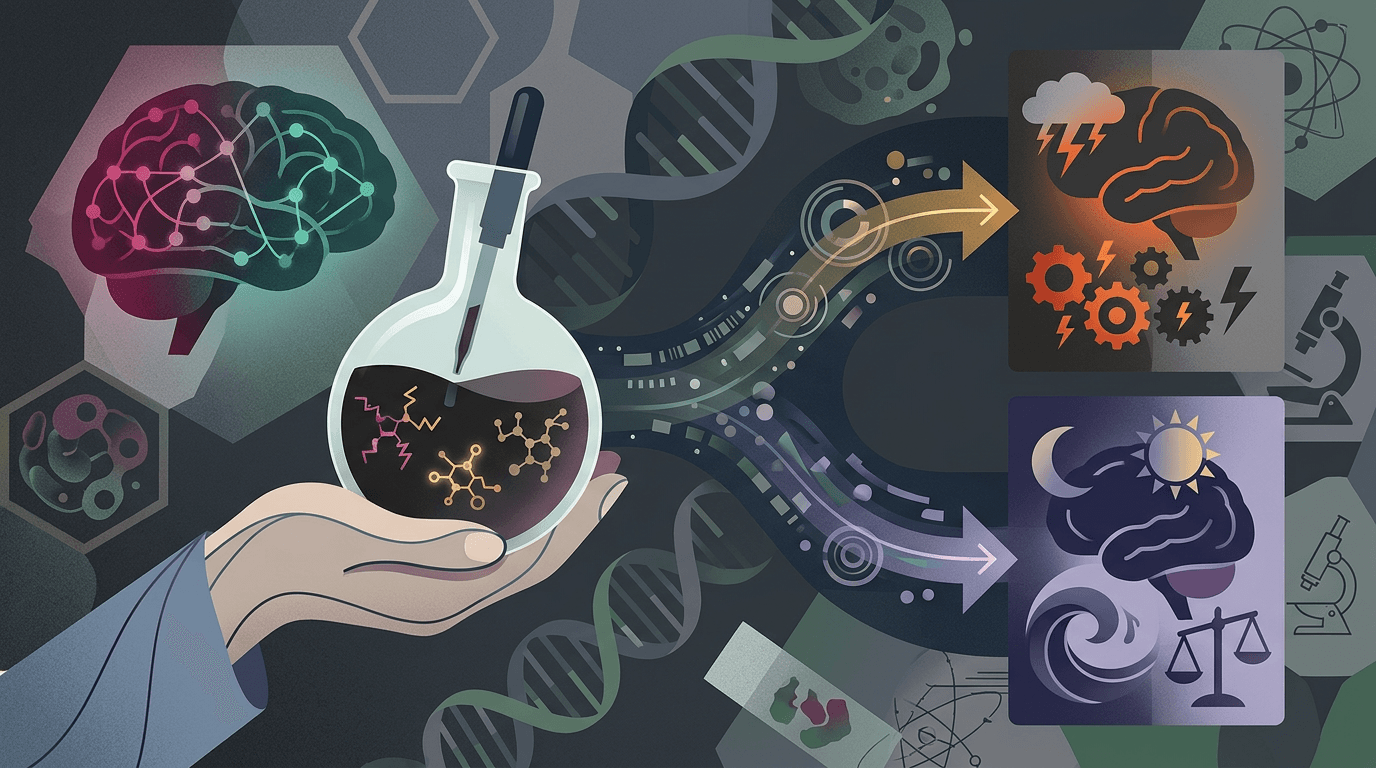
Think of it this way: traditional drug discovery is like trying every key in a hardware store to see which one opens a particular lock. Isomorphic's AI looks at the lock and designs the key from scratch.
A fancy AI platform is one thing. Getting Eli Lilly and Novartis to bet billions on it is another.
In January 2024, Isomorphic inked deals with both pharma giants worth a combined $3 billion in potential milestone payments. Lilly paid $45 million upfront with up to $1.7 billion in milestones. Novartis put down $37.5 million with up to $1.2 billion on the table. Both deals focus on small molecule drugs aimed at targets that have historically been considered "undruggable," the biological equivalent of picking locks that no one has been able to crack.
The early results seem to be working. Novartis expanded its collaboration in February 2025, effectively doubling the number of programs from three to six. By early 2026, both partnerships had reportedly moved beyond initial discovery into preclinical candidate stage, with several programs entering the final stretch of testing required before human trials can begin.
Isomorphic is now staffing up its clinical development team, hiring regulatory experts and trial designers. The company has said it plans to put its first AI-designed molecules into Phase 1 human trials by late 2026. If that happens, it would be a landmark moment: proof that a drug designed primarily by artificial intelligence can make the leap from silicon to skin.
The timing isn't accidental. AI drug discovery funding has been on a tear. But this round stands apart, both in size and in what it signals.
First, the investor mix tells a story. Thrive Capital coming back to lead (for the second consecutive round) signals deep conviction, not tourist money. The sovereign wealth funds from Abu Dhabi, Singapore, and the UK suggest that governments now view AI-driven drug development as critical infrastructure, similar to how they invest in semiconductors or energy.
Second, the capital gives Isomorphic a structural advantage. Training massive AI models costs a fortune. Generating the biological data to feed those models costs even more. With $2.1 billion in fresh cash on top of last year's $600 million, Isomorphic can outspend virtually every competitor in the space on compute, data generation, and talent. In AI, scale tends to compound; more data makes better models, which attract better partners, which generate more data.
Third, analysts note that the real test is still ahead. No AI-discovered drug has ever received FDA approval. Several have entered clinical trials; some have already failed. Isomorphic's Drug Design Engine may be impressive on benchmarks, but biology has a nasty habit of humbling even the best predictions. The gap between "works on a computer" and "works in a human" remains the great unsolved problem of the field.
Isomorphic Labs now sits at a fascinating inflection point. It has the pedigree (Nobel Prize-winning science), the partnerships ($3 billion in pharma deals), the capital ($2.7 billion raised to date), and a clinical timeline that could produce real human data within months.
But it also has no approved drugs, no clinical results, and a valuation that remains undisclosed, probably because the number would make traditional biotech investors spit out their coffee.
Hassabis has talked publicly about compressing early drug discovery from years down to months. If Isomorphic delivers on even a fraction of that promise, it could reshape how the entire pharmaceutical industry operates. If it doesn't, this will go down as the most expensive science experiment in biotech history.
Either way, the bet has been placed. And at $2.1 billion, it's the biggest one AI drug discovery has ever seen.
Biogen and Denali's LRRK2 inhibitor nailed every biological target in a 648-patient Parkinson's trial, then failed to help a single clinical measure. A billion-dollar partnership just lost its centerpiece, and the implications ripple across the entire field of neurodegeneration.