The Cancer Therapy Nobody Thought Could Scale Just Proved Them Wrong
Iovance just bumped its 2026 revenue guidance by $55 million for a cancer therapy that requires custom-building each patient's treatment from their own tumor. The company that wasn't supposed to scale is scaling fast, and the entire cell therapy industry is watching.
A $55 Million "We Told You So"
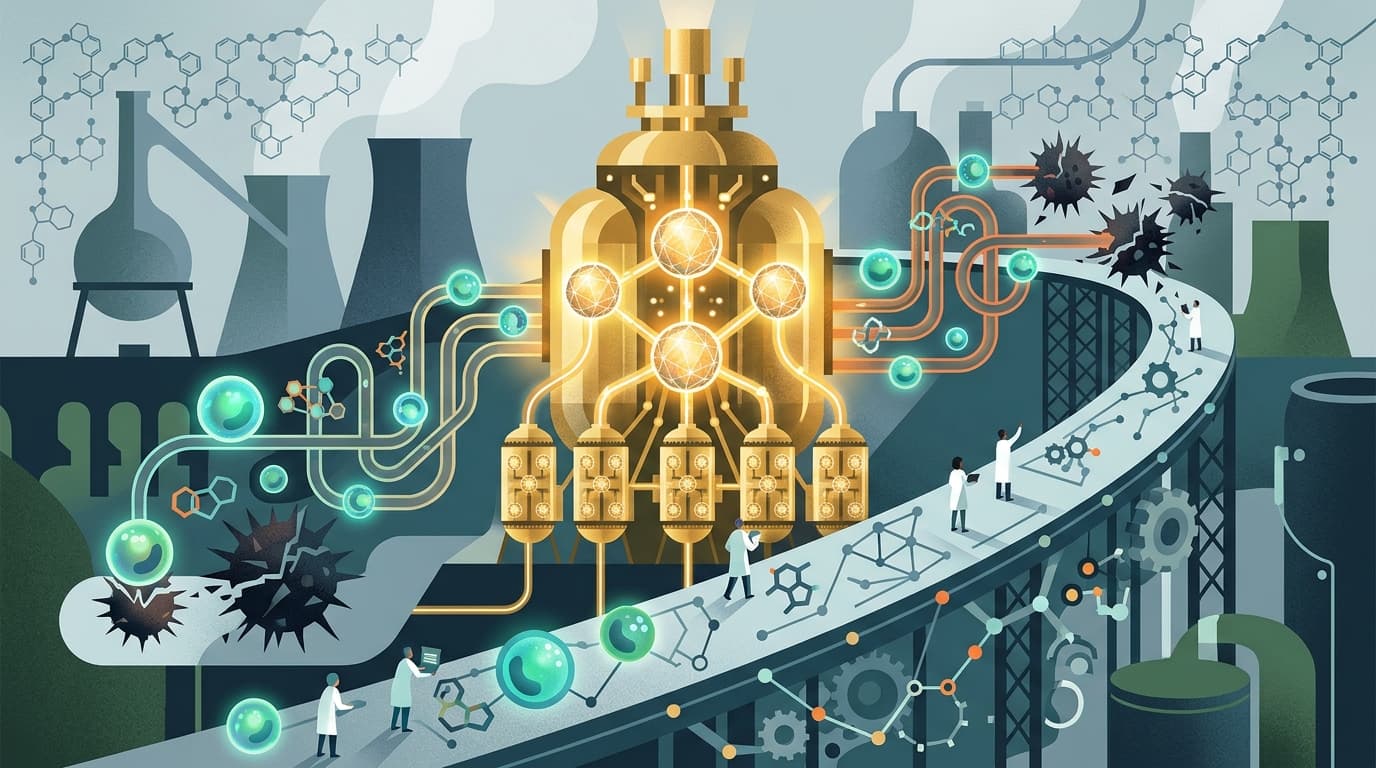
When Iovance Biotherapeutics launched Amtagvi, the skeptics had a point. This wasn't a pill you could stamp out by the millions. It wasn't even a standard infusion. Amtagvi is a tumor-infiltrating lymphocyte (TIL) therapy, which means doctors surgically remove a piece of your tumor, ship it to a manufacturing facility, grow your own immune cells into an army, and ship them back to be infused into your body. Every single patient gets a custom-built treatment. Think bespoke tailoring, except the suit is made of your own cancer-fighting T cells.
The conventional wisdom? Therapies this complex don't scale commercially. They're too expensive, too slow, and too logistically fragile to ever become blockbusters.
Iovance just raised its 2026 revenue guidance to $410 million to $420 million, up from $350 million to $370 million. That's a $55 million jump at the midpoint, implying nearly 60% annual revenue growth. Wall Street's consensus was around $403 million, so Iovance didn't just clear the bar; it moved it.
From Launch Ramp to Revenue Machine
The sales trajectory tells a story of steady, compounding momentum. When Amtagvi launched in the U.S., it pulled in $43.6 million in Q1 2025. By Q4 2025, that number had climbed to roughly $65 million. Full-year 2025 U.S. Amtagvi revenue landed around $220 million.
Then 2026 kicked into a higher gear. Q2 2026 alone delivered approximately $91 million in U.S. Amtagvi revenue, a 40% jump from Q4 2025. That's not a slow grind upward; that's an acceleration curve.
The company also posted a record $99.3 million in total product revenue for Q2 2026, which includes its second revenue driver, Proleukin. Iovance pointed to a growing network of U.S. treatment centers as a key factor behind the demand surge.
Why This Was Supposed to Be Impossible
To appreciate what Iovance is pulling off, you need to understand why personalized cell therapies are considered the hardest products in biotech to commercialize.
Get tomorrow's biotech intelligence before your competitors.
Join thousands of biotech professionals who start their day with our free, daily briefing.
Every autologous (made-from-your-own-cells) therapy is a batch of one. You can't brew a giant vat of product and bottle it. Each patient requires a separate manufacturing run, so scaling up really means scaling out: more parallel workflows, more equipment, more trained technicians, more coordinated logistics. It's like running a restaurant where every single dish has a completely different recipe.
The typical timeline from cell collection to infusion runs three to five weeks. During that window, tumor tissue has to be surgically procured, shipped under strict temperature controls, manufactured in a cleanroom, quality-tested, released, cryogenically shipped back, and perfectly timed with the patient's treatment schedule. If any link in that chain breaks, the product can fail.
Manufacturing failure rates in some commercial autologous settings can exceed 10%, and every lot needs its own quality testing and release. The labor is specialized, the cold-chain logistics are fragile, and the cost of goods stays stubbornly high compared to traditional drugs.
How Iovance Is Beating the Odds
Iovance's answer to this complexity has been relentless operational discipline. The company built its own dedicated manufacturing hub, the Iovance Cell Therapy Center (iCTC) in Philadelphia, with current capacity for more than 2,000 patients per year and plans to expand to up to 5,000. Rather than trying to decentralize production across dozens of sites, it centralized manufacturing to drive better utilization and lower costs.
The manufacturing turnaround sits at roughly 34 days from tumor receipt to shipment back to the treatment center. Under the hood, the company's Gen 2 manufacturing platform produces the cryopreserved product in approximately 22 days, with the remaining time eaten by logistics, quality release, and coordination.
Bottlenecks still exist. Timely tumor procurement, scheduling the patient's lymphodepletion (a chemotherapy step that clears the way for the new cells), and coordinating IL-2 administration all require tight choreography. But the fact that Iovance keeps growing revenue quarter after quarter suggests these operational challenges are manageable, not fatal.
What Wall Street Is Saying
Analysts responded to the guidance raise with a wave of upward revisions. Multiple firms bumped their price targets and updated their revenue models. The tone across coverage was consistent: this isn't just a one-quarter blip; it's confirmation that commercial traction for Amtagvi is real and accelerating.
The company had signaled earlier that updated guidance would come during Q3, so the raise wasn't a bolt from the blue. But beating consensus by roughly $12 million at the midpoint gave the Street confidence that Iovance's demand signals are durable, not just optimistic forecasting.
The Bigger Picture for Cell Therapy
This is where the story gets interesting beyond Iovance's P&L. The entire cell therapy industry has been wrestling with a fundamental question: can personalized, autologous treatments ever be real commercial businesses, or will they always be niche products trapped by their own complexity?
Iovance is building the strongest case yet that the answer is yes. A product on track for $415 million in annual revenue (at guidance midpoint) is not a science experiment. It's a commercial franchise.
Right now, Amtagvi is approved only for adults with advanced melanoma who've already been treated with a PD-1 blocking antibody (and targeted therapy if their tumor carries a specific BRAF mutation). The approval came through the FDA's accelerated pathway based on response rate, meaning confirmatory data is still required. Iovance is also studying lifileucel combined with pembrolizumab in frontline advanced melanoma, which could significantly expand the addressable market.
If Iovance can prove the manufacturing and logistics model works at this scale for melanoma, the playbook becomes a template. Other TIL therapies, other tumor types, other companies watching from the sidelines: they're all taking notes.
The Bottom Line
Iovance raised guidance by $55 million because more patients are getting treated, more treatment centers are coming online, and the manufacturing machine is holding up. For a therapy that requires surgically removing tumor tissue, shipping it across the country, growing billions of immune cells in a cleanroom, and shipping them back on a precise schedule, that's remarkable.
The skeptics said personalized cell therapy couldn't scale. Iovance's revenue curve is the rebuttal. The real question now isn't whether this model works; it's how big it can get.
4 min read
Foghorn Blew Through $300M of Lilly's Cash and Has Nothing to Show for It
Foghorn Therapeutics axed 40% of its workforce after its Eli Lilly-partnered cancer drug flopped in Phase 1. The $1.6 billion collaboration is over, the stock is at $2, and the wreckage tells a cautionary tale about one of oncology's trickiest frontiers.