

Inovio just cut 22 employees and is down to $58.5 million in cash, with the FDA questioning whether its only real drug qualifies for the fast lane to approval. For the 17,000 Americans living with a rare throat tumor disease that has zero approved treatments, the next seven months are everything.
Imagine spending your entire career building a house, only for the city inspector to show up and say, "Actually, we're not sure your foundation meets code." That's roughly where Inovio Pharmaceuticals finds itself right now.
On March 12, the company cut 22 employees, trimming its headcount from 134 to 112. That's a 16% reduction. The reason? The FDA is raising questions about whether Inovio's lead drug, INO-3107, qualifies for the fast track to approval. And with just $58.5 million in cash, every dollar now has to count.
Before we get to the regulatory drama, let's talk about what INO-3107 actually treats. Recurrent respiratory papillomatosis (RRP) is a rare condition caused by HPV that grows tumors on the vocal cords and airways. Think of it like weeds that keep coming back in the same garden bed, no matter how many times you pull them out.
The roughly 17,000 people in the U.S. living with it rely on repeated surgeries to remove the growths, sometimes undergoing 20 to 25 procedures over a lifetime. That's not a treatment plan; that's a treadmill.
INO-3107 is a DNA-based immunotherapy designed to train the body's own immune system to fight the HPV strains causing the tumors. In a Phase 1/2 trial of 32 patients, 72% saw their surgeries cut by at least half in the first year. By year two, that number climbed to 86%, and roughly half of the patients didn't need surgery at all. Side effects were mild: mostly injection site pain and some fatigue. Nothing above a Grade 2 reaction.
For a disease with zero approved therapies, those numbers aren't just promising. They're potentially life-changing.
Inovio submitted its Biologics License Application (BLA) for INO-3107 in November 2025, seeking accelerated approval. The FDA accepted the application in December and set a target decision date of October 30, 2026. So far, so good.
But buried in the acceptance letter was a gut punch. The FDA included a "preliminary conclusion" that Inovio hadn't submitted enough information to justify using the accelerated approval pathway.

A single FDA departure sent gene therapy stocks soaring, with uniQure jumping 26% in one day. Vinay Prasad's exit from CBER after a chaotic 10-month tenure has the entire genetic medicines sector recalculating its odds.


Join thousands of biotech professionals who start their day with our free, daily briefing.
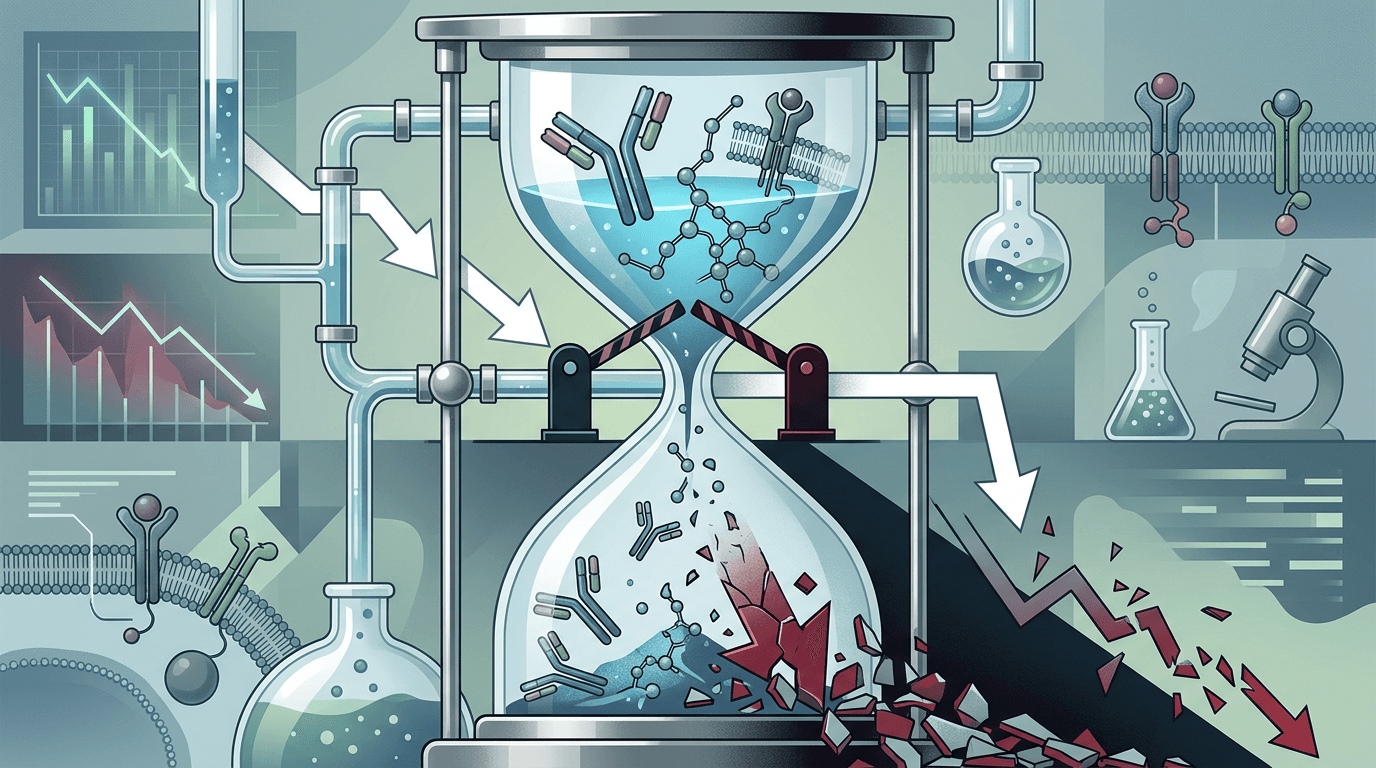
Quick explainer: accelerated approval lets the FDA greenlight drugs for serious conditions based on a surrogate endpoint (a stand-in measurement that suggests the drug works) rather than waiting years for definitive proof. It's the express lane. Inovio is arguing that T-cell immune responses and surgery reduction rates are strong enough surrogates to qualify.
The FDA, apparently, isn't so sure.
This doesn't mean the drug is dead. The application is still under review, now classified as a "standard review" rather than accelerated. Inovio has requested a meeting with the FDA to make its case, though as of March 12, that meeting hadn't been scheduled yet.
The distinction matters enormously. Standard review means the FDA will hold INO-3107 to a higher evidence bar, potentially requiring additional clinical data that Inovio may not have the resources to generate.
This is where the layoffs fit into the picture. With $58.5 million in cash as of December 31, 2025, Inovio estimates it has enough runway to operate into the fourth quarter of 2026. The company expects to burn around $22 million in the first quarter of 2026 alone.
Do the math, and you'll notice the timing is razor-thin. The FDA's decision date is October 30, 2026. Inovio's cash runs into Q4 2026. The company is essentially threading a needle: it needs to keep the lights on just long enough to get a yes or no from regulators.
That's why every non-essential role got eliminated. Inovio is stripping down to a skeleton crew focused entirely on one thing: getting INO-3107 across the finish line. It's the biotech equivalent of burning your furniture for warmth because the rescue helicopter is supposedly on its way.
The company did trim its full-year net loss from $107.3 million in 2024 to $84.9 million in 2025, and operating expenses dropped from $112.6 million to $86.9 million. Those aren't small reductions. But when your revenue for the year is just $65,343 (yes, thousand), cost-cutting only buys you so much time.
Despite all of this, analysts are surprisingly bullish. The stock trades at around $1.73 per share, giving Inovio a market cap of roughly $119 million.
Part of that optimism comes from the math on Inovio's balance sheet. Cash represents more than half the company's market value, which means investors are pricing in almost no value for INO-3107 itself. If the drug gets approved, the stock has massive room to run. If it doesn't, well, there's still some cash to cushion the fall.
But analyst price targets for micro-cap biotechs are a bit like weather forecasts for next month: directionally interesting, rarely precise.
What makes this story sting is the patient angle. RRP is one of those conditions that's too rare to attract big pharma dollars but devastating enough that people living with it are desperate for options. HPV vaccination programs (like Gardasil) can prevent new cases, but they do nothing for the thousands already diagnosed.
Inovio is, right now, one of the only companies actively pursuing an approved treatment for RRP. If the regulatory path collapses and the cash runs out, those patients go back to square one: an endless cycle of surgeries with no cure in sight.
The next seven months will determine whether Inovio's decade-long bet on DNA medicines pays off or becomes another cautionary tale in biotech. The FDA meeting, whenever it gets scheduled, will be the first real signal. Until then, 112 employees are holding down the fort with $58.5 million and a whole lot of conviction that the science speaks for itself.
Vertex dropped $4.9 billion on a kidney drug most people had never heard of. Two years later, the Phase 3 data just landed, and it's turning heads across the IgA nephropathy space. The stock hit a record high.