What If Your Body Could Build Its Own Cancer Therapy?
IASO Bio just showed that a single IV infusion can build cancer-killing CAR-T cells directly inside a patient's body, no factory required. If these early results hold up, the entire playbook for cell therapy could be about to change.
A Factory Inside Your Veins
Right now, making a cancer-killing cell therapy is a lot like ordering a custom suit from a tailor on the other side of the world. Doctors draw your blood, ship your immune cells to a specialized factory, genetically reprogram them over several weeks, freeze them, ship them back, and then infuse them into your body. The whole process takes three to six weeks. It costs hundreds of thousands of dollars. And some patients die waiting.
What if you could skip all of that and just… get an IV drip?
That's exactly what a Shanghai-based biotech called IASO Bio says it just demonstrated in humans for the first time. Their drug, IASO206, is designed to turn your own T cells into cancer fighters while they're still inside your body. No cell collection. No factory. No weeks of waiting. One infusion, and your immune system starts building the weapon itself.
The early results, presented as a late-breaking oral presentation at the 2026 International Myeloma Society Annual Meeting, are raising eyebrows across the field.
The Numbers That Matter
Let's start with what IASO Bio actually showed. Ten patients with relapsed or refractory multiple myeloma received a single intravenous dose of IASO206. These weren't easy cases: 90% had high-risk genetic features, and 70% were classified as ultra-high-risk. These are patients who've already been through the wringer.
The objective response rate (basically, how many patients saw their cancer shrink meaningfully) was 90%. Three patients achieved what's called a stringent complete response, the deepest level of remission. And 90% tested negative for minimal residual disease, meaning even the most sensitive tests couldn't find cancer cells left behind.
In the highest-dose group, both the response rate and MRD negativity hit 100%.
Now, caveats first: this is a Phase 1 trial with only ten patients. Small studies can look spectacular and then fall apart in larger ones. Durability data is immature. But as a proof of concept, these numbers are hard to ignore.
Get tomorrow's biotech intelligence before your competitors.
Join thousands of biotech professionals who start their day with our free, daily briefing.
Why This Is a Big Deal (If It Holds Up)
To understand why the cell therapy world is paying attention, you need to appreciate just how painful the current manufacturing process is.
Conventional CAR-T therapy (where T cells are collected from a patient, genetically modified in a lab, and reinfused) is one of the most logistically demanding treatments in medicine. A single batch can require over 200 labor hours. The approved products carry list prices that make your eyes water: Kymriah runs about $475,000, Yescarta around $373,000, and Carvykti approximately $465,000. Factor in hospital stays and patient management, and the total bill in some U.S. settings can approach $2 million.
Beyond cost, there's a time problem. Manufacturing takes 10 to 21 days, and the full vein-to-vein turnaround stretches to three to six weeks. For patients with aggressive cancers, that wait can be a death sentence. And the whole system depends on centralized manufacturing facilities, cold-chain shipping, and exquisite coordination between the factory and the clinic.
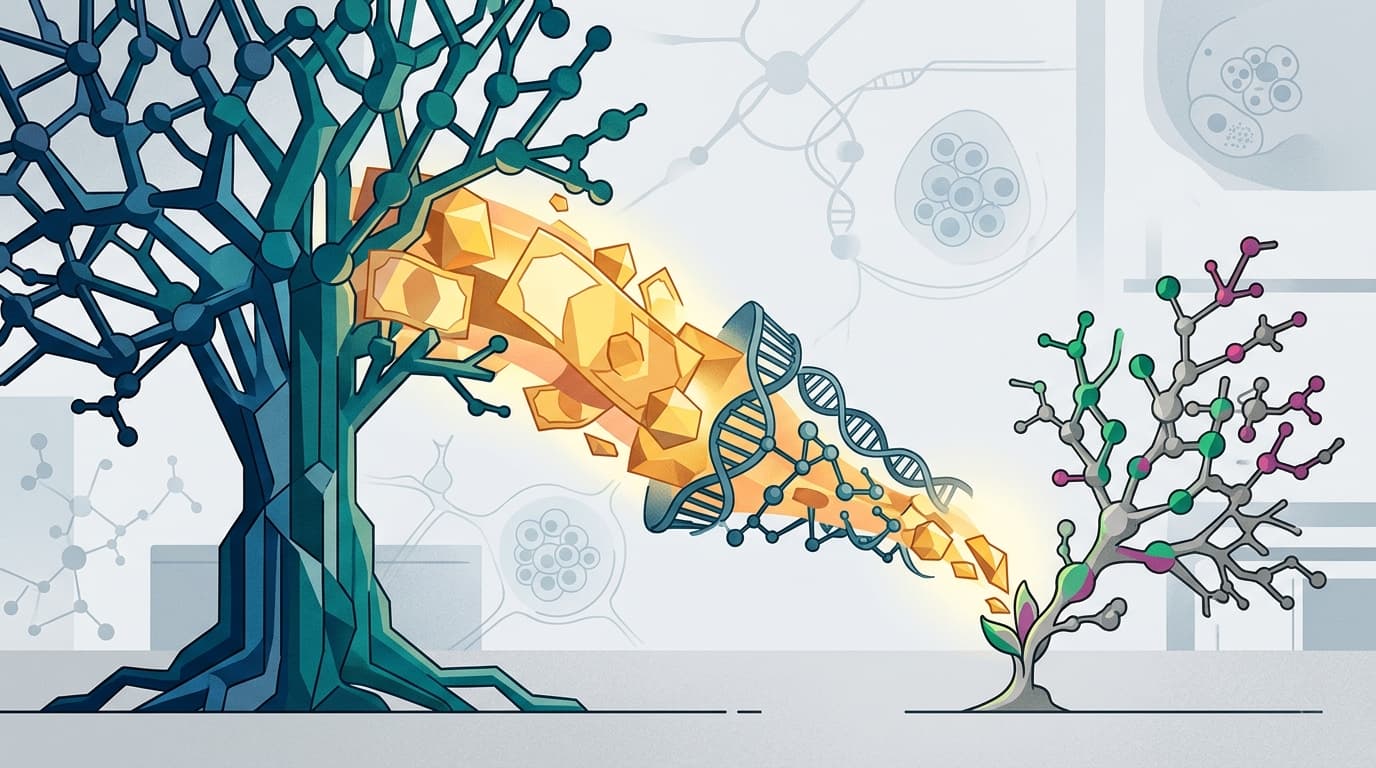
IASO206 sidesteps all of it. The drug uses a lentiviral vector (think of it as a microscopic delivery truck) that, once injected into the bloodstream, seeks out T cells and reprograms them on the spot. The viral vector inserts new genetic instructions directly into the T cell's DNA, teaching it to recognize and attack a protein called BCMA that sits on the surface of myeloma cells.
Critically, IASO206 was given without lymphodepleting chemotherapy, the harsh conditioning regimen that current CAR-T therapies require before infusion. Removing that step alone could make the treatment dramatically easier on patients.
The Race to Build CAR-T 2.0
IASO Bio isn't the only company chasing this idea. The in vivo CAR-T space has attracted serious money and serious players, with roughly 38 companies working globally and about 12 already in clinical development.
Umoja Biopharma holds the distinction of having the first FDA-cleared in vivo CAR-T investigational new drug application in the U.S., with its CD19-targeted lentiviral platform already in a Phase 1 trial and carrying an FDA Fast Track designation. Capstan Therapeutics took a different approach, using lipid nanoparticles (the same delivery technology behind mRNA COVID vaccines) to deliver temporary CAR instructions for autoimmune disease; AbbVie was impressed enough to acquire them in 2025 for up to $2.1 billion. And Interius BioTherapeutics, which developed a lentiviral platform, was snapped up by Kite/Gilead for $350 million.
Those acquisition prices tell you something important. Big pharma isn't just curious about in vivo CAR-T. They're writing billion-dollar checks on the belief that it works.
What Could Go Wrong
Plenty, honestly. The lentiviral vector approach integrates new genetic material into T cell DNA permanently. That's a feature when it works (durable CAR expression), but it also means long-term safety monitoring is essential. Can you control which cells get transduced? What happens if non-T cells pick up the cargo? How consistent is the CAR-T generation from patient to patient?
Then there's the durability question. Ten patients with limited follow-up can't tell us whether these responses last months or years. Current ex vivo CAR-T products have shown that initial responses don't always hold; some patients relapse as their CAR-T cells lose steam over time.
And while IASO206's early safety profile was described as "overall manageable," we simply don't have enough data yet to know the full risk picture. The history of cell therapy is littered with treatments that looked promising in small trials and then revealed unexpected toxicities at scale.
The Bigger Picture
IASO Bio itself is a company worth watching beyond this single readout. Founded in 2017, the company has raised over $243 million and built a pipeline of more than ten products spanning hematologic cancers and autoimmune diseases. Their approved product, equecabtagene autoleucel (branded as FUCASO), is a conventional BCMA CAR-T therapy already on the market. And they're not stopping at myeloma for in vivo delivery: IASO208, a CD20-targeted in vivo CAR-T, received FDA IND clearance in 2026, signaling the platform has applications well beyond a single target.
The company also recently acquired MediSix Therapeutics in Singapore and maintains partnerships with organizations including Instituto Butantan, suggesting an ambition that extends far beyond China's borders.
So What Does This Mean for Patients?
Imagine a future where getting CAR-T therapy is as simple as getting a flu shot (okay, a really important flu shot). No blood draws shipped across the country. No weeks spent waiting in limbo while a factory builds your personalized treatment. No brutal chemotherapy just to prepare your body to receive the cells. You walk in, get an infusion, walk out, and let your body do the manufacturing.
We're not there yet. These are ten patients in an early trial. But the data from IASO206 represent something the field has been waiting for: real clinical evidence that in vivo CAR-T generation actually works in humans. If larger studies confirm what this small trial suggests, the entire economics and logistics of cell therapy could be rewritten.
The custom suit might be going off-the-rack. And for the hundreds of thousands of cancer patients who can't access or afford today's CAR-T therapies, that would change everything.
Deals & M&A4 min read
Novo Nordisk Really Wants You to Swallow a $1.4B Pill
Novo Nordisk just dropped $1.4 billion on a macrocycle startup days after another billion-dollar delivery deal. The injection giant is betting its future on pills, and the reason has everything to do with Eli Lilly.