A Plant Factory Just Sent an AI-Designed Obesity Drug to the Clinic
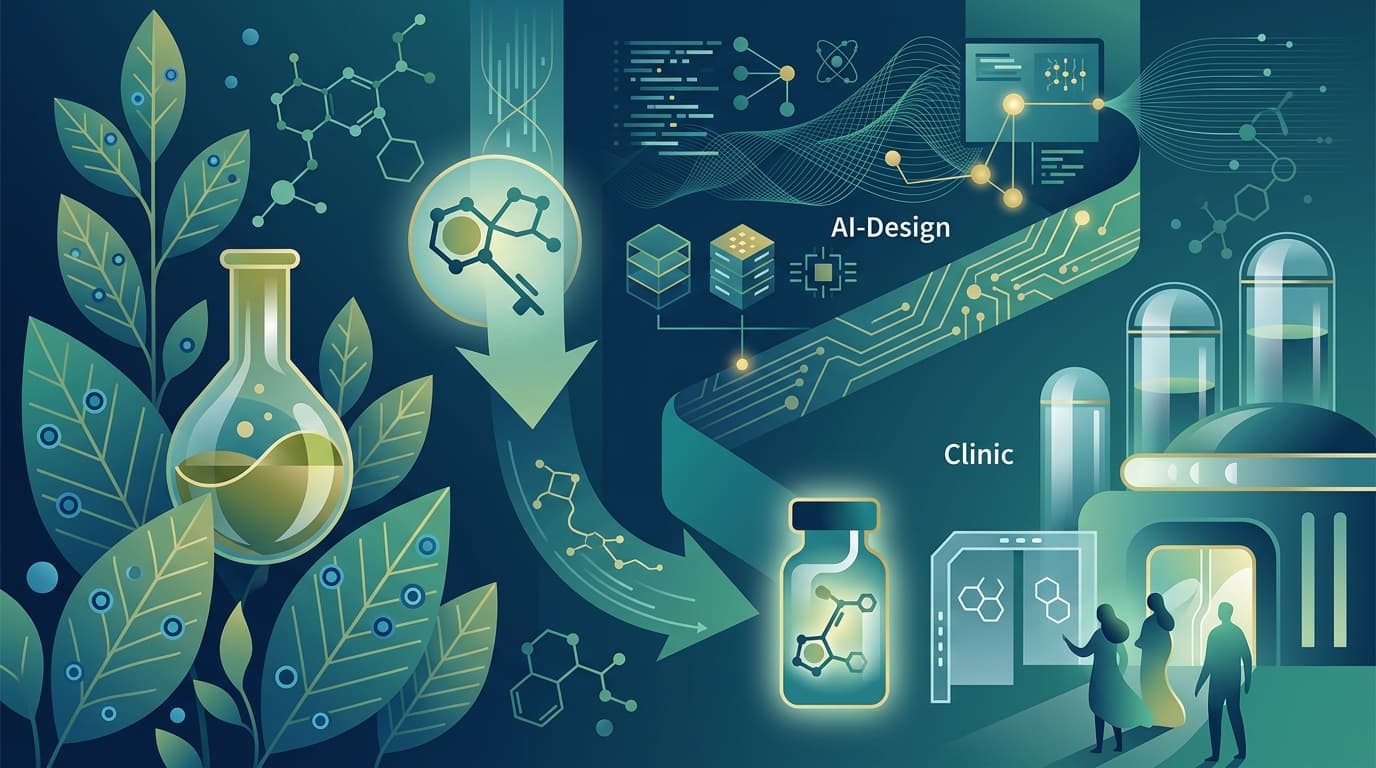
iBio, a company that used to grow antibodies in tobacco plants, just dosed the first patient with an AI-designed obesity drug that took only seven months to discover. It's a wild pivot into the most competitive drug market on Earth.
From Greenhouses to Algorithms
Five years ago, iBio was a plant-based biologics manufacturer. Think: growing antibodies inside tobacco plants in a giant greenhouse. It was niche, it was interesting, and it wasn't exactly lighting Wall Street on fire.
Now the company just dosed the first patient in a Phase 1 clinical trial for IBIO-600, an AI-designed obesity drug. That's one of the more dramatic corporate reinventions you'll see in biotech, and it puts a real, human-tested proof point behind the increasingly crowded intersection of artificial intelligence and weight loss.
The first participant received the drug on June 2, 2026, at a trial site in Australia. And while dosing a single patient in a 32-person Phase 1 study might not sound like front-page news, the backstory makes it worth paying attention to.
The Seven-Month Molecule
IBIO-600 is a long-acting monoclonal antibody (a lab-made protein designed to bind a specific target in your body) that blocks two molecules called myostatin and GDF11. Both of those act like brakes on muscle growth. Remove the brakes, and the idea is that your body holds onto lean muscle mass even while you're losing weight.
That matters because today's blockbuster GLP-1 drugs, like semaglutide (Ozempic/Wegovy) and tirzepatide (Mounjaro/Zepbound), have a dirty little secret: they don't just melt fat. They also chew through muscle. Studies have shown that up to a third of the weight people lose on GLP-1s can be lean mass, which creates real concerns about long-term metabolic health and physical function.
iBio wants IBIO-600 to be the muscle bodyguard. Take your GLP-1 for appetite control; take IBIO-600 so you keep the muscle. In preclinical testing with obese primates, a single dose produced lean mass gains of up to 5.1% while simultaneously reducing fat. The drug's half-life clocked in at roughly 40 to 52 days, which means very infrequent dosing.
Perhaps most impressively, iBio says its AI platform went from antibody discovery to development candidate in about . Traditional drug discovery typically takes three to five years to reach that same milestone.
Get tomorrow's biotech intelligence before your competitors.
Join thousands of biotech professionals who start their day with our free, daily briefing.
seven months
Why AI Matters Here (and Why It Might Not)
iBio's platform uses generative AI to design 3D models of the exact spot on a target protein where an antibody should bind. Think of it like a locksmith who uses software to design the perfect key before ever touching metal. The AI creates synthetic "baits" that steer the antibody discovery process toward molecules with the right binding properties, stability, and manufacturability.
The company acquired this technology in September 2022 when it bought the assets of a startup called RubrYc Therapeutics. It spent roughly a year and a half integrating the AI with traditional wet-lab validation before pivoting its entire corporate identity toward obesity in early 2024.
That pivot included selling off a preclinical cancer asset to Otsuka ($1 million upfront, up to $52.5 million in milestones) and inking a collaboration with AstralBio to co-develop antibodies for obesity and cardiometabolic conditions. The message was clear: we're an obesity company now.
The broader AI-drug-discovery space provides some context for optimism, and some for caution. Across the industry, roughly 173 AI-discovered programs are now in clinical development. Phase 1 success rates for AI-designed molecules hover around 80 to 90%, compared with about 52% for traditionally discovered drugs. That sounds incredible, but there's a catch: no AI-originated drug has received full regulatory approval yet. And Phase 2 success rates (around 40%) look similar to traditional programs. The real test still lies ahead.
The Obesity Arena Is a Mosh Pit
IBIO-600 isn't entering a quiet market. It's entering one of the most competitive therapeutic spaces in the history of drug development.
By early 2026, analysts counted more than 120 clinical-stage obesity programs in development. Novo Nordisk is pushing CagriSema and amycretin beyond semaglutide. Eli Lilly has orforglipron, an oral GLP-1, alongside tirzepatide expansion. Amgen is betting on monthly dosing with maridebart cafraglutide. Viking Therapeutics is advancing VK2735 through late-stage trials.
The competitive playbook has evolved, too. Raw weight-loss numbers are no longer enough to stand out. Companies are differentiating on oral delivery, less frequent injections, combination biology, and increasingly, muscle preservation. That last category is exactly where iBio is trying to plant its flag.
The strategic logic isn't bad. If GLP-1s become the backbone of obesity treatment (and they probably will), then a complementary therapy that solves their biggest weakness has a natural market. It's the phone case to the iPhone: you don't replace the main product, you make it better.
What the Market Thinks
Wall Street's reaction has been positive but measured. iBio shares were trading around $1.65 to $1.67 after the announcement, up roughly 5% on the day. Not a blowout, but not indifference either.
Raymond James initiated coverage with an Outperform rating and a $5 price target, calling the obesity pipeline an attractive risk-reward setup. Consensus analyst targets cluster around $4.50 to $5.53, with an overall Buy-leaning tilt. That implies significant upside from current levels, but it also reflects the inherent uncertainty of a Phase 1 asset in a company that was making plant-based proteins three years ago.
The Road From Here
The Phase 1 trial is a randomized, double-blind, placebo-controlled study testing single ascending doses in about 32 overweight or obese adults. Participants will be monitored for roughly nine months after dosing. The primary goal is safety and tolerability, with secondary objectives around how the drug behaves in the body. Full study completion is estimated around May 2027.
Behind IBIO-600, the company has a second obesity candidate called IBIO-610, which targets a different molecule (Activin E) involved in fat metabolism. That one is slated for first-in-human trials in early 2027. Across its full pipeline, iBio now counts 11 active programs discovered through its AI platform: five in obesity and cardiometabolic disease, six in cancer.
The Bottom Line
iBio's story is part corporate reinvention, part AI proof-of-concept, and part smart strategic positioning in the hottest therapeutic market on the planet. The company identified that GLP-1s have a muscle problem, built an AI-designed antibody to address it, and got to the clinic in about two years.
That's genuinely fast, and the science is plausible. But Phase 1 in 32 patients is still very early innings. The drug needs to be safe, it needs to show pharmacological activity in humans, and eventually it needs to prove that it actually preserves muscle in people losing weight on GLP-1s. Each of those steps filters out the majority of candidates that attempt them.
For now, iBio has earned the right to be taken seriously. Whether it earns the right to be taken as a winner is a question only the data can answer.
4 min read
Lantheus Had the Data. The Factory Broke the Dream.
Lantheus' cancer imaging agent had flawless clinical data and a clean safety profile. The FDA rejected it anyway, and the reason has nothing to do with science. It's a cautionary tale about the hidden risk that keeps torpedoing biotech approvals.