Researchers found that toxic sugars made by gut bacteria can trigger ALS and frontotemporal dementia by sparking immune attacks on the brain. The discovery could explain why some people with high-risk genes never get sick, and clinical trials targeting this gut-brain pathway could begin within a year.
Think about every time someone told you "trust your gut." Turns out, your gut might not always deserve that trust. Especially if its resident bacteria are quietly producing sugars that destroy your brain.
A team at Case Western Reserve University just dropped a paper in Cell Reports that rewrites a big chunk of what we know about ALS (amyotrophic lateral sclerosis, the disease that slowly paralyzes you) and frontotemporal dementia (FTD, a brutal form of early-onset cognitive decline). The culprit behind these diseases isn't just bad genes. It's bad gut bacteria making bad sugar.
And that changes everything about how we might treat them.
The Mystery That's Haunted ALS Researchers for Decades
The most common genetic cause of ALS and FTD is a mutation in a gene called C9orf72. If you carry this mutation, you're supposed to be at high risk for developing one or both of these devastating diseases.
But here's what's always bugged scientists: not everyone with the mutation actually gets sick. Some carriers live full, healthy lives. Others deteriorate rapidly. Same gene, wildly different outcomes. It's like having two people with the same lottery ticket, but only one of them wins (or in this case, loses).
For years, researchers assumed some unknown environmental factor was flipping the switch. They just couldn't find it.
Now they have.
The Sugar Your Gut Makes That Your Brain Can't Handle
Aaron Burberry, an assistant professor of pathology at Case Western Reserve, led a team that zeroed in on an unlikely suspect: glycogen. Not the normal glycogen your muscles store for energy. This is a twisted, inflammatory version of glycogen produced by certain gut bacteria.
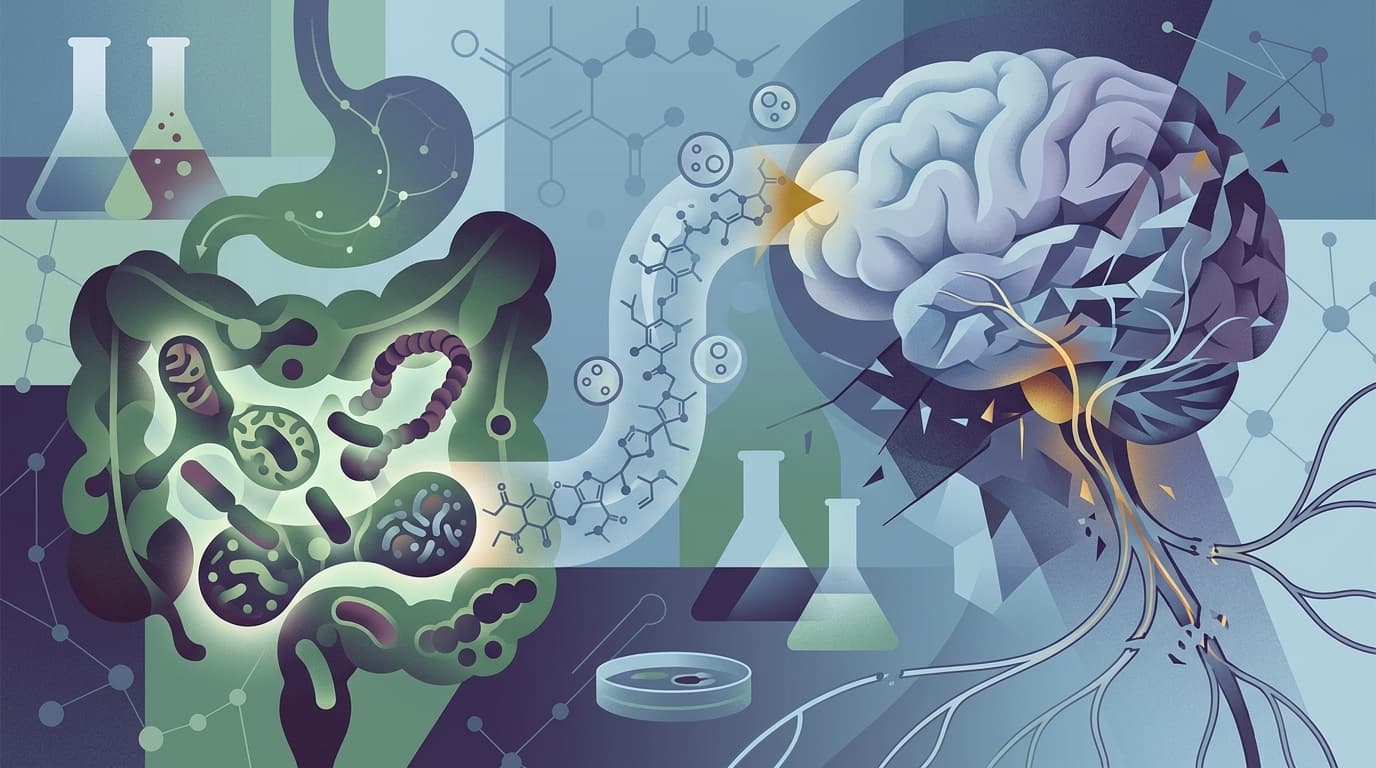
These bacterial sugars don't just sit quietly in your intestines. They leak into the bloodstream and trigger a ferocious immune response. Your immune system, now on high alert, starts attacking your own brain cells. It's friendly fire on the most important organ you've got.
"We found that harmful gut bacteria produce inflammatory forms of glycogen… that trigger immune responses that damage the brain," Burberry said.
Get tomorrow's biotech intelligence before your competitors.
Join thousands of biotech professionals who start their day with our free, daily briefing.
Think of it like a smoke alarm that won't stop going off. The alarm itself (your immune system) isn't broken; it's responding to real smoke (bacterial glycogen). But instead of putting out a small kitchen fire, it burns down the whole house.
The Numbers Tell the Story
The team studied 23 ALS/FTD patients and compared them to healthy controls. The results were stark: 70% of patients had elevated levels of these harmful bacterial sugars. Among healthy people? Only about a third showed similar levels.
That's a massive gap. It suggests these sugars aren't just correlated with disease; they're likely a key trigger, especially in people already carrying the C9orf72 mutation. The genetic predisposition loads the gun. The gut bacteria pull the trigger.
Alex Rodriguez-Palacios, an assistant professor at Case Western's Digestive Health Research Institute and a key collaborator on the study, highlighted something even more exciting. When they reduced these harmful sugars in experimental models, brain health improved and lifespans got longer.
Let that sink in. Removing a sugar made by gut bacteria extended life in models of a disease we currently have almost no good treatments for.
Why This Is a Bigger Deal Than It Sounds
Let's put ALS treatment in context, because the landscape is bleak.
Right now, the disease affects roughly 30,000 Americans at any given time, and the approved drugs (Riluzole, Radicava, and a gene-targeted therapy called Qalsody for a tiny subset) offer only modest benefits. Riluzole extends survival by a few months. Radicava slows functional decline slightly. Qalsody works only for patients with a specific SOD1 mutation, which accounts for about 2% of cases.
The pipeline is growing, with more than 20 drugs in clinical trials spanning gene therapies, immunomodulators, and neuroprotectants. Companies like Zydus Lifesciences, Coya Therapeutics, and BrainStorm Cell Therapeutics all have candidates moving forward. But most target downstream effects of the disease, not the upstream trigger.
This gut bacteria discovery is different. It points to a root cause that's potentially modifiable. You can't (yet) edit someone's C9orf72 mutation out of existence easily. But you might be able to change what their gut bacteria are doing.
The Gut-Brain Axis: From Fringe Theory to Front Page
Five years ago, suggesting that gut bacteria could cause a neurodegenerative disease would've gotten you some sideways glances at a neurology conference. The gut-brain axis was real, sure, but mostly discussed in the context of mood, anxiety, and maybe irritable bowel syndrome.
That's changed dramatically. Earlier work from Harvard's Stem Cell Institute showed that mice carrying the same ALS-causing mutation developed wildly different disease severity depending on which lab they lived in. The difference? Their gut bacteria. Antibiotics and fecal transplants could actually alter disease outcomes in these genetically identical animals.
The Case Western study builds on that foundation by identifying the specific mechanism: inflammatory glycogen produced by gut microbes, traveling through the bloodstream, sparking an immune attack on the brain. It's no longer a vague "gut feelings affect brain health" story. It's a concrete molecular pathway.
What Comes Next (and Why It Could Move Fast)
This isn't just an academic curiosity. The researchers are already talking about clinical trials targeting glycogen degradation within the next year. That's an unusually aggressive timeline for translating basic science into patient studies, and it reflects how actionable these findings are.
The therapeutic implications branch in several directions. First, there's the diagnostic angle: measuring bacterial glycogen levels could become a biomarker to identify which C9orf72 carriers are most at risk. Instead of waiting for symptoms to appear (by which point significant brain damage has already occurred), doctors could flag high-risk patients early.
Second, there are the interventions themselves. These could range from targeted antibiotics or probiotics that reshape the gut microbiome, to enzymes that break down the harmful glycogen before it triggers immune havoc. Some early clinical work on fecal microbiota transplants (essentially giving patients a healthy person's gut bacteria) has shown mixed but intriguing results. One Italian case study reported halted ALS progression after treatment. A larger randomized trial was less conclusive, but the field is still figuring out the right approach.
The Case Western findings give all of these efforts a sharper target. Instead of broadly trying to "fix" the microbiome (which is like trying to tune a radio by randomly turning every knob), researchers can now focus specifically on reducing inflammatory glycogen production.
The Counterintuitive Takeaway
We've spent decades thinking about neurodegenerative diseases as brain problems. ALS destroys motor neurons. FTD ravages the frontal and temporal lobes. The action happens upstairs, so that's where we've focused our treatments.
This research says: look downstairs. The gut, that unglamorous tube processing your lunch, might hold the key to diseases we've barely been able to slow down. It's like discovering that the reason your car engine keeps failing isn't the engine at all; it's contaminated fuel coming from the gas station down the street.
For the roughly 90–95% of ALS cases classified as sporadic (meaning no family history), the gut-brain axis connection opens even more questions. If bacterial sugars can trigger disease in genetically predisposed people, could they also play a role in cases with no obvious genetic cause? The researchers plan larger microbiome surveys to find out.
Bottom Line
ALS and FTD remain devastating diseases with painfully few treatment options. But this study offers something the field desperately needs: a new, modifiable target. Not a gene you can't easily change. Not a protein you can't easily reach. A sugar made by bacteria in a part of the body we can actually access and influence.
Clinical trials could begin within a year. If the results hold, we might look back at this Cell Reports paper as the moment the fight against ALS shifted from the brain to the belly.
Your gut has been talking to your brain this whole time. We're only just starting to understand what it's been saying.
4 min read
The CAR-T Startup Betting $110M It Can Crack Liver Cancer
A Shanghai biotech just raised $110 million to chase what nobody has achieved: a CAR-T therapy that actually works against solid tumors. Oricell Therapeutics is betting it can crack liver cancer and IPO on the other side.