
GSK just dropped $55 million (with up to $1 billion on the table) to license a Chinese biotech's RNA drug that targets belly fat while preserving muscle. It's the latest sign that the obesity drug race is about to get way more interesting than GLP-1s.
Forget everything you know about the obesity drug race. While the world obsesses over GLP-1 injections like semaglutide, GSK just quietly placed a billion-dollar bet on a completely different approach: using tiny strands of RNA to silence a gene linked to belly fat.
The British pharma giant signed a licensing deal with SiranBio, a Chinese biotech barely three years old, for a Phase 1 drug called SA030. The price tag: $55 million upfront, with up to $1 billion in total if milestones hit. That's $945 million in future payments tied to development, regulatory approvals, and commercial success.
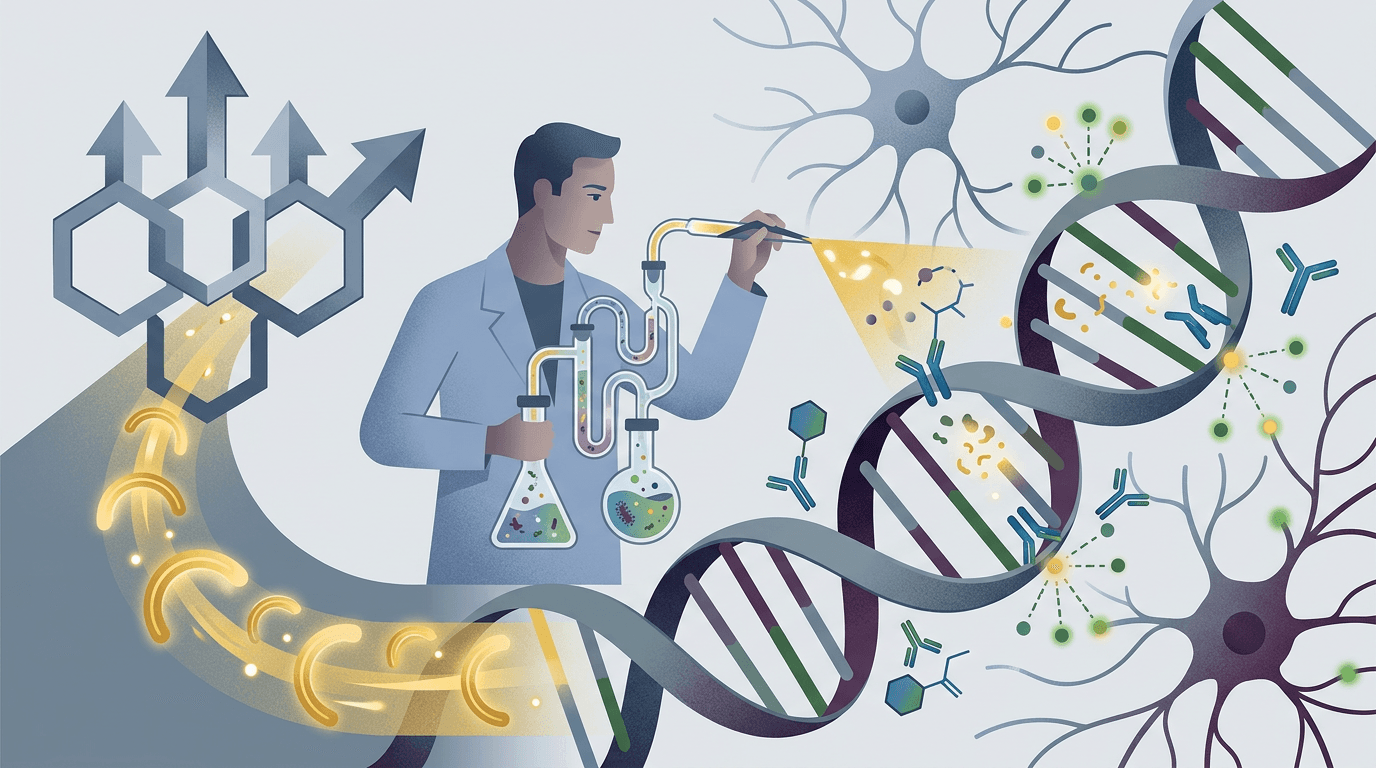
The drug targets something called ALK7 (activin receptor-like kinase 7), a protein that plays a role in how your body stores and burns fat. The pitch is tantalizing: reduce abdominal fat while preserving lean muscle mass. If you've followed the GLP-1 conversation, you know that muscle loss is one of the biggest complaints patients have about drugs like Ozempic. SA030 is designed to solve that problem from the ground up.
SiranBio was founded in May 2022 in Suzhou, China. It specializes in siRNA drugs, which stands for "small interfering RNA." Think of siRNA like a molecular sniper: you design a tiny piece of genetic code that matches a specific gene's messenger RNA, inject it into the body, and it silences that gene before it can make its protein. No protein, no downstream effect.
The company has built proprietary platforms for designing these molecular snipers, including one called eSAFE (for reducing off-target effects) and another called STORK (for delivering the drug to the right tissues). Their pipeline spans hepatitis B, cardiovascular disease, and metabolic conditions.
SA030 is currently in a Phase 1 trial in Australia, testing safety and how the drug moves through the body in overweight and obese patients. SiranBio filed for the Australian trial in January 2026. The plan: SiranBio finishes Phase 1, then hands the drug to GSK for global development. GSK gets rights everywhere outside Greater China.

The FDA is letting Amgen and AstraZeneca share live clinical trial data with regulators as patients enroll, not after trials end. It could cut drug development timelines by 20-40%, and it's the biggest change to how trials work in six decades.


Join thousands of biotech professionals who start their day with our free, daily briefing.
This isn't GSK's first rodeo with oligonucleotides (the broader family of RNA-based drugs that includes siRNA). In recent months, they've signed a similar deal with Frontier Biotechnologies: $40 million upfront, up to $1 billion total, for two siRNA drugs targeting inflammatory kidney diseases. They also struck a deal with Empirico worth roughly $745 million for an siRNA targeting COPD.
See the pattern? GSK is building an entire RNA medicine pipeline through licensing deals, picking off promising early-stage assets from smaller biotechs and paying the big bucks only if they work.
The strategy makes sense when you zoom out. GSK's CEO Luke Miels has set a target of £40 billion in annual revenue by 2031. To get there, the company needs growth engines beyond vaccines and HIV. Metabolic disease, with its massive patient populations and chronic dosing, fits the bill perfectly.
Earlier in 2026, GSK also acquired 35Pharma for $950 million, gaining a clinical-stage drug called HS235 that inhibits activin receptor signaling (sound familiar?). That drug showed early evidence of fat loss and lean mass preservation in pulmonary hypertension patients. The SiranBio deal doubles down on the same biological thesis: target the activin pathway, lose fat, keep muscle.
For years, oligonucleotide therapeutics were a niche play. Alnylam pioneered the field with drugs for rare genetic diseases. Ionis built an empire in antisense technology. But metabolic disease? That was considered too big, too competitive, too risky for RNA drugs.
That calculus is changing fast. The key innovation is GalNAc conjugation, a delivery technology that sends RNA drugs straight to liver cells with remarkable efficiency. It enabled subcutaneous dosing as infrequent as once every six months (as proven by Novartis's cholesterol drug Leqvio).
Now consider: the liver expresses roughly 14,000 genes, and fewer than 1% have been targeted by siRNA drugs. The untapped opportunity is enormous. Companies like Alnylam are pushing ANGPTL3-targeting siRNAs into Phase 3 for dyslipidemia. Arrowhead has programs for liver fat reduction.
But here's what makes the SiranBio deal interesting: SA030 isn't just another liver-targeted lipid drug. By going after ALK7, it's attempting something mechanistically distinct from the cholesterol and triglyceride plays that dominate the RNA therapeutics pipeline. It's aiming at body composition itself.
Let's be honest about the math. SA030 is in Phase 1. The drug hasn't proven it works in humans yet; it's still being tested for basic safety. The vast majority of Phase 1 drugs never make it to market. GSK is paying $55 million for the privilege of finding out.
That said, the deal structure limits GSK's downside nicely. The $945 million in milestones only gets paid if SA030 hits specific development and commercial targets. If the drug fails in Phase 2, GSK loses $55 million and walks away. That's couch-cushion money for a company with GSK's balance sheet.
The upside scenario, though? A best-in-class obesity drug that preserves muscle, dosed subcutaneously a few times per year, with no GLP-1 side effects (nausea, muscle wasting, the "Ozempic face"). In a market projected to be worth hundreds of billions, even a niche slice would justify the billion-dollar price tag many times over.
The SiranBio deal signals something important: the next generation of obesity drugs won't all look like GLP-1s. Big pharma is hedging its bets across multiple mechanisms, from activin inhibitors to RNA interference. The companies that win won't just help patients lose weight; they'll help patients lose the right weight.
GSK is placing its chips on a world where your doctor prescribes an RNA injection that tells your belly fat genes to shut up, while leaving your biceps alone. It's a bold vision. Whether SA030 delivers on that promise is years away from being answered.
But at $55 million to find out? That's a bet worth making.
Madrigal Pharmaceuticals just paid up to $1 billion for a gene-silencing drug to pair with its blockbuster MASH therapy Rezdiffra. It's the third major deal in a year as the company races to build an unbeatable liver disease franchise before Novo Nordisk and others crash the party.