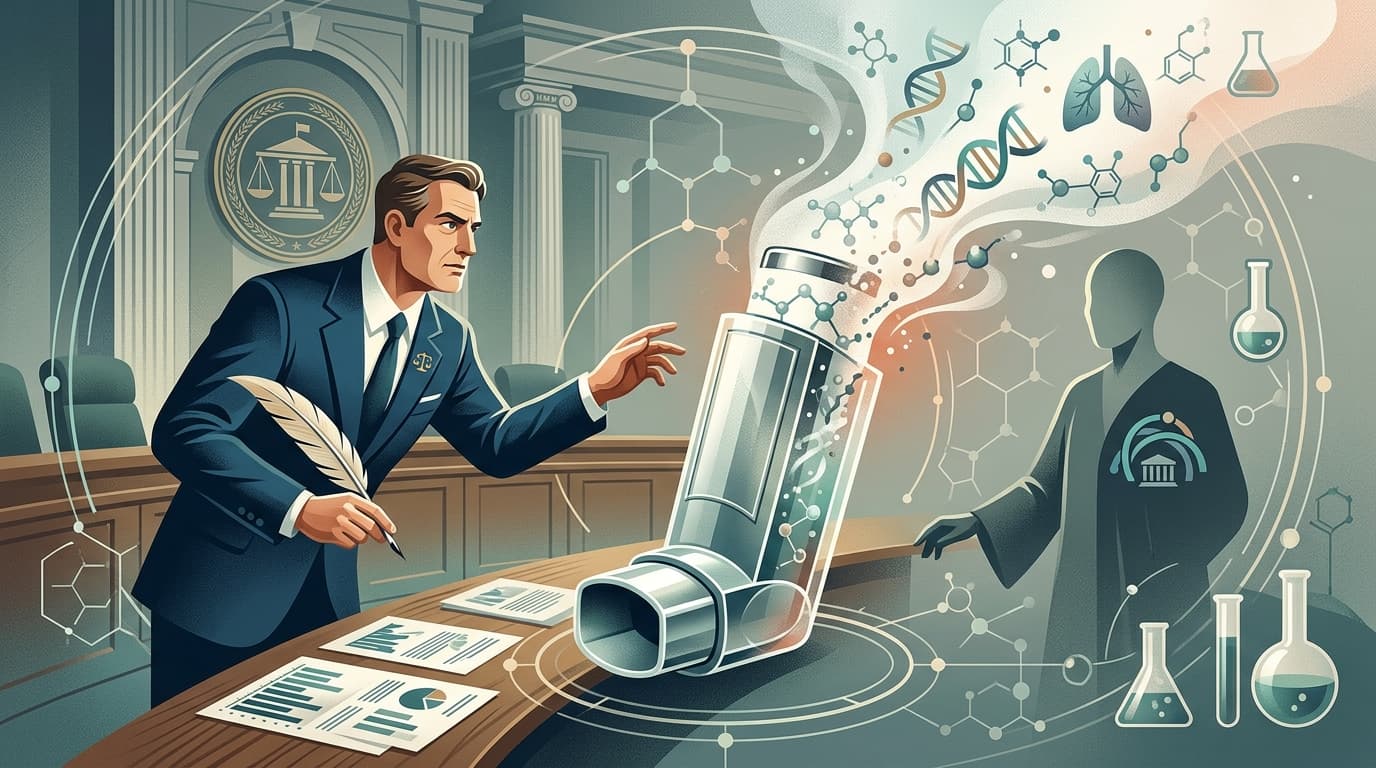

A senator says GSK pulled a vanishing act with one of America's most common asthma inhalers, swapping the brand name for a copycat to dodge Medicaid penalties. Nearly 5 million kids got caught in the middle, and Congress wants answers.
Imagine your kid's asthma inhaler just… disappeared from pharmacy shelves. Not because it stopped working. Not because something better replaced it. But because the company that made it found a more profitable way to sell you essentially the same thing.
That's the accusation Senator Maggie Hassan (D-NH) is leveling at GlaxoSmithKline, and the story behind it reads like a masterclass in pharmaceutical gamesmanship.
Flovent was one of the most widely used asthma inhalers in the United States for decades. Then, on January 1, 2024, GSK pulled the branded version off the market entirely.
The company didn't leave patients with nothing; it replaced Flovent with an "authorized generic." Think of an authorized generic like a restaurant rebranding its signature burger under a different name. Same kitchen, same recipe, same chef. The only thing that changed was the label. GSK manufactured it; a company called Prasco Laboratories distributed it.
Sounds harmless, right? Senator Hassan says it was anything but.
Here's where it gets interesting. Under Medicaid rules, drug companies owe the government rebates when they raise prices faster than inflation. GSK had been hiking Flovent's price for years, which meant those rebate penalties were piling up. By discontinuing the branded product and shifting everyone to the authorized generic, GSK could effectively reset the clock on those obligations.
It's like racking up a huge credit card bill, then canceling the card and opening a new one to dodge the interest. The debt doesn't go away for patients; it just stops being GSK's problem.
Hassan's two-year investigation found this wasn't an accident. It was a strategy, one she says was designed to "block competitors and increase prices on a life-saving asthma inhaler to unconscionable levels."
The real cost wasn't measured in dollars. It was measured in emergency room visits.
When GSK pulled the branded Flovent, the transition created chaos. Insurance companies scrambled to update their formularies (the lists of drugs they cover). Some patients found the authorized generic on a higher copay tier, meaning they paid more out of pocket. Others were forced to switch medications entirely, right in the middle of winter respiratory season.

J&J just got FDA approval for the first oral pill that rivals injectable biologics in clearing psoriasis. ICOTYDE beat the only other oral option head-to-head, and it's gunning for three more diseases next.


Join thousands of biotech professionals who start their day with our free, daily briefing.

Hassan's report paints a grim picture: worse asthma symptoms, more ER visits, more hospitalizations, and in some cases, the senator alleges, preventable deaths. All while GSK maintained what her investigation calls a monopoly on the product, since no independent generic competitor existed at the time.
The authorized generic was cheaper at wholesale than the branded version, but that discount often didn't reach families at the pharmacy counter. Insurance hurdles turned a theoretical price cut into a practical headache.
This is the part that really frustrated Hassan. Authorized generics aren't the same as true generics. A true generic is made by a completely independent company that proves its product works identically to the original through rigorous FDA testing. When true generics hit the market, they create real competition that drives prices down.
But here's the catch: when GSK discontinued Flovent in early 2024, no true generic existed. The authorized generic was the only option. GSK had effectively replaced its own product with its own product, kept competitors off the field, and called it a day.
Research on authorized generics broadly shows they cut revenues for independent generic competitors by 40 to 52 percent during the crucial first 180 days of market entry. That makes it harder for independent manufacturers to justify the investment of developing a competing product in the first place. It's a strategy that looks pro-consumer on the surface but can actually chill competition underneath.
The good news: pressure worked. On March 4, 2026, the FDA approved the first true generic version of Flovent HFA (the 44 mcg dose) from Glenmark Specialty SA. This is an independently manufactured alternative that went through the full abbreviated approval process, and it comes with 180 days of market exclusivity to establish itself.
The timing is notable. Hassan's report dropped right around the same time, and she took credit for pressuring GSK into abandoning its monopoly position. Whether GSK voluntarily stepped aside or simply ran out of runway is debatable, but the result is the same: families now have a genuinely independent, lower-cost option.
"Congress must act to close the loopholes that GSK exploited," Hassan said in her report.
Flovent isn't the only drug where this playbook could work. The authorized generic strategy is perfectly legal, widely used, and (until now) largely invisible to the public. What Hassan is really targeting isn't one company's behavior; it's the structural loophole that made it possible.
Senator Elizabeth Warren separately pushed for an HHS investigation into GSK's Flovent withdrawal back in March 2025, signaling this isn't a one-senator crusade. Bipartisan interest in pharmaceutical pricing reform has been building for years, and Flovent just handed reformers a vivid, sympathetic case study: millions of kids with asthma, a vanishing inhaler, and a company that (critics say) prioritized its balance sheet over its patients.
The pharmaceutical industry will be watching closely. If Congress moves to close the Medicaid rebate loophole that enabled GSK's strategy, it could reshape how every major drugmaker plans its brand-to-generic transitions. Companies that have relied on authorized generics as a soft landing for aging blockbusters might suddenly find that parachute has a few holes in it.
For now, the FDA's approval of Glenmark's true generic is a concrete win for patients. But the bigger battle, the one over whether the system that allowed this to happen gets fixed, is just getting started.
Aldeyra Therapeutics just received its third FDA rejection for dry eye drug reproxalap, with regulators once again citing inconsistent efficacy data. The stock plunged over 70%, and Wall Street is running out of patience for a drug that keeps failing the same test.