
GSK's partner Hansoh just delivered the first-ever Phase 3 survival win for a B7-H3 antibody-drug conjugate in small-cell lung cancer. In one of oncology's most competitive target races, being first to prove patients live longer is a powerful opening move.
For years, the oncology world has been buzzing about a protein called B7-H3. It sits on the surface of cancer cells like a neon sign, practically begging drug developers to target it. Dozens of companies have tried. None had proven their drug could actually help patients live longer.
Until now.
GSK's partner Hansoh Pharma just dropped results from the ARTEMIS-008 trial, a Phase 3 study testing risvutatug rezetecan (try saying that three times fast) against topotecan in patients with advanced or relapsed small-cell lung cancer. The drug hit its primary endpoint: overall survival. Patients on the B7-H3-targeting ADC lived significantly longer than those on the standard treatment.
That might sound routine. It's not. Overall survival is the gold standard in cancer trials. It's the difference between "your tumor shrank on a scan" and "you're actually alive longer." Many drugs clear the first bar but stumble at the second. Risvutatug rezetecan cleared both.
The kicker? This is the first time any B7-H3-targeted antibody-drug conjugate has won a Phase 3 survival trial in any cancer type, anywhere in the world. First. Ever.
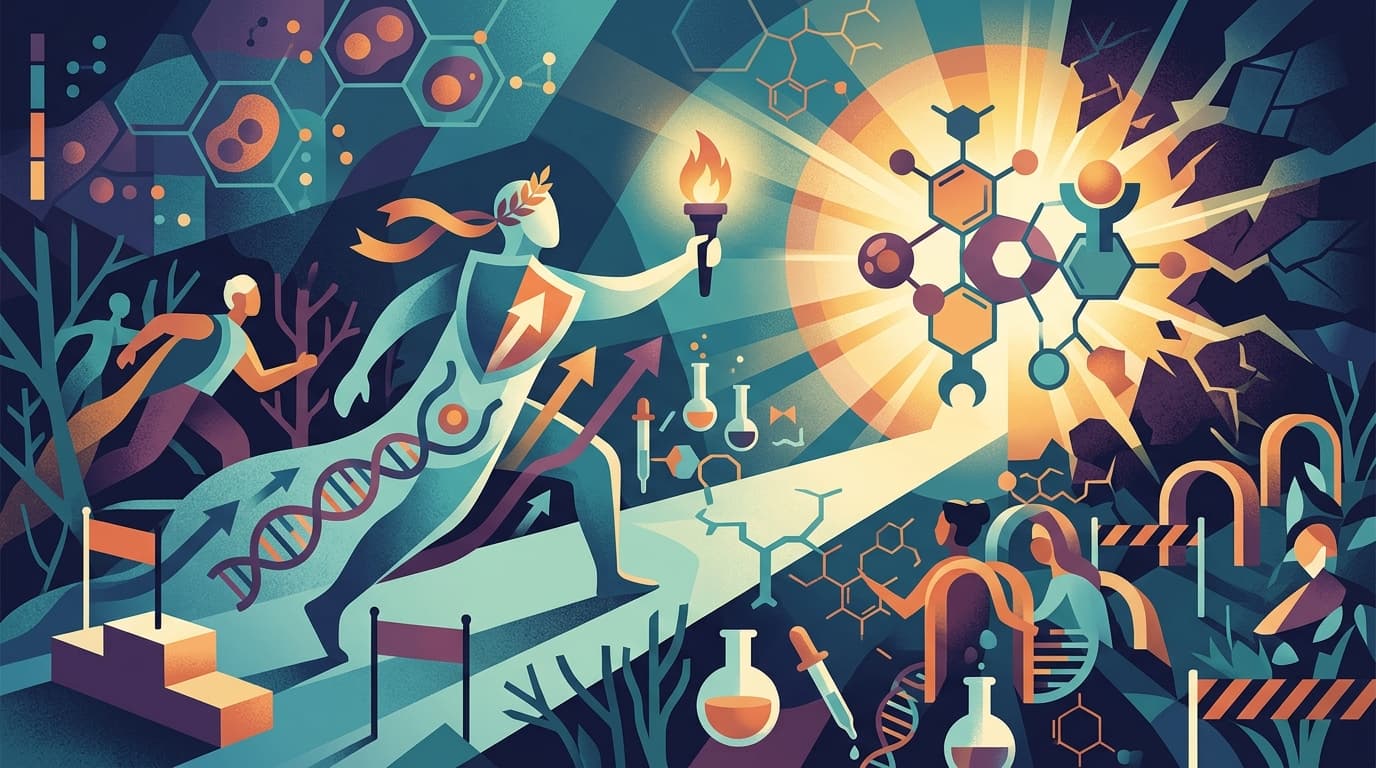
Think of an antibody-drug conjugate as a guided missile. The antibody is the GPS system; it locks onto a specific target on cancer cells. The payload is the warhead: a potent toxin that kills the cell from the inside. The linker holds them together until the missile reaches its destination.
In this case, the GPS locks onto B7-H3 (also called CD276), a protein that cancer cells love to overexpress. It shows up across a wild range of tumors: lung, breast, prostate, bone, brain, ovarian, colorectal, you name it. Critically, normal healthy tissue barely expresses it. That contrast is what makes B7-H3 such a compelling target. The missile hits cancer cells and mostly spares everything else.
Once the drug binds to B7-H3 and gets pulled inside the cancer cell, enzymes clip the linker and release a topoisomerase I inhibitor, a type of chemotherapy that shreds the cell's DNA replication machinery. The cancer cell can't copy itself. It dies.

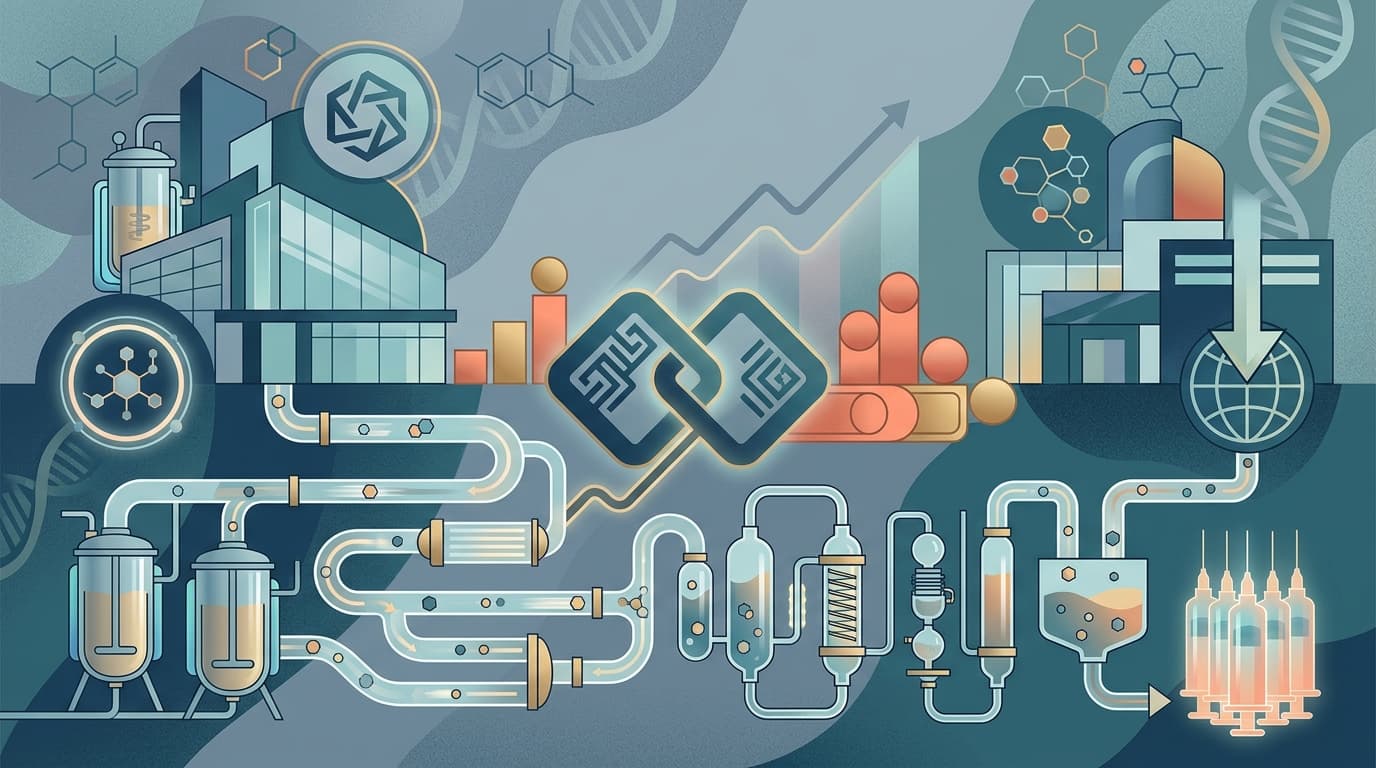
Samsung Biologics just dropped $1.8 billion on a Swiss peptide manufacturer, making the largest pharma M&A in South Korean history. The target: PolyPeptide Group, a company sitting on exactly what the GLP-1 boom desperately needs.


Join thousands of biotech professionals who start their day with our free, daily briefing.
Small-cell lung cancer is one of oncology's cruelest diagnoses. It grows fast, spreads early, and responds to initial chemotherapy only to roar back with a vengeance. Once it relapses, treatment options are grim. Topotecan, the comparator arm in this trial, is a decades-old drug that nobody loves.
So when a new drug beats topotecan on survival in this setting, the bar may seem low. But here's the thing: plenty of drugs have tried and failed to clear even this modest hurdle. The fact that risvutatug rezetecan succeeded tells us something important about B7-H3 as a target. It's not just a lab curiosity. Engaging it changes outcomes.
Earlier Phase 1 data from the ARTEMIS-001 trial had already hinted at this, with encouraging response rates and disease control in over 80% of patients. Those early numbers were enough to earn FDA Orphan Drug Designation for SCLC and EMA PRIME designation for relapsed extensive-stage disease.
GSK licensed the worldwide rights to risvutatug rezetecan (outside China) from Hansoh Pharma in a deal worth over $1.7 billion in total potential value. That's a big check, and GSK is clearly treating this as a franchise play, not a one-off.
Beyond SCLC, GSK is pushing the drug into osteosarcoma (bone cancer), where it has already earned FDA Breakthrough Therapy Designation for patients who've failed at least two prior treatments. In August 2024, risvutatug rezetecan received FDA Breakthrough Therapy Designation for extensive-stage SCLC. And a global Phase 3 trial in relapsed extensive-stage SCLC (called EMBOLD SCLC-301) kicked off in August 2025, with results expected in 2027.
Combination data look promising too. At the AACR 2026 conference, Hansoh presented Phase 1 results pairing the drug with a PD-L1 inhibitor. The combo delivered a 47.1% response rate, disease control in 94.1% of patients, and a median progression-free survival of 14 months. No treatment-related deaths were reported.
GSK isn't alone in chasing B7-H3. The target has become one of oncology's hottest addresses, and the neighborhood is getting packed.
Daiichi Sankyo and Merck are developing ifinatamab deruxtecan (I-DXd), another B7-H3 ADC built on Daiichi's blockbuster deruxtecan platform. It's already in Phase 3 for prostate cancer and has FDA Priority Review in SCLC. Roche partnered with MediLink Therapeutics on YL201, a B7-H3 ADC that earned FDA Breakthrough Therapy Designation for SCLC based on a 63.9% response rate in extensive-stage SCLC from a broader 287-patient phase 1/1b study across solid tumors. China's Qilu Pharma has its own B7-H3 ADC, MHB088C, in Phase 3.
Then there's the second wave. IDEAYA Biosciences just started a Phase 1 trial for a bispecific ADC that targets both B7-H3 and PTK7 simultaneously. Mabwell Bioscience presented data at ASCO 2025 for its entry, 7MW3711. Even GT Biopharma is coming at B7-H3 from a different angle with a trispecific NK cell engager.
The broader ADC market is exploding. Analysts peg it at roughly $15-20 billion in 2026, growing at double-digit rates toward $30 billion or more by the early 2030s. Megadeals keep coming: BioNTech and Bristol Myers Squibb signed a $1.5 billion upfront collaboration in June 2025 for BNT327, a PD-L1 x VEGF-A bispecific antibody; Innovent and Pfizer inked a deal worth up to $10.5 billion covering 12 cancer medicines.
Analysts are cautiously optimistic. The consensus framing: this is a validation event for B7-H3 as a target and for GSK's oncology strategy, but the full payoff depends on global data.
The big caveat? GSK and Hansoh haven't disclosed the actual survival numbers yet. No hazard ratios, no median overall survival figures. That makes it hard for analysts to build precise revenue models. One recent rating on GSK sits at Hold with a £19.50 price target, suggesting the Street sees this as incrementally positive rather than transformational.
The 2027 readout from GSK's global EMBOLD trial will be the real test. ARTEMIS-008 was conducted in China against topotecan; Western regulators and payers will want to see the drug perform in a broader, more diverse patient population against current standards of care.
After HER2 and TROP2, B7-H3 may be the next major ADC target class to enter the mainstream. GSK now owns the first survival win in that class. It's an early lead, not a victory lap. But in a race this competitive, being first to prove your drug keeps people alive longer is a powerful position to hold.
The real question isn't whether B7-H3 works. That debate is effectively over. The question is which company, which drug, and which combinations will define the category. GSK just made its strongest case yet.
Former LifeMD employees allege clinicians had just two minutes per patient to prescribe powerful GLP-1 weight-loss drugs. The STAT News investigation puts Novo Nordisk's entire telehealth strategy under a harsh spotlight.