Samsung Biologics Just Made a $1.8 Billion Bet on Your Ozempic Supply Chain
Samsung Biologics just dropped $1.8 billion on a Swiss peptide manufacturer, making the largest pharma M&A in South Korean history. The target: PolyPeptide Group, a company sitting on exactly what the GLP-1 boom desperately needs.
The world's largest biologics contract manufacturer just decided that making antibodies isn't enough anymore. It wants to make the stuff inside your Ozempic, too.
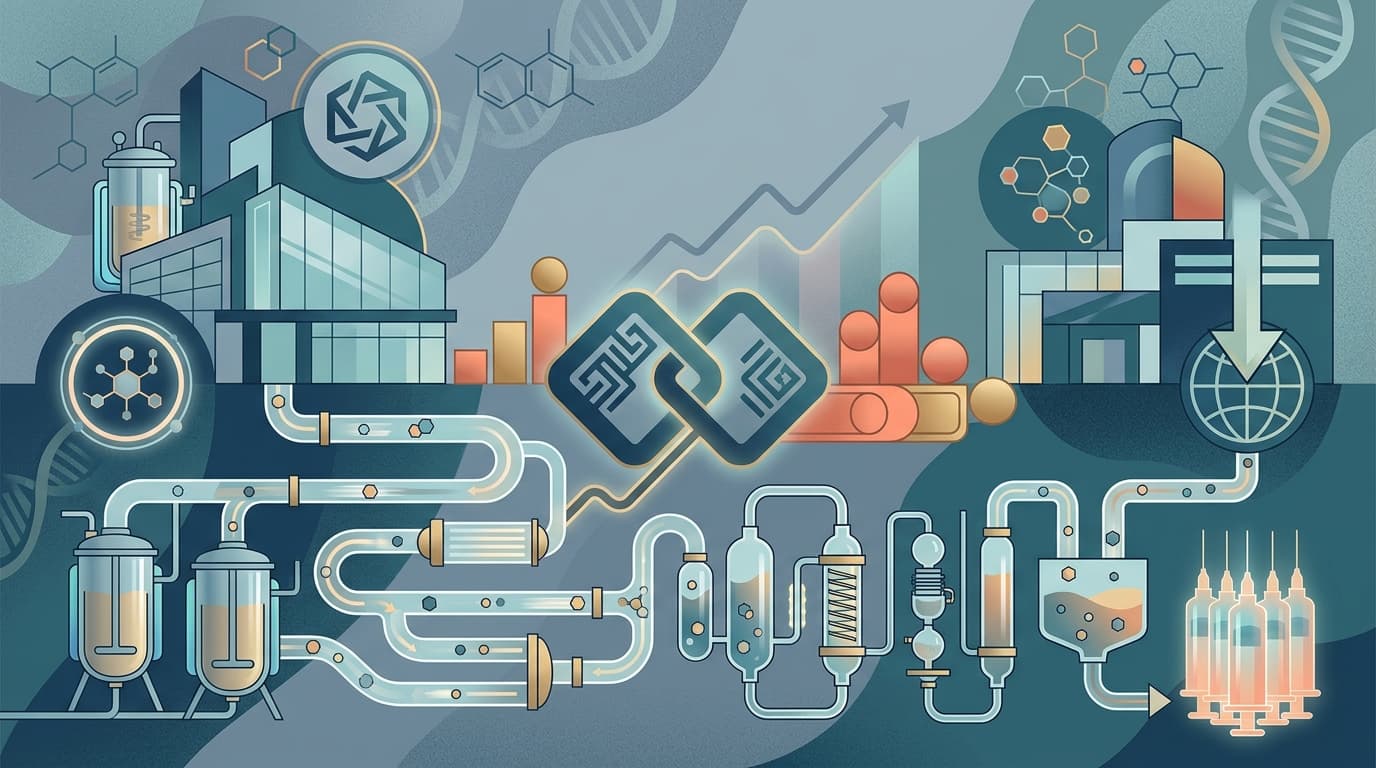
Samsung Biologics announced a $1.8 billion all-cash bid to acquire PolyPeptide Group, a Swiss company that specializes in manufacturing peptide-based drug ingredients. The deal, disclosed over the weekend, represents the largest pharmaceutical M&A in South Korean history. And it tells you everything you need to know about where the biotech industry thinks the money is heading.
The GLP-1 Gold Rush Has a Manufacturing Problem
You've probably heard the story by now: GLP-1 drugs like semaglutide (Ozempic, Wegovy) and tirzepatide (Mounjaro, Zepbound) are reshaping medicine. Obesity, diabetes, heart disease, maybe even Alzheimer's. The demand is enormous and growing.
But here's the part that doesn't get enough attention: nobody can make enough of the stuff.
GLP-1 drugs are peptides, which are essentially short chains of amino acids that are smaller than the big antibody proteins most biotech factories are built to produce. Making them at commercial scale requires a specialized process called solid-phase peptide synthesis (SPPS), and global SPPS capacity is stretched thin. Bachem, one of the world's leading peptide manufacturers, has said it plainly: pharmaceutical companies and their suppliers "do not have enough capacity to produce the required APIs today."
The numbers back that up. The peptide CDMO market (contract development and manufacturing organizations, basically the factories-for-hire of the drug world) is projected to nearly triple from $2.9 billion in 2025 to $9.5 billion by 2036. The global obesity treatment market alone could reach 200 trillion won over the next decade, according to Korean financial analysts.
So Samsung Biologics looked at all of this and said: we need to be in this game.
What Samsung Is Actually Buying
PolyPeptide Group isn't some scrappy startup. The company was spun out of Ferring Pharmaceuticals in 1996 and has spent nearly three decades becoming one of the world's top peptide CDMOs, alongside Bachem and Lonza. It operates , has developed or produced more than 1,000 therapeutic peptides, and currently runs 37 metabolic disease projects. Ten of those are already commercialized. Seven are in Phase III clinical trials.
Get tomorrow's biotech intelligence before your competitors.
Join thousands of biotech professionals who start their day with our free, daily briefing.
six production sites across four countries
In other words, Samsung isn't buying a fixer-upper. It's buying a turnkey operation with existing GLP-1 contracts and revenue.
The offer price is CHF 44.31 per share, valuing PolyPeptide at approximately CHF 1.46 billion (about $1.8 billion, or roughly 2.7 trillion Korean won). That represents a 40% premium over PolyPeptide's stock price before market rumors started circulating, and about an 11.6% premium to the 60-day volume-weighted average price.
PolyPeptide's board has unanimously recommended that shareholders accept the deal. And critically, the company's largest shareholder has already committed to tender roughly 55-56% of outstanding shares, essentially guaranteeing that the deal clears its 66.67% acceptance threshold. The tender offer is expected to launch by the end of August 2026, with closing targeted for year-end.
If all goes as planned, PolyPeptide will be delisted from the Swiss stock exchange and become a wholly owned Samsung Biologics subsidiary.
Why Samsung Biologics Needs to Evolve
Think of Samsung Biologics like a restaurant that built its reputation on one incredible dish: monoclonal antibodies. For years, that was enough. The company grew into the world's largest biologics CDMO, generating KRW 4,557 billion (approximately $3.5 billion) in revenue during 2025. It operates four fully utilized plants in Incheon, South Korea, recently opened a fifth with 180,000 liters of additional capacity, and acquired a 60,000-liter manufacturing site in Rockville, Maryland for $353 million.
But here's the thing about restaurants (and CDMOs): if the market shifts to a new cuisine and you're still only serving the old menu, customers start looking elsewhere.
The biotech industry's drug pipeline is diversifying fast. Antibody-drug conjugates (ADCs), bispecific antibodies, cell and gene therapies, mRNA therapeutics, and yes, peptides are all growing segments. Samsung has already started expanding into ADCs, with a dedicated facility that commenced operations in early 2025 and drug product services planned for early 2027. But peptides represent a fundamentally different manufacturing capability that Samsung didn't have in-house.
CEO John Rim framed the acquisition as reinforcing Samsung's "long-term growth strategy" by broadening the service portfolio into peptides, including GLP-1s, while boosting geographic reach across the U.S., Europe, and India.
The Peptide Manufacturing Arms Race
Samsung isn't making this move in a vacuum. There's a genuine scramble underway to lock up peptide manufacturing capacity, and the deals are coming fast.
Granules India agreed to acquire Swiss peptide CDMO Senn Chemicals, explicitly citing GLP-1 receptor agonists as the motivation. CordenPharma reached an agreement to buy AmbioPharm, a U.S.-based peptide API manufacturer with operations in both America and China. Celltrion purchased a former Eli Lilly API manufacturing site in New Jersey. And looming over all of it is Novo Holdings' $16.5 billion acquisition of Catalent, completed in late 2024, which market commentators view as a vertical-integration play to secure pipeline capacity for Novo Nordisk's GLP-1 empire.
The pattern is unmistakable: if you want to play in the peptide CDMO space in 2027 and beyond, you need to be buying capacity now. Building new SPPS facilities from scratch takes years. Specialty amino acid and resin supply chains are already strained. Skilled peptide chemists are in short supply. And large pharma companies like Novo Nordisk and Eli Lilly are locking up manufacturing slots with multi-year supply agreements, leaving smaller sponsors scrambling for whatever's left.
Analysts say capacity is still not enough to meet demand, particularly for the large-volume, high-purity SPPS runs that GLP-1 drugs require.
Wall Street's Reaction: Smart Move, Scary Price Tag
The strategic logic is getting good marks from analysts, who describe the deal as a way to "strengthen global CDMO competitiveness" and position Samsung as an early mover in GLP-1 manufacturing capacity. PolyPeptide's chairman, Peter Wilden, offered a bullish take: "When combined with Samsung Biologics' overwhelming production capabilities and operational know-how, we will secure a firm competitive advantage in the global peptide CDMO market."
But investors? They're a tougher crowd.
Samsung Biologics shares dipped about 1.3-1.9% in early trading after the announcement. The concern isn't the strategy; it's the financing. At 2.7 trillion won, this is a massive check to write. The company has indicated it plans to fund part of the deal through borrowing, even as it continues heavy capital expenditure on Plant 5 ramp-up, the Rockville site integration, and future Bio Campus III development.
Analysts expect PolyPeptide to hit revenue above €640 million with EBITDA margins around 25% by 2028, suggesting the deal could be financially accretive within a couple of years. But integration risk is real: harmonizing quality systems across antibody, ADC, and peptide manufacturing lines, while managing a six-site global peptide network, is no small feat.
The independent fairness opinion from IFBC concluded the offer price is fair, which is standard for deals of this size but still provides some comfort that Samsung isn't wildly overpaying.
The Bigger Picture
Zoom out, and the Samsung-PolyPeptide deal illustrates a structural shift in how the drug industry's supply chain is being rebuilt.
For decades, CDMOs could specialize. You made antibodies, or you made small molecules, or you made peptides. Clients would pick the right shop for the right drug. But as pharma pipelines become more complex and multi-modal, the biggest clients increasingly want one-stop shops that can handle everything from biologics to peptides to ADCs under a single contract.
Samsung Biologics is betting $1.8 billion that the future belongs to the CDMOs that can offer that integrated platform. With PolyPeptide, it would cover monoclonal antibodies, ADCs, bispecific antibodies, and now peptides, all with a global footprint spanning South Korea, the U.S., Europe, and India.
Is it a bold bet? Absolutely. The deal represents the company's biggest acquisition by a wide margin, and it's happening while Samsung is simultaneously executing one of the largest capacity expansions in CDMO history. But in a world where GLP-1 demand shows no signs of slowing and peptide manufacturing capacity remains structurally scarce, the biggest risk might be standing still.
The tender offer is expected to launch by the end of August. By December, Samsung Biologics could be a very different company. And the race to own the GLP-1 supply chain will have one fewer seat at the table.
4 min read
Abbott's Hackers Claim 30 Million Records. Abbott Says Everything's Fine.
Abbott disclosed two cyberattacks in July 2026 while posting a strong $12.6 billion quarter. Hackers claim they stole 30 million records, including Social Security numbers and doctor-patient notes. Wall Street barely blinked, but should it have?