Gossamer Bio's Drug Flunked Its Test. They Want an A Anyway.
Gossamer Bio's lead drug missed the main goal of its Phase 3 trial in a deadly lung disease, then the company announced it's heading to the FDA anyway. It's either the boldest regulatory gamble of the year or a case study in denial.
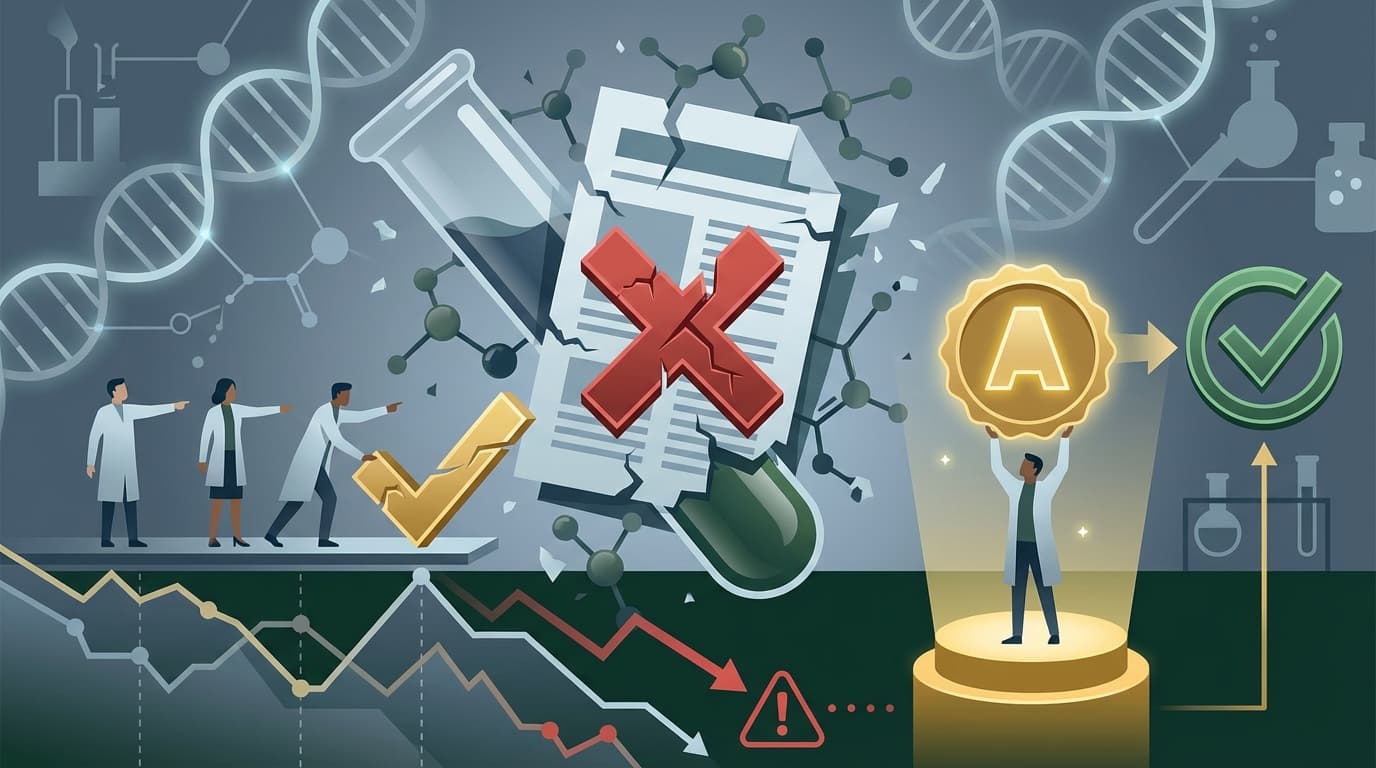
Imagine bombing the final exam, then walking into the dean's office to argue you should still graduate. That's essentially what Gossamer Bio is doing right now.
The San Diego biotech's lead drug, seralutinib, just missed the main goal of its Phase 3 trial in pulmonary arterial hypertension, a rare, deadly disease where blood pressure in the lungs slowly strangles the heart. The stock cratered almost 80% overnight. And yet, Gossamer is heading to the FDA to make the case that this drug still deserves a shot at approval.
Bold? Absolutely. Delusional? Maybe not.
A Miss Is a Miss, Or Is It?
The PROSERA trial enrolled 390 patients with PAH, a condition that affects fewer than 200,000 Americans and has limited treatment options. Patients inhaled seralutinib on top of their existing medications, and researchers measured how far they could walk in six minutes: the gold standard test in this disease.
The result: patients on seralutinib walked 13.3 meters farther than those on placebo after 24 weeks. That's about 44 extra feet. Directionally positive, sure. But the improvement didn't clear the study's pre-set statistical bar. The p-value came in at 0.032, just above the required threshold of 0.025.
In clinical trial math, that's like losing by a single point in overtime. You played a good game, but the scoreboard doesn't care about moral victories.
Analysts had expected a gain of 20–25 meters to call this a win. Falling short at 13.3 meters was enough for Guggenheim to flag a "material setback and regulatory uncertainty." Wall Street agreed; the stock plummeted roughly 77% after the data dropped.
The Subgroup Hail Mary
But Gossamer isn't looking at the overall score. They're looking at the replay footage, and they think the refs missed some calls.
When researchers zoomed into sicker patients (the 234 intermediate- and high-risk participants), the drug looked considerably better. That subgroup showed a 20-meter improvement in walking distance. Among the 75 North American patients specifically, the gain was even more striking at .
Get tomorrow's biotech intelligence before your competitors.
Join thousands of biotech professionals who start their day with our free, daily briefing.
25.9 meters
So what dragged the overall number down? Gossamer points to unusually high placebo responses at Latin American trial sites. Basically, some patients on sugar pills improved way more than expected, washing out the drug's real effect. The company is still digging into why, and a CT imaging substudy could shed more light in coming weeks.
All four secondary measures (including a key cardiac biomarker called NT-proBNP, clinical improvement scores, time until patients got worse, and a risk assessment tool) numerically favored seralutinib too. None of them were statistically significant either, but they all pointed in the same direction. When every arrow on the compass points north, it's hard to argue there's no signal.
The Cough Problem Nobody's Ignoring
There's another wrinkle worth flagging: Seralutinib is an inhaled drug, and 37% of patients who took it developed a cough. That's more than one in three. Elevated liver enzymes hit 13% of treated patients as well, compared to lower rates on placebo.
For a disease where patients are already struggling to breathe, a persistent cough isn't just annoying; it's potentially a dealbreaker for real-world use. Even if the FDA says yes, doctors have to want to prescribe it, and patients have to want to keep taking it. A cough rate that high makes both harder.
Filing When You've Failed: Crazy or Calculated?
So why would any company march to the FDA after missing its primary endpoint? Because it's happened before, and it's worked.
Between 2018 and 2021, the FDA approved 10% of new drugs (21 out of 210) that had null findings on one or more primary endpoints in their pivotal trials. Most of those drugs were first-in-class, and two-thirds received expedited review designations. Four drugs even got approved based on a single study where every primary endpoint missed.
The common thread: serious diseases with few alternatives, plus enough supporting evidence to make a benefit-risk argument. PAH checks both boxes.
The most famous (or infamous) example is Aducanumab, the Alzheimer's drug that got accelerated approval despite both pivotal trials being stopped for futility. The FDA approved it based on an exploratory surrogate endpoint (amyloid plaque reduction) rather than the clinical measures that actually failed. That decision remains deeply controversial, but it proved the door is open.
The Ghost in the Room: Sotatercept
Gossamer's timing couldn't be worse. Merck's sotatercept, sold as Winrevair, is already approved for PAH and showed a dramatically better result in its own pivotal trial: roughly 40 meters of improvement in six-minute walk distance. That's three times what seralutinib delivered in the full population.
Seralutinib works differently. It's an inhaled drug that targets enzymes called PDGFR, CSF1R, and c-KIT, proteins involved in the abnormal blood vessel growth that drives PAH. Sotatercept tackles the same remodeling problem from a different angle. In theory, the two could even complement each other. But "in theory" doesn't win market share.
With Merck's drug already on pharmacy shelves and United Therapeutics dominating the prostacyclin therapy space with drugs like Tyvaso, seralutinib would need a compelling story just to carve out a niche, even with an approval in hand.
The $105 Million Question
Gossamer has about $105 million in cash heading into Q1 2026. That sounds like a lot, but burning through regulatory discussions, potential additional studies, and a commercial launch could eat through it fast. The company has paused enrollment in its other Phase 3 trial, SERANATA, which was testing seralutinib in a related lung disease. That pause is officially to review data and regional differences, but it's also clearly about conserving resources.
Partner Chiesi, the Italian pharma company that paid $160 million upfront for ex-U.S. rights, is still at the table reviewing data. That relationship is critical. If Chiesi walks, Gossamer's leverage evaporates.
CEO Faheem Hasnain has described the combined Phase 2 and Phase 3 data as a "compelling package" for the FDA. That's CEO-speak for "we think there's enough here if they'll listen."
What Happens Next
Gossamer plans to meet with the FDA to discuss a potential path forward. No NDA filing has been submitted yet, and there's no guarantee one ever will be. The outcome of that meeting will likely determine whether this company survives in its current form.
The fundamental tension here is real and growing: should statistical significance be the only gatekeeper for drugs treating deadly rare diseases? When patients are running out of options and every secondary measure points toward benefit, how rigid should the rules be?
It's a question the FDA will have to answer, not just for Gossamer, but for every small biotech betting everything on a single program in orphan disease. The precedent this sets could reshape how we think about "failed" trials for years to come.
For Gossamer's shareholders, who've watched roughly 80 cents of every invested dollar vanish in a single trading session, the philosophical debate is cold comfort. They need the FDA to see something in this data that Wall Street didn't.
And that might be the longest shot in all of biotech right now.
Deals & M&A
5 min read
Moderna Just Sold a Rare Disease Drug for Pennies on the Dollar
Moderna handed Recordati the commercial rights to a potentially first-in-class rare disease therapy for just $50 million upfront. Leerink analysts called it a "garage sale," and the math backs them up.