
Gilead is paying $7.8 billion for a CAR-T therapy the FDA hasn't approved yet, a 68% premium that looks less like confidence and more like a rescue mission. With its existing cell therapy business shrinking, the company is betting everything on a drug that oncologists already prefer over the competition.
When your existing business is shrinking 7% a year and staring down another 10% drop, you don't shop for bargains; you pay whatever it takes.
Gilead Sciences just agreed to buy Arcellx for $7.8 billion in cash, a 68% premium over the company's recent share price, to get its hands on a CAR-T therapy called anito-cel. The catch? The FDA hasn't approved it yet. The decision isn't expected until December 23, 2026, ten months from now. Gilead is essentially writing a massive check for a product that might not legally exist until Christmas.
So why the urgency?
Gilead's cell therapy unit, Kite, is in trouble. Its two approved cancer treatments, Yescarta and Tecartus, brought in $1.8 billion in 2025. That sounds decent until you realize it was down 7% from the year before. Yescarta sales dropped 10% in Q3 alone; Tecartus fell 15% in the same quarter.
And the forecast for 2026? Another 10% decline.
Think of it like owning a restaurant where foot traffic drops every quarter: at some point, you either renovate or close. Gilead chose to renovate by buying the hottest new chef on the block.
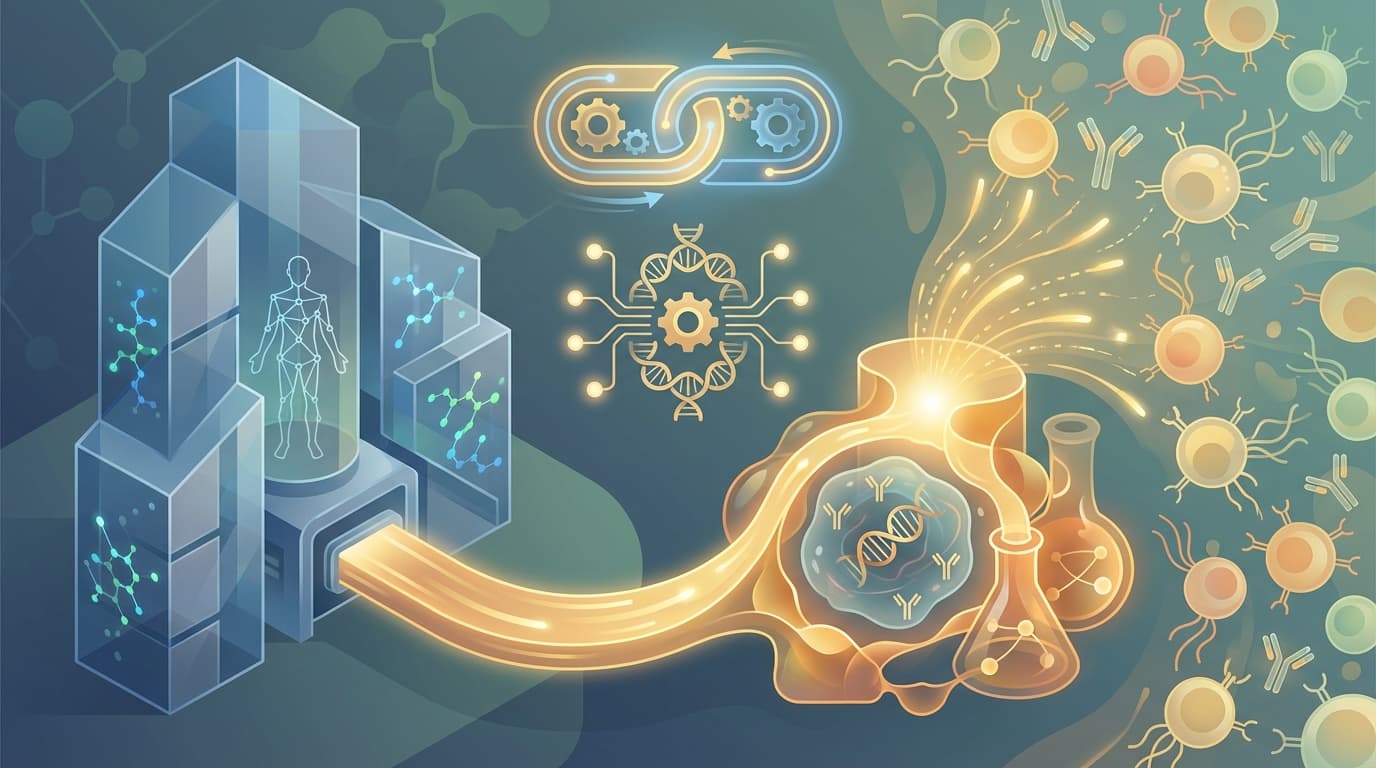
Anito-cel is a CAR-T therapy, a treatment where doctors remove a patient's immune cells, engineer them in a lab to hunt cancer, and infuse them back into the body. Specifically, anito-cel targets a protein called BCMA that sits on the surface of multiple myeloma cells (a blood cancer that forms in bone marrow); it's like giving the immune system GPS coordinates to the tumor.
The multiple myeloma CAR-T market already has a dominant player: Carvykti, made by Johnson & Johnson and Legend Biotech. Carvykti racked up $1.88 billion in 2025 sales. It works well, but oncologists have a growing concern about its side effects.
CAR-T therapies are powerful, but they can trigger serious complications. The two big ones are CRS (cytokine release syndrome: basically the immune system going into overdrive, causing fevers, low blood pressure, and sometimes organ damage) and (neurotoxicity: confusion, seizures, or worse). Carvykti has notable rates of both, plus risks of delayed neurological problems.

Join thousands of biotech professionals who start their day with our free, daily briefing.
Anito-cel's clinical data tells a different story. In the iMMagine-1 trial of 117 heavily pretreated patients, 83% experienced no CRS or only the mildest form. ICANS hit just 8% of patients, and only one person had a severe case. No delayed neurotoxicities. No secondary cancers linked to the treatment.
Meanwhile, the efficacy numbers are eye-popping: a 96% overall response rate and 74% of patients achieving a stringent complete response, the deepest level of remission. MRD negativity (meaning no detectable cancer at a molecular level) hit 95%.
RBC Capital Markets analyst Brian Abrahams put it plainly: anito-cel has shown "generally comparable efficacy" to Carvykti with "potential for a better safety profile." When two treatments work equally well but one is significantly gentler on patients, doctors notice. That preference is exactly what Gilead is paying $7.8 billion for.
Let's break open the deal structure, because it reveals how Gilead is thinking about risk.
Arcellx shareholders get $115 per share in cash at closing, expected in Q2 2026. On top of that, they receive a contingent value right (essentially a bonus coupon) worth $5 per share, but only if anito-cel hits $6 billion in cumulative global sales from launch through the end of 2029.
That CVR is telling. It sets a sales bar that's ambitious but not outrageous. For context, Carvykti did nearly $1.9 billion in a single year. If anito-cel captures meaningful market share after a late 2026 or early 2027 launch, $6 billion cumulative by 2029 is within reach, roughly three years of strong sales.
Gilead isn't new to Arcellx, either. It already owned 11.5% of the company's shares through a partnership that started in December 2022. Back then, Gilead's Kite unit paid $225 million upfront, invested $100 million in equity, and dangled up to $3.9 billion in milestone payments. They expanded the deal in November 2023 with another $85 million in cash and $200 million in equity.
The acquisition wipes all of that away: no more profit-sharing, no milestones, no royalties. Gilead gets 100% of the economics. It's the difference between renting and buying. When you've already furnished the apartment, sometimes it's cheaper to just buy the building.
The biggest risk isn't the science; it's the clock.
Abrahams flagged that Gilead and Arcellx face "a significant timing disadvantage" because Carvykti has been on the market building relationships with treatment centers and oncologists. In CAR-T therapy, that early entrenchment matters enormously. These treatments require specialized manufacturing, certified hospitals, and trained medical teams. Switching costs are real.
Anito-cel's BLA (the application for FDA approval) was filed for fourth-line treatment, meaning patients who've already tried at least three other therapies. That's a narrower initial market. The broader play comes from the ongoing Phase 3 iMMagine-3 trial, which is testing anito-cel as a second-line treatment against standard care. If that succeeds, the addressable market explodes.
Gilead is projecting the deal will add to its earnings per share starting in 2028. That's a two-year patience test for investors watching cell therapy revenues decline in the meantime.
What makes this deal particularly interesting is the industry context. The hottest trend in cell therapy right now is in vivo CAR-T: therapies that reprogram immune cells inside the body, skipping the complex manufacturing process entirely. AbbVie spent up to $2.1 billion on Capstan Therapeutics for an in vivo approach. Bristol Myers Squibb dropped $1.5 billion on Orbital Therapeutics for RNA-based in vivo tech. Even Gilead hedged its bets with a $350 million buy of Interius in August 2025.
But anito-cel is old-school ex vivo: cells removed, engineered in a lab, put back in. It's the proven playbook, and Gilead is making the largest recent CAR-T acquisition to double down on it.
There's a logic to this. In vivo is the future, but it's still years from approval. Ex vivo CAR-T is generating billions in revenue right now. And in that market, anito-cel has what might be the best combination of safety and efficacy data anyone has seen.
Gilead isn't betting on the future of cell therapy with this deal; it's betting on the next three to five years. Whether that's visionary or short-sighted depends entirely on what happens on December 23, 2026, when the FDA decides if anito-cel was worth $7.8 billion before it even had a label.
Eli Lilly just dropped $85 million upfront, with $1.84 billion more on the table, to partner with Repertoire Immune Medicines on a radical idea: retraining the immune system instead of suppressing it. If it works, autoimmune patients might finally escape lifelong drug regimens.