The $400M Bet That AI Can Design Drugs Better Than Nature
Generate Biomedicines just pulled off the biggest biotech IPO of 2026, raising $400 million on an AI platform that designs drugs nature never imagined. The stock promptly dropped 20% on day one. So is this a breakthrough or a bubble?
A Robot Just Walked Into the IPO Party
Five years ago, a small team in Somerville, Massachusetts had a wild idea: what if you could teach a computer to design brand-new proteins that nature never invented, then turn those proteins into drugs?
Last week, Wall Street handed them $400 million to find out.
Generate Biomedicines priced its IPO on the Nasdaq at $16 per share, selling 25 million shares in what became the largest biotech IPO of 2026. Goldman Sachs and Morgan Stanley led the deal. The ticker is GENB. And the implications ripple far beyond one company's bank account.
This isn't just another AI-biotech story. It's a signal flare for the entire sector.
What Generate Actually Does (In English, Please)
Most drug companies discover molecules the old-fashioned way: screen millions of compounds, find something that kinda works, then spend a decade tweaking it. Think of it like panning for gold in a river. You sift through tons of sediment hoping to find a nugget.
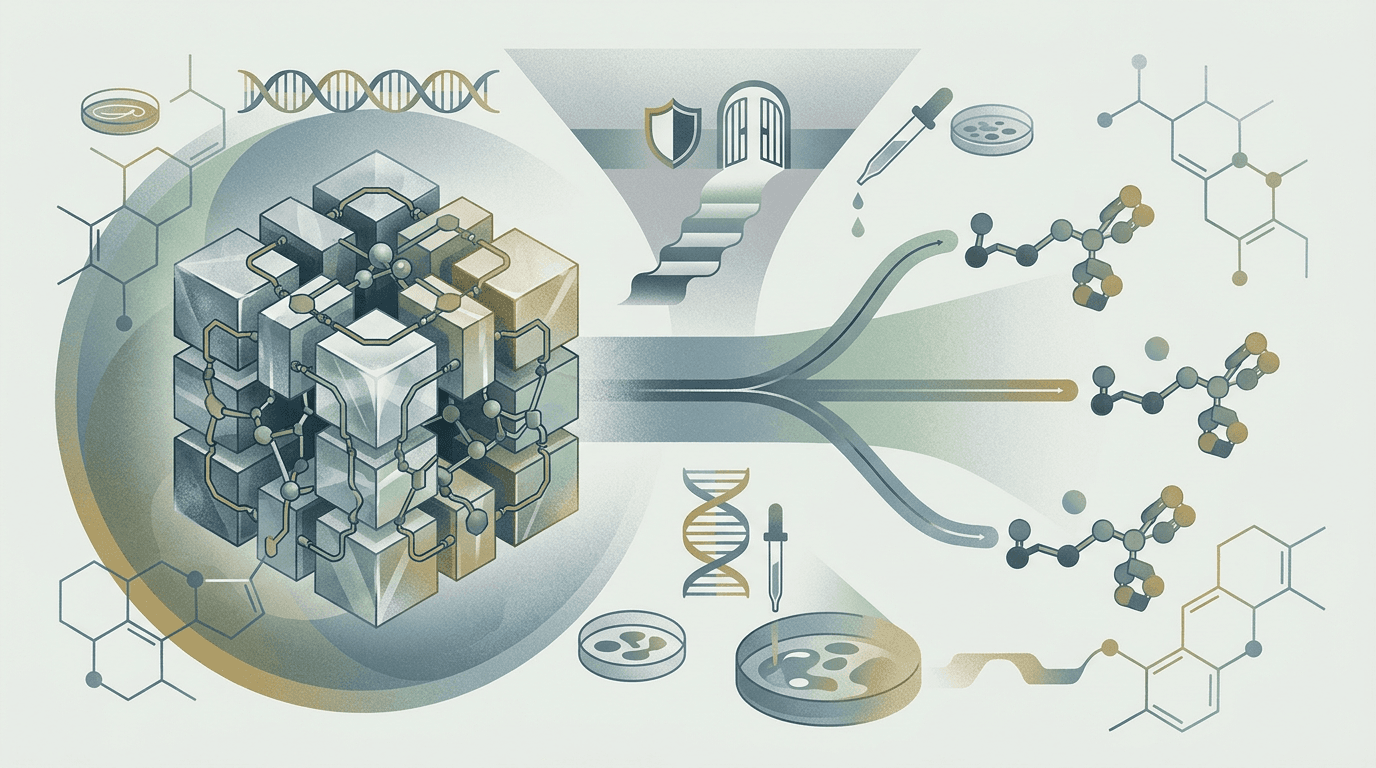
Generate skips the river entirely. Instead of searching for existing molecules, their platform designs new ones from scratch using generative AI. Their system, called Chroma, learns the rules of how proteins fold and function by studying millions of known protein sequences. Then it creates entirely new therapeutic candidates that have never existed in nature.
Imagine the difference between searching Netflix for a movie you like versus writing your own screenplay. That's roughly the leap Generate is attempting in drug discovery.
The company calls this approach "Generative Biology," and it works in a continuous loop: generate a new protein, build it in the lab, measure how it performs, learn from the results, then generate something better. Each cycle makes the AI smarter. Each cycle gets faster.
The Drug That Made This IPO Possible
A flashy AI platform is nice, but investors don't write $400 million checks for PowerPoint decks. They need proof. Generate has it.
Get tomorrow's biotech intelligence before your competitors.
Join thousands of biotech professionals who start their day with our free, daily briefing.
Their lead drug, GB-0895, is an antibody that blocks a protein called TSLP (thymic stromal lymphopoietin), which plays a key role in triggering severe asthma attacks. What makes this remarkable: GB-0895 went from AI-generated concept to Phase 3 clinical trials in under five years. That's roughly half the typical drug development timeline.
The two pivotal studies, called SOLAIRIA-1 and SOLAIRIA-2, are testing the drug in about 1,600 patients with severe asthma. These are the big, definitive trials designed to support an FDA approval. For an AI-designed molecule to reach this stage this quickly is unprecedented.
Beyond asthma, Generate is also running an early-stage trial of GB-0895 in COPD (chronic obstructive pulmonary disease) and has two oncology programs, GB-4362 and GB-5267, in earlier development. The company plans to spend roughly $300 million of its IPO proceeds on the asthma program alone, with about $100 million going toward the COPD study. The rest will fund those cancer programs and keep the AI engine running.
Big Pharma Already Bought In
Before Generate ever went public, it passed a critical test: getting serious pharma companies to pay real money for access to its platform.
Amgen signed a multi-target collaboration that came with $50 million upfront and significant milestone payments. Novartis inked a separate deal covering multiple disease areas. These aren't charity donations. When companies like Amgen and Novartis put money behind a platform, they're saying: "We've looked under the hood, and we think this thing works."
That external validation mattered to IPO investors. It's one thing for a startup to claim its AI is revolutionary. It's quite another when two of the world's largest drugmakers agree.
The First Day Wasn't Pretty
For all the hype, the stock market delivered a cold splash of reality on day one. GENB shares dropped roughly 22% from the $16 offer price, closing around $12.45.
That's not unusual for biotech IPOs, which often trade down in their first sessions. But it reveals something important: public market investors are more price-sensitive on AI drug discovery names than the IPO demand might suggest. The books were covered (meaning enough investors wanted shares at $16), yet the aftermarket told a different story.
Part of the issue is valuation. On roughly $32 million in revenue, GENB's price-to-sales ratio sits around 49x. The company posted a net loss of $223 million. By traditional financial metrics, this stock is expensive. The entire investment case rests on future clinical wins and the platform's ability to keep churning out viable drugs.
If GB-0895 nails its Phase 3 data, those numbers won't matter. If it stumbles, well, 49x revenue is a long way to fall.
Why Insiders Are Doubling Down
The split is clear: growth-oriented and thematic investors are leaning in. Generalist fund managers, the ones who care about trailing revenue multiples and near-term earnings, are keeping their distance.
The Bigger Picture: Biotech's IPO Window Is Wide Open
Generate's IPO didn't happen in a vacuum. It was the fifth biotech IPO in February alone, capping off a stretch where the sector raised close to $1.4 billion across five offerings. That pace represents the strongest biotech IPO market in nearly three years.
Just weeks earlier, Eikon Therapeutics raised $381 million in what was briefly the year's biggest biotech debut. Before that, Aktis Oncology pulled in $318 million in January, and AgomAb Therapeutics raised $200 million. Generate topped them all.
The broader biotech sector has been on a tear since mid-2025. The SPDR S&P Biotech ETF rallied sharply from its 52-week lows, fueled by stronger clinical data, faster FDA approvals, and a wave of M&A activity. After years of investors treating biotech like a pariah, the money is flowing back.
AI-enabled drug discovery sits at the heart of this resurgence. Pharma giants are signing bigger, richer platform deals because they recognize a structural truth: traditional R&D productivity is declining, and AI may be the only way to reverse that trend.
The Pedigree Behind the Platform
Generate was founded in 2018 by Molly Gibson and Gevorg Grigoryan, with backing from Flagship Pioneering, the venture creation firm that also built Moderna. Noubar Afeyan, Flagship's founder, serves as chairman of Generate's board.
That Moderna connection isn't cosmetic. Stéphane Bancel, Moderna's founding CEO, sits on Generate's board. This is not your typical biotech advisory board.
Michael Nally took over as CEO in 2021, the same year the company raised $370 million in its Series B funding round. Before going public, Generate had attracted more than $800 million in venture capital, making the $400 million IPO less of a Hail Mary and more of a planned escalation.
The Bull Case and the Bear Case
If you're bullish, the story writes itself. Generate has three AI-engineered proteins in human trials (more clinical proof than almost any AI drug discovery peer). The lead program is already in pivotal Phase 3 studies. Two major pharma partners have validated the platform with real dollars. The IPO gives the company enough cash to fund its key programs.
If you're bearish, the concerns are equally clear. The stock trades at a nosebleed valuation on current revenue. The entire thesis hinges on Phase 3 asthma data that hasn't read out yet. AI drug discovery is still largely unproven at scale; no AI-designed drug has been approved by the FDA. And broader market volatility around AI and tech sentiment could drag the stock lower regardless of fundamentals.
The honest answer is that both cases are valid. Generate is the most credible test yet of whether AI can fundamentally reshape how drugs are made. But "most credible test" and "guaranteed success" are very different things.
What This Means for You
Generate's IPO is a milestone for the AI-in-biotech narrative, full stop. It proves that public market investors will back capital-intensive AI platforms with real clinical assets, not just promise slides. The size of the deal ($400 million), the quality of the underwriters (Goldman, Morgan Stanley), and the caliber of the backers (Flagship, Amgen, Novartis) all say the same thing: this subsector has arrived.
But the real verdict won't come from the stock price. It'll come from the SOLAIRIA trials. If GB-0895 works in 1,600 asthma patients, it won't just be a win for Generate. It'll be proof of concept for an entirely new way of making medicine.
And that would change everything.
Funding & Financings4 min read
The $381M Bet on Watching Proteins Move
Eikon Therapeutics just pulled off the largest biotech IPO in two years, raising $381 million on a platform that literally watches individual proteins move inside living cells. With Nobel Prize co-founder Eric Betzig and former Merck R&D chief Roger Perlmutter at the helm, the company is betting its cancer pipeline (and a billion-dollar war chest) on seeing biology differently.