
Genentech just paid $100 million upfront (with up to $1.27 billion more on the table) for a preclinical Parkinson's program from Alector. The real prize isn't just the drug; it's a platform that tricks the brain into letting medicines past its toughest bouncer.
Getting drugs into the brain is one of the hardest problems in medicine. The blood-brain barrier, a tightly sealed wall of cells protecting your gray matter, blocks almost everything from crossing over. It's like a nightclub bouncer who only lets in tiny, fat-soluble molecules and tells everything else to go home.
Alector thinks it found a VIP pass. And on October 5, Genentech agreed, writing a $100 million upfront check to license Alector's AL050 program globally. The total deal could be worth up to $1.27 billion when you add development, regulatory, and commercial milestones on top, plus tiered royalties on future sales.
For a company whose stock was trading around $3.00 the day before, that's not a deal. That's a lifeline.
AL050 targets a specific problem in Parkinson's disease and Lewy body dementia. In both conditions, a broken enzyme called glucocerebrosidase (GCase for short) fails to clean up fatty waste products inside neurons. Think of it like a clogged garbage disposal: lipids pile up, cells get stressed, and neurons start dying.
People with mutations in the GBA1 gene have especially low GCase activity, and those mutations are among the strongest known genetic risk factors for Parkinson's. AL050 is essentially a replacement enzyme, engineered to be more stable and more active than the natural version.
But the clever part isn't the enzyme itself. It's the delivery system.
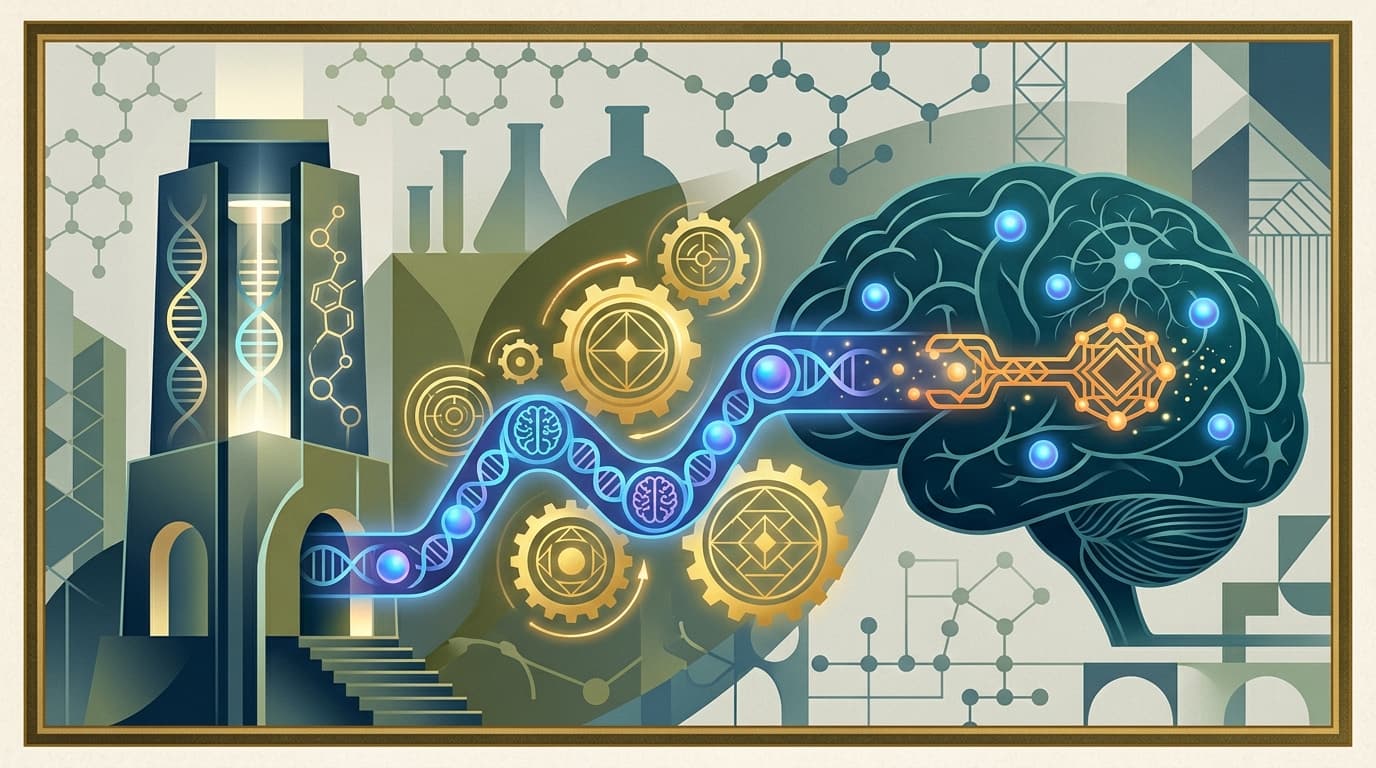
Alector built something called the Alector Brain Carrier (ABC) platform, which hijacks the brain's own supply chain. The platform attaches therapeutic cargo to molecules that bind the transferrin receptor, a protein the brain already uses to import iron. By piggybacking on that natural import process (called receptor-mediated transcytosis), AL050 can sneak across the blood-brain barrier and reach the neurons that need it.
In animal studies, Alector showed that AL050 boosted GCase activity in both rodent and primate brains, reduced toxic lipid buildup in a disease model, and did so without triggering blood-related side effects. The program was still preclinical at the time of the deal, with an IND submission previously targeted for 2027.

Roche and Ionis's RNA drug sefaxersen just cleared a major Phase 3 hurdle in IgA nephropathy, proving it can significantly reduce kidney-damaging protein leakage. But with six drugs already approved for the disease, the real question is whether being seventh is good enough.


Join thousands of biotech professionals who start their day with our free, daily briefing.
Genentech didn't just buy an enzyme. It bought a platform thesis it already believes in.
Roche (Genentech's parent company) has been quietly assembling one of the most aggressive neuroscience portfolios in pharma. Its crown jewel is trontinemab, an Alzheimer's antibody that uses Roche's own "Brainshuttle" technology to cross the blood-brain barrier. Phase III trials are underway, and early data showed rapid, deep amyloid plaque reduction.
The AL050 deal slots perfectly into that strategy. Genentech already understands brain delivery. It already has the clinical infrastructure for CNS trials. Adding Alector's ABC platform and a Parkinson's/Lewy body program lets Roche expand beyond Alzheimer's without starting from scratch.
And the company isn't stopping there. Roche has more than a dozen neurological medicines in development across multiple sclerosis, Huntington's, Parkinson's, Duchenne, and other conditions. It has partnerships with Recursion for AI-driven neuroscience discovery (potentially supporting up to 40 small-molecule programs), Atalanta for RNAi therapies in neurodegeneration, and Manifold Bio for next-generation brain shuttles.
This isn't a one-off bet. It's a coordinated campaign.
Genentech's AL050 deal is part of a much bigger pattern. After years of treating brain diseases like a minefield (and watching billions evaporate on failed Alzheimer's trials), Big Pharma is rushing back into neuroscience with renewed conviction.
The numbers tell the story. Alzheimer's drug acquisition deal value hit $16.8 billion in 2025, anchored by Johnson & Johnson's massive $14.6 billion buyout of Intra-Cellular Therapies. Sanofi paid $470 million for Vigil Neuroscience and its oral TREM2 agonist, a drug designed to supercharge the brain's immune cleanup crew. Bristol Myers Squibb expanded its Prothena partnership around a tau-targeting antibody in a deal worth potentially $2.2 billion.
AbbVie went even further, acquiring Aliada Therapeutics for $1.4 billion to get both an anti-amyloid antibody and a blood-brain barrier delivery platform. Sound familiar? The same logic that drove the AL050 deal: pharma doesn't just want drugs, it wants the keys to get them into the brain.
Three trends are driving this frenzy. First, companies are diversifying beyond amyloid, spreading bets across tau, neuroinflammation, and enzyme replacement. Second, platform technologies for brain delivery have become strategic assets in their own right. Third, AI and computational tools are reshaping how pharma discovers and develops CNS drugs; Roche reported that 40% of its pipeline decisions from late 2025 through mid-2026 had a tracked AI or computational contribution.
For Alector, this deal is both a win and a pivot. The company has been through a rough stretch. Its frontotemporal dementia drug latozinemab failed a Phase 3 trial, and its long-running partnership with GSK unwound in 2026 after setbacks in their dementia collaboration.
That left Alector leaning hard on its ABC platform as the core strategic asset. The Genentech deal validates that bet in a big way: it proves that a major pharma company sees enough value in the platform to write a nine-figure check for a preclinical program.
Financially, management says the deal extends Alector's cash runway into 2029, giving the company room to advance its remaining wholly owned programs. Those include AL137, an ABC-enabled anti-amyloid antibody for Alzheimer's, and earlier-stage tau and siRNA programs.
The stock reflected the market's excitement on the day of the announcement, though the stock still sits well below the analyst consensus price target of $3.62.
Genentech paid $100 million upfront for a preclinical enzyme that might not reach patients for years. That sounds risky until you realize what it actually bought: a proven brain delivery platform, a genetically validated target in Parkinson's and Lewy body dementia, and another piece in Roche's broader plan to dominate neuroscience.
For Alector, the deal buys time and credibility after a painful 2025. For the industry, it's another data point in a clear trend: Big Pharma believes the brain is finally crackable, and it's willing to pay billions to prove it.
Daiichi Sankyo and Merck pulled their FDA application for a lung cancer ADC just two weeks before the decision date. The reason signals a seismic shift in how the FDA evaluates accelerated approvals, and dozens of ADC programs should be worried.