A boy treated with AAV gene therapy for a fatal childhood disease developed a brain tumor four years later, and molecular evidence points directly to the viral vector. It's the first case of its kind, and it's forcing the entire gene therapy field to rethink what "safe" really means.
Four years after a toddler received a cutting-edge gene therapy to save his brain, doctors found something growing inside it.
The child had Hurler syndrome, a brutal genetic disease that destroys the body and mind before most kids finish kindergarten. At 13 months old, he was treated with an AAV gene therapy: a virus engineered to deliver a working copy of the gene he was missing. AAV (adeno-associated virus) is the workhorse of gene therapy, used precisely because it's supposed to be safe. It drops off its genetic cargo and, for the most part, doesn't mess with your DNA.
Except this time, it did.
The Discovery Nobody Wanted to Make
About four years after treatment, doctors discovered a brain tumor. It was a neuroepithelial tumor, meaning it grew from the cells lining the brain's fluid-filled chambers. Surgeons removed it successfully, and the boy is reportedly doing well cognitively.
But the molecular findings rattled the gene therapy world.
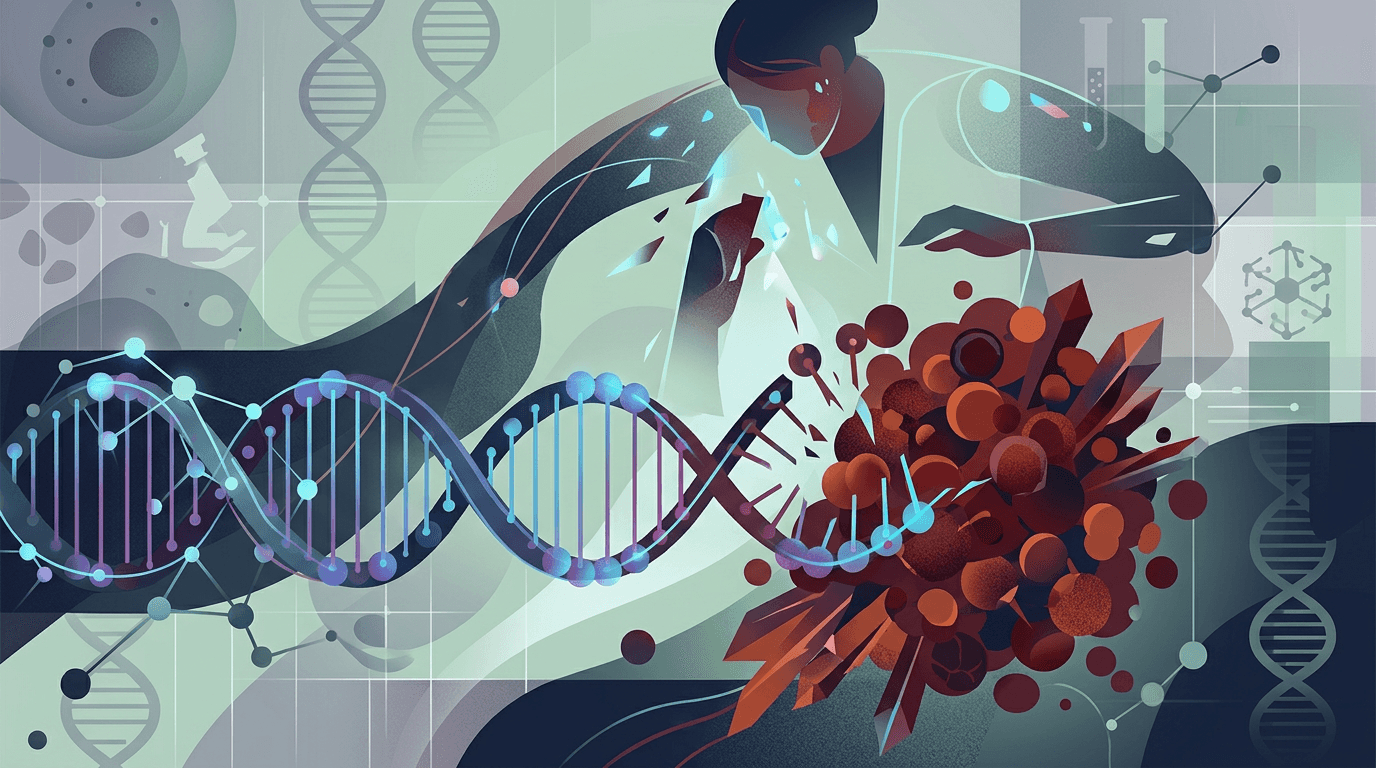
When researchers at Children's Hospital of Philadelphia (CHOP) sequenced the tumor, they found pieces of the AAV vector woven directly into the tumor cells' DNA. The viral fragments had landed near a gene called PLAG1, which acts like a growth accelerator when switched on. The vector's own powerful "on switch" (a promoter, in scientific terms) appeared to have flipped PLAG1 into overdrive, helping fuel the tumor.
Why AAV Was Supposed to Be the Safe One
To understand why this case matters, you need to know one thing about gene therapy vectors: they're not all built the same.
Older gene therapy tools, like retroviral vectors, work by permanently inserting themselves into your DNA. Think of them as writing in permanent marker on your genome. That approach caused leukemia in early clinical trials when the inserted DNA landed in the wrong spot and activated a cancer gene. It nearly killed the field.
AAV was the comeback kid. It mostly stays outside the genome, floating in the cell's nucleus as a separate loop of DNA (called an episome). Think sticky note versus permanent marker. That's why regulators, companies, and scientists treated AAV as fundamentally safer.
Get tomorrow's biotech intelligence before your competitors.
Join thousands of biotech professionals who start their day with our free, daily briefing.
The catch? "Mostly" isn't "never." AAV does integrate into the genome at low rates. Scientists knew this from lab studies and animal experiments. But in humans, no one had a clear-cut case where that rare integration event actually caused a tumor.
Until now.
A Perfect Storm of Risk Factors
Researchers identified several factors that may have conspired to create this outcome. Each one, on its own, might not have been enough. Together, they painted a troubling picture.
The child was very young. At 13 months, his brain cells were still actively dividing. Dividing cells are far more likely to accidentally incorporate foreign DNA into their own genome. It's like trying to slip a counterfeit page into a book: much easier when the book is being rewritten than when it's sitting on a shelf.
The virus had a preference for brain cells. The AAV type used had a natural tendency to infect the cells lining the brain's ventricles, exactly where the tumor appeared.
The vector carried a strong promoter. Promoters are genetic "volume knobs" that control how loudly a gene gets expressed. This one was powerful and broadly active. If the vector integrated near a cancer-related gene (which it did), that promoter could crank it up.
The child's immune system was suppressed. He had recently undergone a bone marrow transplant. A weakened immune system is less equipped to detect and destroy rogue cells before they become tumors.
No single factor caused the cancer. But the combination created a vulnerability the field hadn't seen play out in a patient before.
Not the First Warning Sign
Animal data had been waving a yellow flag for years.
In mouse studies, newborn mice given high doses of AAV to the liver developed hepatocellular carcinoma (liver cancer) at alarming rates; up to 75% in certain groups. Researchers traced the problem to AAV fragments integrating near specific cancer-related genes, activating them.
Mice with fatty liver disease were even more susceptible. Male mice with the rodent equivalent of NAFLD (non-alcoholic fatty liver disease) developed liver tumors after AAV treatment at significantly higher rates than healthy controls.
In primates and humans, though, the picture looked much better. Studies following non-human primates for up to 15 years after AAV treatment showed low integration rates and no clear signs of tumor-driving mutations. In humans, thousands of patients have received liver-directed AAV therapy for conditions like hemophilia, with no confirmed case of AAV-driven cancer in the liver so far.
The scientific consensus was comfortable: integration happens, but it's rare, and it probably doesn't matter much in practice.
This case just proved that "probably" has limits.
The Gene Therapy Community Reacts
Experts are threading a careful needle. The dominant reaction is serious concern, not panic.
The field's position can be boiled down to this: AAV gene therapy is not broken, but the safety assumptions that supported it need updating. Describing AAV as "non-integrating" is no longer accurate. A more honest label: "mostly episomal, with low-frequency integration and a small but real risk of causing cancer."
Disease context matters enormously. Hurler syndrome is devastating; without aggressive treatment, children face severe intellectual disability and death in childhood. The boy in this case appears to have been cognitively saved by the combined approach of bone marrow transplant and gene therapy. For diseases this severe, a small risk of a treatable tumor may still represent a favorable trade-off.
For milder conditions or quality-of-life indications, though, this finding tilts the risk calculus hard. A therapy with even a tiny chance of causing a brain tumor faces a much steeper justification hurdle when the disease it's treating isn't lethal.
What Changes Now
The ripple effects are already visible.
Vector design is under the microscope. Strong, broadly active promoters are now seen as riskier, especially in young patients with dividing cells. Expect a shift toward weaker, tissue-specific promoters that are less likely to accidentally activate nearby cancer genes if integration occurs.
The FDA is tightening the screws. Clinical holds have already landed on related programs. REGENXBIO's RGX-111 and RGX-121 (both CNS-targeted AAV therapies) were put on hold in January 2026 after this case came to light. The agency's April 2026 draft guidance on genome editing safety assessment covers next-generation sequencing of integration sites and chromosomal integrity checks.
Long-term follow-up is getting real teeth. Gene therapy trials have always required years of post-treatment monitoring (often 15 years for integrating vectors). Now, AAV programs will face similar or stricter surveillance requirements, with more structured tumor screening and mandatory molecular workups if any cancer appears.
Registries will expand. Single-company trial data can't detect rare events across the field. Global registries tracking cancer incidence in all AAV-treated patients are now seen as essential infrastructure, not optional extras.
What This Means for the Sector
The financial implications are real but nuanced.
Companies with CNS-targeted or high-dose pediatric AAV programs face the most direct exposure. Sarepta, whose Duchenne muscular dystrophy gene therapy relies on high-dose systemic AAV in children, remains one of the highest-volatility names in the space. Any tightening of pediatric AAV oversight hits its core thesis.
BioMarin, with its approved hemophilia A gene therapy Roctavian, sits in a somewhat different position. Its program targets the liver in adults, a lower-risk combination than brain delivery in infants. The company also has a diversified rare disease portfolio that cushions AAV-specific shocks.
The broader AAV sector is pricing in a persistent risk discount. Investors now assume some probability of future clinical holds, label restrictions, or post-marketing surprises. Early-stage AAV platform companies without strong data or deep pockets are feeling this most acutely.
The Uncomfortable Truth
Gene therapy has always lived in the space between transformative promise and sobering risk. This case doesn't invalidate the technology. The boy is alive, cognitively intact, and free of a disease that would have stolen both from him.
But it does force an honest reckoning. The "safe" vector isn't perfectly safe. The risk is rare, context-dependent, and likely manageable with better design and monitoring. It is also, for the first time, undeniably real in a human patient.
The gene therapy field has survived worse crises (the death of Jesse Gelsinger in 1999, the leukemia cases in early retroviral trials). Each time, it came back stronger, with better science and stricter safeguards. The question now is whether the field can absorb this signal with the rigor it demands: not by minimizing it, and not by panicking, but by building the monitoring systems, vector designs, and regulatory frameworks that make the next generation of therapies genuinely safer.
Because gene therapy's greatest risk was never a single tumor. It was complacency.
Clinical & Regulatory
5 min read
The 100% Tax That Could Break Big Pharma's Global Playbook
The Trump administration just slapped a 100% tariff on every branded drug not made in America, forcing pharma companies into an impossible choice: slash prices, build U.S. factories, or watch their margins evaporate. The biggest shake-up in pharma trade policy is already reshaping the industry.