The 100% Tax That Could Break Big Pharma's Global Playbook
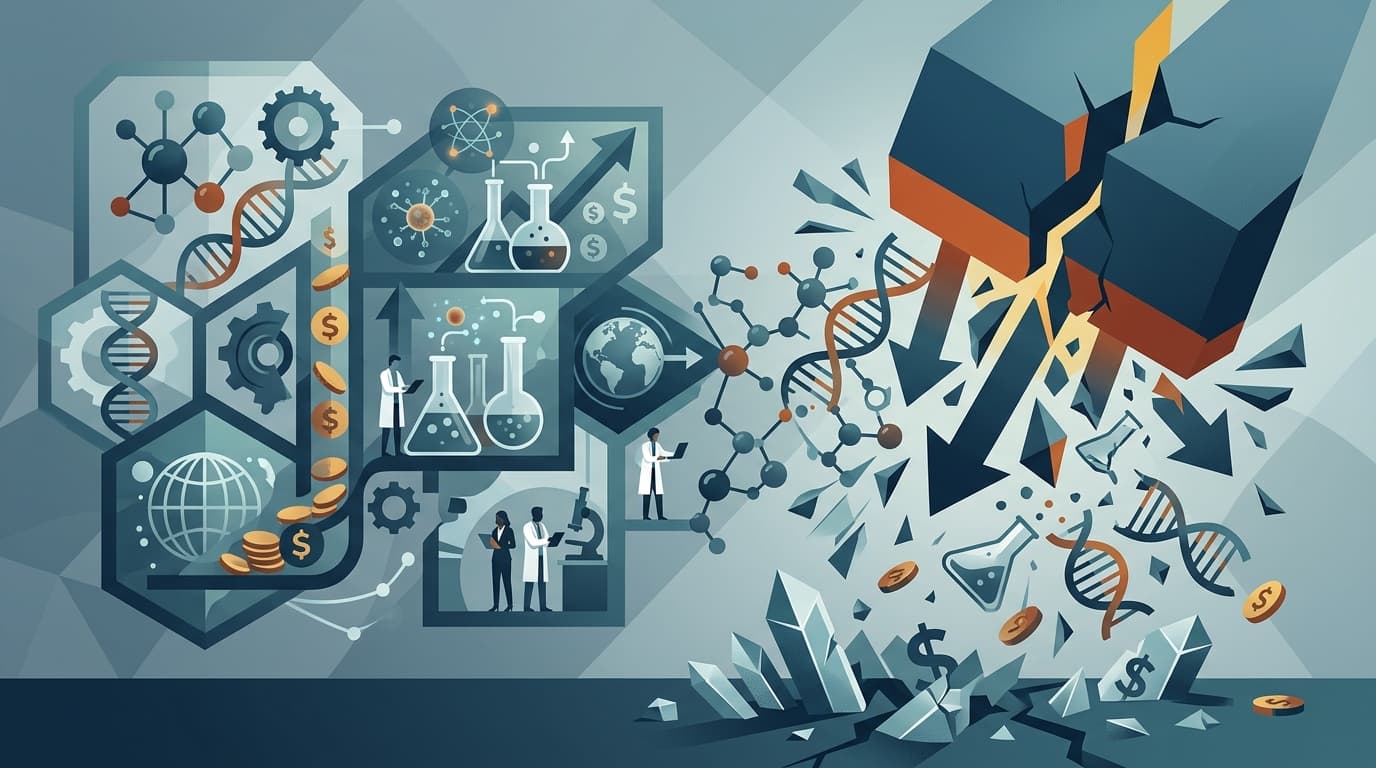
The Trump administration just slapped a 100% tariff on every branded drug not made in America, forcing pharma companies into an impossible choice: slash prices, build U.S. factories, or watch their margins evaporate. The biggest shake-up in pharma trade policy is already reshaping the industry.
Imagine your favorite imported olive oil suddenly cost twice as much at the grocery store. Not because olives got scarce, but because the government decided you should be buying American. Now replace olive oil with cancer drugs, insulin, and biologics worth hundreds of billions of dollars.
That's roughly what just happened to the pharmaceutical industry.
In April 2026, the Trump administration dropped a bomb on global pharma: a 100% tariff on patented drugs manufactured outside the United States, with exemptions for companies that secure MFN pricing or onshoring deals, as well as preferential rates for certain allied nations and orphan drug carveouts. Not 10%. Not 25%. One hundred percent as the default. The tax applies to both finished medicines and the active pharmaceutical ingredients (APIs) that go into them. If your branded drug isn't made on American soil and you haven't cut a deal with Washington, your import costs just doubled.
The policy, issued as a presidential proclamation under Section 232 of the Trade Expansion Act of 1962 (the same national security authority used for steel tariffs), represents the most aggressive trade intervention the pharmaceutical industry has ever faced.
The Binary Choice: Build Here or Pay Up
The administration isn't just waving a stick. It's offering two escape hatches, and both come with strings attached.
Option A: Sign an MFN pricing deal and commit to onshoring. Companies that agree to "Most Favored Nation" pricing, essentially pegging their U.S. drug prices to the lowest prices charged in other wealthy countries, and also sign an onshoring agreement with the Department of Commerce, get a 0% tariff. About 17 companies have reportedly signed MFN agreements so far.
Option B: Commit to onshoring. Companies that submit an approved plan to the Department of Commerce to move manufacturing to the U.S. get a reduced 20% tariff during the transition. But if the factory isn't up and running within four years, the full 100% rate snaps back.
Large companies face the full tariff starting . Smaller firms get until . After that, every imported patented drug without a deal gets taxed at 100%.
Get tomorrow's biotech intelligence before your competitors.
Join thousands of biotech professionals who start their day with our free, daily briefing.
Option C (the bad one): Do nothing.
July 31, 2026
September 29, 2026
Think of it like a restaurant loyalty program, except instead of earning free appetizers, you're choosing between slashing your prices, spending billions on new factories, or watching your margins get incinerated.
Who's Safe and Who's Sweating
The biggest names in pharma saw this coming and moved early. Pfizer, Novo Nordisk, Eli Lilly, Johnson & Johnson, and Merck have all signed onshoring deals, MFN pricing agreements, or both. Their key products (think GLP-1 weight loss drugs, blockbuster immunology biologics, major oncology treatments) face tariffs of 0% to 20% instead of the full triple-digit hit.
Country of origin matters too. Drugs manufactured in the EU, Japan, South Korea, Switzerland, and the UK fall into preferential tiers with rates around 10 to 15%, significantly below the default. That's cold comfort compared to zero, but it's a world apart from 100%.
The companies staring down the barrel are the ones you might not immediately think of: mid-sized branded drugmakers from India, China, and other countries without trade agreements. Sun Pharma, Dr. Reddy's, Lupin, and Biocon all have specialty or patented drug businesses in the U.S. that could face the full tariff. Smaller European and Asian biotechs with single-asset portfolios and no American manufacturing footprint are in a similar bind.
Analysts estimate roughly $12 billion worth of imported branded medicines will actually face the 100% rate, representing roughly a third of branded imports from companies that haven't yet struck deals.
Wall Street's Verdict: Winners, Losers, and a Whole Lot of Uncertainty
The market reaction split cleanly along predictable lines. Companies with significant U.S. manufacturing (Eli Lilly, AbbVie, Vertex) are viewed as relative winners, potentially gaining competitive share as rivals scramble. Foreign-dependent branded drugmakers, particularly European and Swiss companies like Novartis and Roche with large imported portfolios, face margin compression and restructuring costs that could take years to resolve.
The wild card nobody wants to talk about: drug prices for patients. If companies can't absorb the tariff and can't move production fast enough, the math points in one uncomfortable direction. Higher costs get passed downstream, especially for specialty drugs that have no generic competition.
The Factory Problem Nobody Solved Yet
The administration's theory is elegant: force companies to build factories in America, creating jobs and supply chain security. The practice is far messier.
Building a pharmaceutical manufacturing plant from scratch typically takes three to seven years, depending on complexity. That includes site selection, design, construction, equipment installation, validation, and regulatory approval. Even with the FDA's new "PreCheck" initiative (launched in August 2025 to fast-track domestic facility reviews), you can't compress chemistry and concrete into a two-year timeline.
The numbers paint a stark picture of the gap. Approximately 72% of API manufacturing facilities and about 60% of finished dosage form sites supplying the U.S. are located overseas. Nearly 80% of Europe's active ingredients come from Asia, primarily China. And the dependence runs deeper than most people realize: even "domestically made" drugs often rely on chemical precursors with significant global capacity concentrated in China.
To their credit, pharma companies have collectively pledged over $350 billion in U.S. manufacturing investments. Eli Lilly alone committed roughly $27 billion to multi-site expansions. AstraZeneca announced a $50 billion U.S. medicines manufacturing and R&D investment. But pledging capital and producing pills are very different things.
Generics Get a Pass (For Now)
One critical carveout: generic drugs, biosimilars, and orphan drugs are exempt from the tariff. That's a huge deal for the roughly 90% of U.S. prescriptions filled with generics. But the exemption comes with an asterisk; the administration explicitly stated it will reassess generic exemptions in one year.
For Indian pharmaceutical giants whose bread and butter is generic exports to America, this is a temporary reprieve, not a permanent shield.
The Bigger Game
Zoom out, and this tariff is really about something larger than trade policy. It's pharmaceutical industrial policy wearing a tariff costume. The administration spent more than a year building to this moment: an executive order in May 2025 to reduce domestic manufacturing barriers, an August 2025 order to build a strategic API reserve, tariff threats in September 2025 that were delayed to give companies time to negotiate.
The message to global pharma is unmistakable: the era of manufacturing wherever it's cheapest and selling into the world's most profitable drug market without conditions is over. Whether that leads to a more resilient supply chain or just more expensive medicine (or both) depends entirely on execution.
Companies have roughly two months before the first tariffs hit. The clock is ticking, and the pharmacy bill might be, too.
5 min read
The DMD Gene Therapy That's Blowing Elevidys Out of the Water
Regenxbio's DMD gene therapy just posted jaw-dropping pivotal trial results, tripling the protein output of Sarepta's Elevidys with a fraction of the liver toxicity. In a gene therapy sector desperate for good news, this might be the biggest win in years.