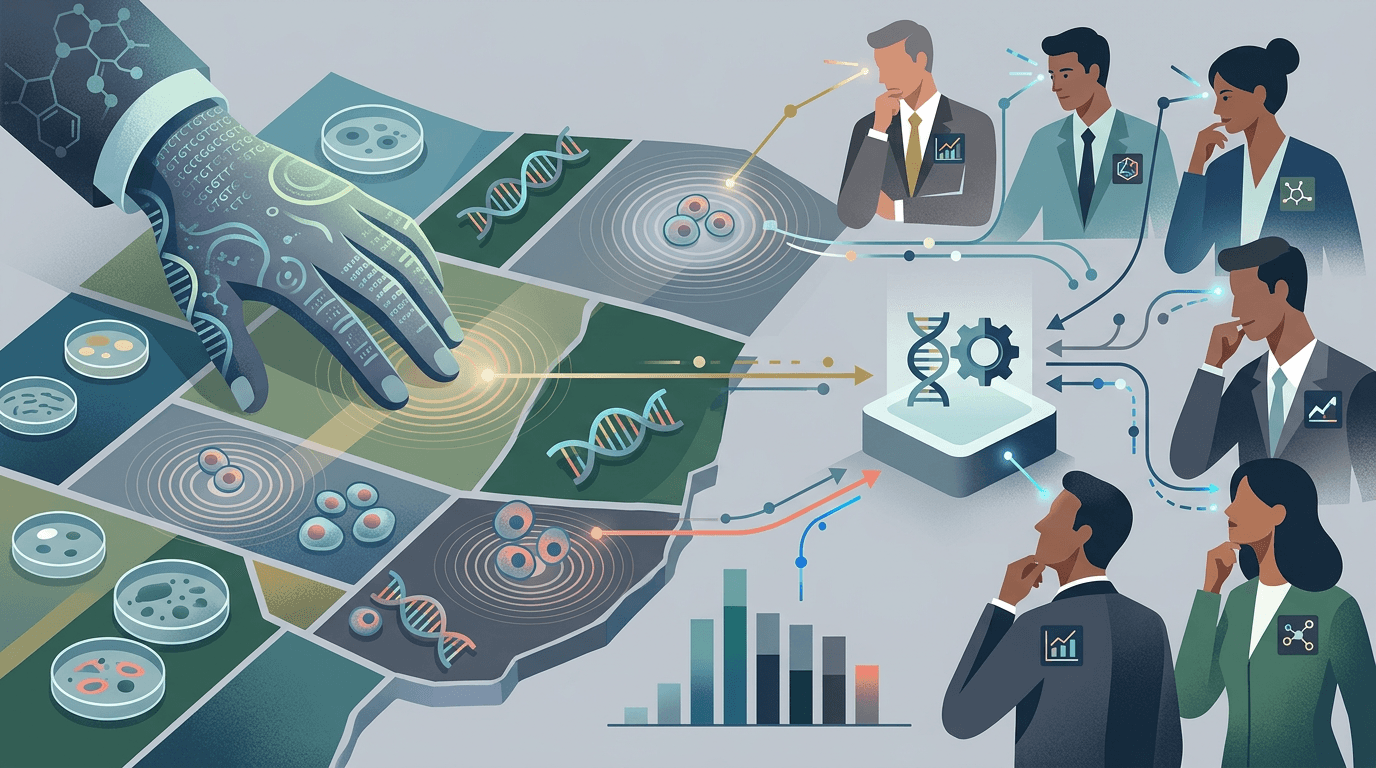

FOMAT Medical Research just swallowed Topography Health's research sites to become the largest embedded research organization in America. With 27% of trial sites failing to enroll a single patient, this coast-to-coast network is betting it can fix clinical research's most embarrassing problem.
Imagine walking into your regular doctor's appointment for a check-up, and your physician says, "Hey, there's a clinical trial that might be perfect for you. Want to hear about it?" No separate research facility. No driving two hours to an academic medical center. No extra appointments stacked on top of your already-packed schedule.
That's the pitch behind embedded research organizations, and the biggest one in America just got a whole lot bigger.
On May 1, FOMAT Medical Research completed its acquisition of Topography Health's research site business unit. The deal (financial terms undisclosed, naturally) gives FOMAT more than 35 clinical research sites spread across six states: Maryland, California, Colorado, New Mexico, Michigan, and Virginia. It's now the largest embedded research organization in the United States.
And if you're wondering why a bunch of community doctor's offices rolling up under one banner matters, the answer involves a $450 million revenue machine, an enrollment crisis that's crippling the industry, and a bet that the future of clinical trials looks nothing like the past.
Clinical trials have an enrollment problem so severe it borders on absurd. 27% of trial sites fail to enroll a single patient. Not one. Zero. They set up shop, hire coordinators, get regulatory approvals, then sit there collecting dust while sponsors burn cash waiting for data.
It gets worse: up to 80% of trials miss their enrollment targets. That's not a rounding error; it's a systemic failure.
The traditional model concentrates trials in big academic medical centers and standalone research facilities. These places are great at science but terrible at accessibility. They tend to cluster in major metro areas, serve populations that skew white and affluent, and require patients to travel significant distances for participation.
This is the gap that embedded research organizations are trying to fill.

Two Oxford companies are teaming up to decode the genetic roots of autoimmune disease, and their bet could reshape how drug targets are chosen. Genomics Ltd. brings the world's largest gene dataset; Greywolf Therapeutics brings the clinical candidates. The result might just fix your immune system's friendly-fire problem.


Join thousands of biotech professionals who start their day with our free, daily briefing.
Think of it like the difference between a food truck that shows up in your neighborhood versus a Michelin-star restaurant 45 minutes away. Both serve food. One meets you where you already are.
An embedded research organization takes clinical trials and plugs them directly into existing community physician practices. Your primary care doc, your gastroenterologist, your allergist: these become the trial sites. Research gets woven into routine clinical care rather than existing as a parallel universe that patients have to seek out.
The advantages are intuitive. Patients don't need extra visits. Physicians already know their patients' medical histories. Electronic health records capture the data in real time. The whole thing runs on existing infrastructure instead of requiring a separate apparatus.
FOMAT has been doing this in California for over a decade, partnering with groups like Golden Valley Health Centers (which serves more than 145,000 patients across three counties) and allergy/immunology practices in the greater LA area. The Topography Health acquisition takes this coast-to-coast.
Topography Health wasn't just a collection of research sites. It built an AI platform called WaypointsOS that sifts through structured and unstructured patient data to identify trial candidates. The platform is EHR-agnostic, meaning it works regardless of what electronic records system a practice uses.
The numbers tell the story: Topography's network enrolled 35,000 patients across more than 1,500 trials, generated $450 million in research revenue, and achieved something almost unheard of in the industry: 100% physician investigator retention.
That retention stat matters enormously. Training a physician investigator takes time and money. If they bail after one trial, you've lost your investment and your community connection. Topography cracked that code by protecting physicians' time and providing operational support so research doesn't cannibalize their clinical practice.
FOMAT isn't operating in a vacuum. The entire clinical trial landscape is consolidating. Sponsors are gravitating toward fewer, higher-performing site networks that can deliver patients on time and on budget. A majority of sites still manually transfer data in 2025, which tells you how much room exists for tech-enabled networks to eat market share.
The tension is real, though. Consolidation boosts efficiency but risks concentrating trials in established regions. Fewer sites can mean less geographic diversity, which undermines the whole point of reaching underserved populations. Racial and ethnic diversity in clinical trials still lags significantly.
FOMAT's bet is that embedding in community practices solves both problems simultaneously: you get the operational efficiency of a coordinated network AND the diversity that comes from meeting patients in their own neighborhoods. It's consolidation without concentration.
For pharma and biotech sponsors, a 35-site embedded network across six states represents a one-stop shop for diverse enrollment. Instead of cobbling together relationships with dozens of independent sites (many of which will under-deliver), they can tap into a unified system with proven retention and AI-powered patient matching.
For patients, especially those in historically underserved communities, this could mean the difference between never hearing about a relevant clinical trial and having their own doctor bring it up during a routine visit. That's not a small thing when you consider that participation in a trial sometimes means access to cutting-edge treatments years before they hit the market.
The question nobody can answer yet: does making one organization this dominant in the embedded research space create a gatekeeper problem? If FOMAT controls the largest network of community-embedded trial sites, sponsors may have limited alternatives. Pricing power follows market power, and we've seen that movie before in healthcare.
For now, the industry seems to be applauding. The enrollment crisis is painful enough that any organization promising to solve it will get a warm reception. Whether FOMAT can deliver on that promise at scale, across six states and 35-plus sites, is the trillion-dollar question that only time (and enrollment data) will answer.
The FDA just approved the first-ever PROTAC, a drug that doesn't just block cancer proteins but destroys them entirely. Vepdegestrant's approval for ESR1-mutated breast cancer validates an entirely new class of medicine, and the implications stretch far beyond one tumor type.