
Flagship Pioneering, the firm that built Moderna, just unveiled Serif Biomedicines and a brand-new drug category called Modified DNA. It promises the durability of gene therapy and the flexibility of mRNA, without rewriting your genome. The catch? It still has to prove it works in humans.
If you think the medicine cabinet is full, Flagship Pioneering just added a whole new shelf.
The prolific venture creation firm behind Moderna unveiled Serif Biomedicines on April 21, emerging from stealth work inside Flagship Labs. The company's pitch is audacious: it claims to have built an entirely new category of medicine called Modified DNA, distinct from gene therapy, mRNA, and gene editing. Flagship is backing that claim with a $50 million commitment.
Bold? Absolutely. But when the firm that bankrolled mRNA vaccines says it's found the next big thing, you pay attention.
To understand why Modified DNA matters, you need to understand what's broken about the current options.
mRNA (think Moderna's COVID vaccine) is programmable and easy to manufacture. But it's temporary. Your cells read the instructions, make a protein, and the mRNA degrades. For chronic diseases, that means coming back for more, again and again.
Gene therapy is the opposite: durable, sometimes curative, but you typically get one shot. Literally. Your immune system recognizes the viral delivery vehicle and blocks it the second time around. And many gene therapies actually alter your genome, which raises safety questions that keep regulators up at night.
Imagine you could only choose between a whiteboard (easy to write on, easy to erase) and a tattoo (permanent, but you better love it forever). Serif says it's built a third option: something like a high-quality print. Durable, but replaceable if you need to update it.
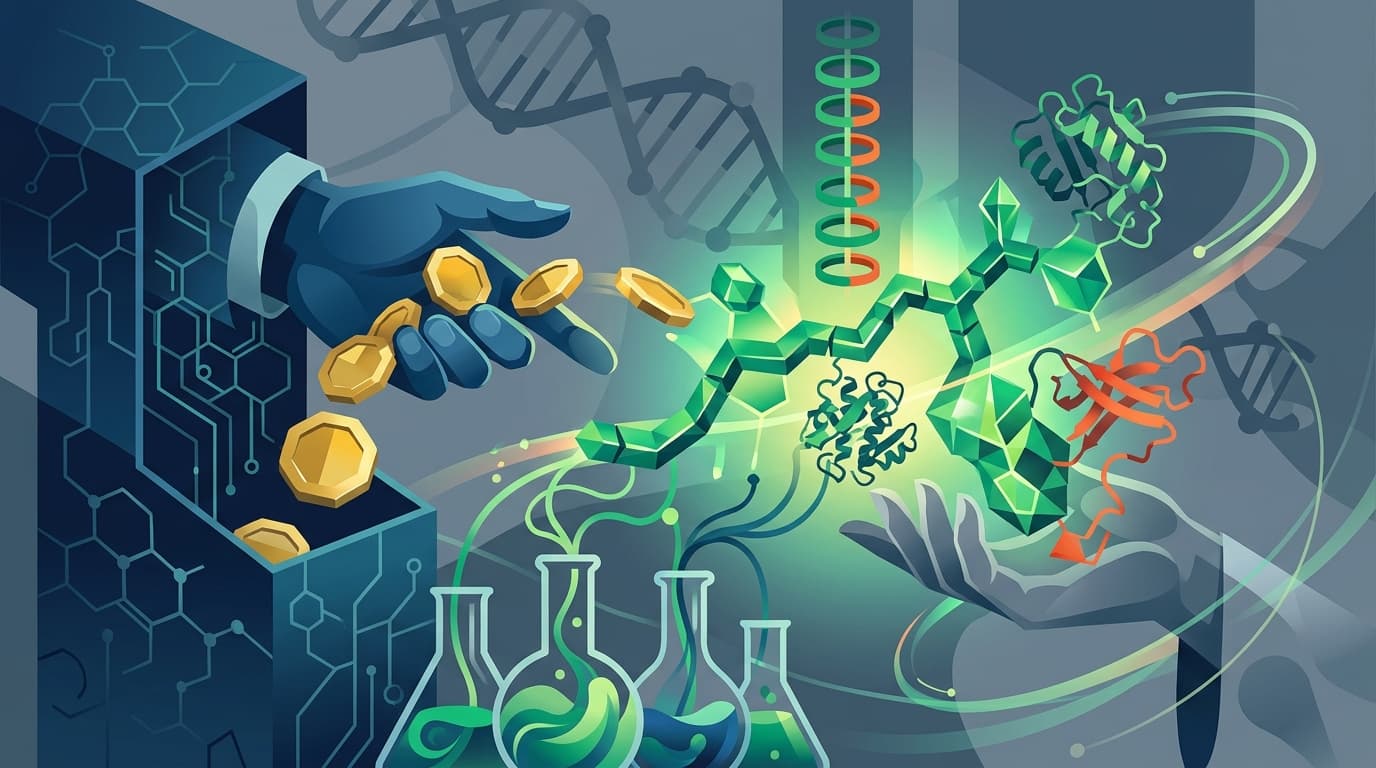
Serif's platform takes DNA and reshapes its structure and chemistry so it can get inside a cell's nucleus, turn on gene expression, and keep running for an extended period. Crucially, it does this without integrating into the cell's own genome. Your DNA stays untouched.
That distinction matters enormously. If the medicine doesn't rewrite your genetic code, the safety profile changes dramatically. And because it doesn't trigger the same immune response as traditional gene therapy vectors, Serif says patients can be : a feature that's essentially impossible with most gene therapies today.

Biogen dropped $850 million to grab Greater China rights to an antibody it already owned everywhere else. The deal consolidates global control of felzartamab, a kidney disease drug that could become a pipeline unto itself, and it signals that China-West pharma deals aren't slowing down anytime soon.


Join thousands of biotech professionals who start their day with our free, daily briefing.

The technology stack is layered. Modified DNA molecules with reduced immunogenicity (meaning your body is less likely to attack them) sit at the core. Those are paired with co-delivered mRNA co-factors that help the DNA get into the nucleus, optimized lipid nanoparticles for tissue targeting, AI-guided sequence design, and scalable manufacturing.
That's a lot of moving parts. But the early results are encouraging: Serif has preclinical data showing that the platform is tolerable in non-human primates with sustained gene expression after IV administration. The company plans to present that data at an upcoming scientific meeting.
Flagship Pioneering isn't your typical venture capital firm. It doesn't wait for founders to walk through the door with a pitch deck. Instead, it creates companies from scratch inside its own labs, incubating ideas for years before spinning them out. The firm has launched over 100 companies since 2000 and currently runs an ecosystem of about 40, collectively advancing more than 50 clinical programs and 150 preclinical ones.
The $50 million commitment to Serif is significant but measured. Flagship, which is backed by more than $10 billion in committed capital from its investors, has been ramping up activity. In January 2026, it participated in a $50 million registered direct financing for portfolio company Foghorn Therapeutics alongside other investors. A $20 million seed round for Extuitive closed in September 2025.
Serif's initial programs will target rare diseases and immune programming, two areas where the platform's durability and redosability could make the biggest difference. The company has built a patent fortress to protect its moat: over 20 patent families, including issued U.S. patents.
Serif isn't operating in a vacuum. The DNA-targeting therapeutics space is booming, with over 180 companies and 200+ drugs in the broader gene therapy competitive landscape.
But most of those companies are doing something fundamentally different. CRISPR Therapeutics and Intellia cut DNA to edit genes; it's precise but involves breaking the double helix, which carries its own risks. Moderna delivers mRNA for temporary protein production. Flagship's own Tessera Therapeutics uses "gene writers" to insert DNA sequences via a different mechanism entirely.
Serif occupies a genuinely novel niche. It's not editing your genes. It's not giving you temporary instructions. It's delivering a new, reshaped form of DNA that expresses proteins durably without changing who you are at the genetic level. If Tessera is a word processor (rewriting specific sentences in your genome), Serif is more like a sticky note placed on top of the page: it delivers the message without altering the original text.
The science sounds compelling on paper. Stealth development, primate data, a robust IP portfolio, and Flagship's track record all point in the right direction. But let's be honest: we've seen elegant platforms stumble when they hit the messy reality of human biology.
How long does "durable" actually mean in patients? Can redosing really work without triggering immune responses over time? Will the lipid nanoparticle delivery system target the right tissues consistently? These are questions that only clinical trials can answer, and Serif hasn't entered the clinic yet.
Still, the timing feels right. The FDA is increasingly comfortable with genetic medicines. And the limitations of mRNA (too temporary) and gene therapy (too permanent) have created a genuine market gap.
Flagship has earned the benefit of the doubt before. It backed Moderna when mRNA was considered a fringe idea. Whether Modified DNA becomes the next billion-dollar platform or an expensive science experiment will take years to determine. But if history rhymes, Serif Biomedicines just became one of the most interesting companies nobody's heard of.
The sticky note is on the page. Now we wait to see if the message sticks.
The FDA rejected Replimune's cancer-fighting virus for the second time, and the fallout was swift: 63 employees gone, manufacturing scaled back, and a company fighting to survive. The oncolytic virus pioneer's collapse reveals what happens when elegant science meets unforgiving regulatory math.