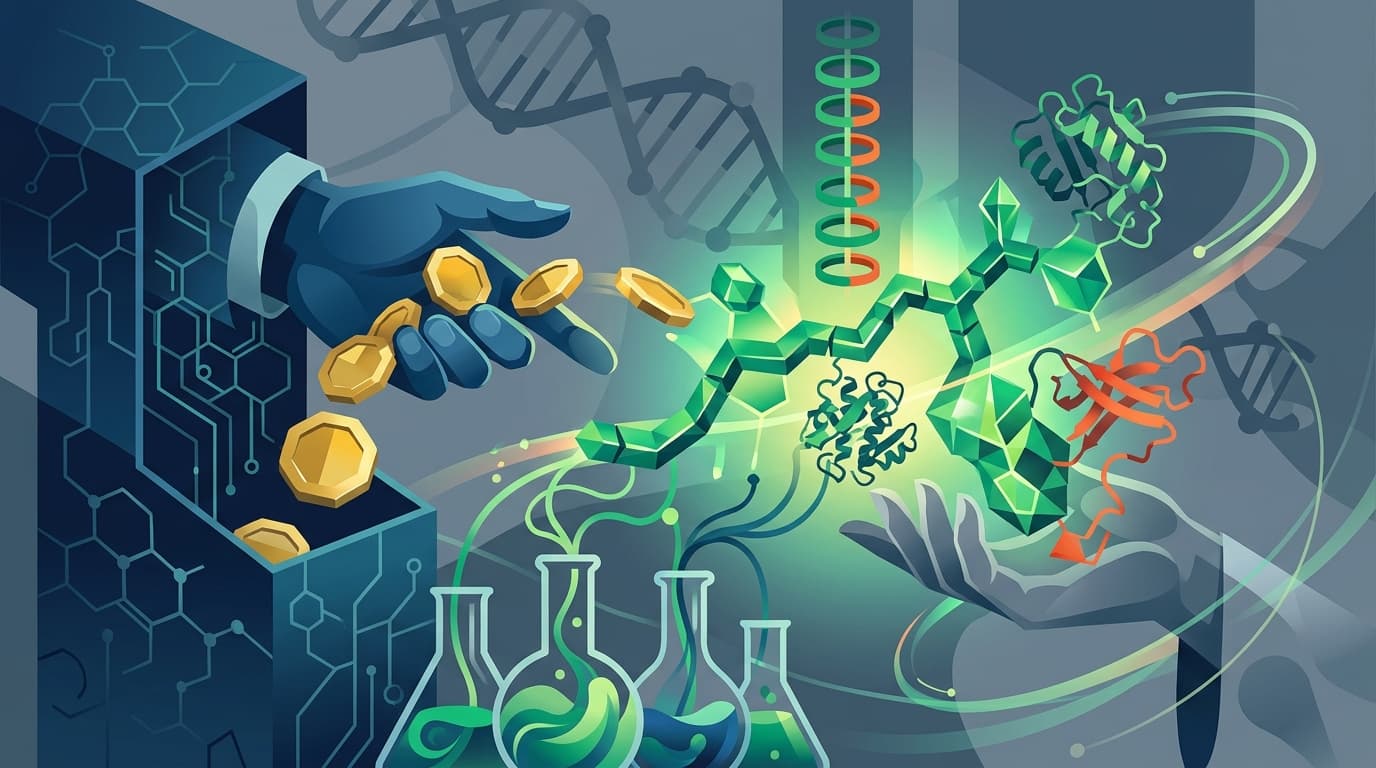
Biogen Just Paid $850M to Own a Drug You've Never Heard Of
Biogen dropped $850 million to grab Greater China rights to an antibody it already owned everywhere else. The deal consolidates global control of felzartamab, a kidney disease drug that could become a pipeline unto itself, and it signals that China-West pharma deals aren't slowing down anytime soon.
Imagine spending two years building a puzzle, only to realize someone else owns the last piece. That's roughly the position Biogen found itself in with felzartamab, a promising antibody it controlled almost everywhere on the planet, except for one of the world's largest pharmaceutical markets.
So Biogen did what any determined puzzle builder would do: it bought the missing piece. The price tag? Up to $850 million.
The Missing Piece Was in China
Back in July 2024, Biogen acquired a company called Human Immunology Biosciences (HI-Bio) and gained worldwide rights to felzartamab. Worldwide, that is, minus Greater China. Those rights belonged to TJ Biopharma, a fully integrated biotech company based in Zhejiang Province with its own GMP manufacturing facilities and a growing pipeline.
That gap in coverage wasn't just a minor inconvenience. China has one of the largest patient populations for the kidney diseases felzartamab is targeting. Leaving Greater China off the map was like opening a restaurant chain but skipping New York City.
The new deal, announced April 20, closes that gap entirely. Biogen now controls worldwide development and commercialization rights to felzartamab, no asterisks required.
What Exactly Is Felzartamab?
Felzartamab is a fully human monoclonal antibody (a lab-made protein designed to target specific molecules in the body) directed against a protein called CD38. If that sounds familiar, it's because CD38-targeting drugs have been blockbusters in blood cancers like multiple myeloma. Think of CD38 as a name tag worn by certain immune cells, especially plasma cells. Felzartamab finds those name tags and takes the cells out.
But Biogen isn't chasing cancer with this drug. The real play is in immune-mediated kidney diseases, conditions where the body's own immune system attacks the kidneys. Plasma cells pump out harmful antibodies that damage kidney tissue. By selectively wiping out those CD38-positive plasma cells, felzartamab goes after the root cause rather than just managing symptoms.
Get tomorrow's biotech intelligence before your competitors.
Join thousands of biotech professionals who start their day with our free, daily briefing.
The drug is currently in Phase III trials (the final stage before seeking regulatory approval) for IgA nephropathy. There's also a Phase I study underway in lupus nephritis. And in a completely separate lane, TJ Biopharma submitted a Biologics License Application for felzartamab in multiple myeloma to China's National Medical Products Administration back in December 2024. That application is currently under review.
Biogen executives have described felzartamab as a "pipeline-in-a-product" because of its potential across so many indications. It's one drug with several possible revenue streams, which makes owning global rights that much more valuable.
Follow the Money
The deal's financial architecture tells you a lot about how confident (or cautious) both sides are.
Biogen is paying TJ Biopharma $100 million upfront in cash. That's real money wired now, and Biogen will book it as an Acquired In-Process Research and Development expense in Q2 2026. It's the cost of admission.
The remaining $750 million comes in commercial and sales milestones, meaning TJ Biopharma only collects if the drug actually succeeds in China. No sales, no payouts. On top of that, TJ Biopharma will receive mid-single-digit to low-double-digit percentage royalties on net sales in the Greater China region.
Notably, there are no disclosed development or regulatory milestone payments. That's unusual. In most licensing deals, the buyer pays at key inflection points: first patient dosed, Phase III data readout, regulatory submission. The absence of those payments here shifts most of the financial risk onto the commercial side. Translation: TJ Biopharma's big payday depends on felzartamab actually selling well in China, not just clearing regulatory hurdles.
One more wrinkle worth noting: as part of this transaction, Biogen assumes milestone payment and royalty obligations under the original licensing agreement with MorphoSys GmbH, which is now a Novartis subsidiary. MorphoSys was involved in felzartamab's early development, and those legacy obligations come along for the ride.
TJ Biopharma: The Partner Behind the Deal
TJ Biopharma isn't a one-trick pony. The company operates as a vertically integrated biotech firm, handling everything from drug discovery to manufacturing to commercial partnerships. Its pipeline includes candidates in autoimmune diseases, immuno-oncology, and metabolic disorders, with four drugs in discovery, five in preclinical development, and several others at various clinical stages.
The company's Hangzhou manufacturing facility will continue to produce felzartamab for the multiple myeloma indication in China, though Biogen will lead post-approval commercial efforts in the region. TJ Biopharma joined Biogen's international Phase III trials for the kidney indications in April 2025, so the two companies already have a working relationship.
TJ Biopharma's general manager, Dr. Lili Qian, called the deal a validation of the company's "fast-to-market" model. Meanwhile, Fraser Hall, Biogen's Intercontinental Region President, framed it as expanding the company's global opportunities in immune-mediated conditions.
The Bigger Picture: China Deals Aren't Slowing Down
This deal arrives at an interesting moment. You might expect cross-border pharma licensing between Western companies and Chinese biotechs to be cooling off, given all the geopolitical noise. Tensions over trade, technology, and the BIOSECURE Act (which restricts U.S. government contracts with certain Chinese biotech firms) have created a cloud of uncertainty.
The data says otherwise. And Q1 2026 alone already clocked $60 billion in deal value.
The growth trajectory is staggering. Deal volume surged 120% from 2022 to 2025, jumping from 42 deals to 93. Average upfront payments climbed from $52 million in 2022 to $172 million in early 2026. Big pharma companies inked 18 in-licensing deals with upfronts north of $50 million in 2025, compared to just one such deal in 2020.
Some of the recent blockbusters make Biogen's deal look modest by comparison. Jiangsu Hengrui had a notable 2025, including a $12 billion arrangement with GSK covering 12 drugs. Pfizer paid 3SBio $1.25 billion upfront (plus $4.8 billion in milestones) for a bispecific antibody. GeneQuantum struck a $13 billion ADC deal. These numbers would have been unthinkable five years ago.
The pattern is clear: Western pharma companies are treating Chinese biotechs as de-risked innovation hubs. Roughly 75% of licensed assets are preclinical or Phase I, and about half focus on next-generation antibodies. Companies facing patent cliffs need fresh pipelines, and China is producing them at a pace and price point that's hard to ignore, regardless of the political headlines.
Why This Deal Actually Matters
Biogen's $850 million play for Greater China rights isn't just about one drug in one market. It's about control.
When a company owns worldwide rights to a drug, it can coordinate global clinical trials, align regulatory strategies across regions, and negotiate with payers from a position of unified strength. Splitting rights across geographies creates friction: different development timelines, competing priorities, potential disagreements about pricing or indications.
By consolidating felzartamab under one roof, Biogen eliminates that friction. Every decision about the drug's future, from which kidney disease to target next to how aggressively to price it in Shanghai, runs through a single organization.
For Biogen specifically, this deal also signals a deepening commitment to immunology and nephrology beyond its traditional neuroscience base. The company built its reputation on drugs for multiple sclerosis and spinal muscular atrophy. Felzartamab represents a bet that Biogen can become a serious player in kidney disease, a space with enormous unmet need and relatively few targeted therapies.
The $100 million upfront is manageable for a company of Biogen's size. And the milestone-heavy structure means the truly big payments only come due if felzartamab delivers commercially. It's a deal designed to limit downside while preserving massive upside.
What to Watch
The next few quarters will tell us a lot. The Phase III readouts for IgA nephropathy and primary membranous nephropathy will determine whether felzartamab actually works well enough to win approval. China's regulatory review of the multiple myeloma application could provide an early commercial foothold in the region.
And keep an eye on the broader trend. If cross-border China deals maintain their 2025 pace, we could be looking at a year where Chinese biotechs supply a meaningful share of Western pharma's future pipelines, geopolitics be damned. Biogen just placed its bet. Now we wait to see if the puzzle is worth finishing.
Clinical & Regulatory4 min read
The Virus That Was Supposed to Kill Cancer Just Killed a Company Instead
The FDA rejected Replimune's cancer-fighting virus for the second time, and the fallout was swift: 63 employees gone, manufacturing scaled back, and a company fighting to survive. The oncolytic virus pioneer's collapse reveals what happens when elegant science meets unforgiving regulatory math.