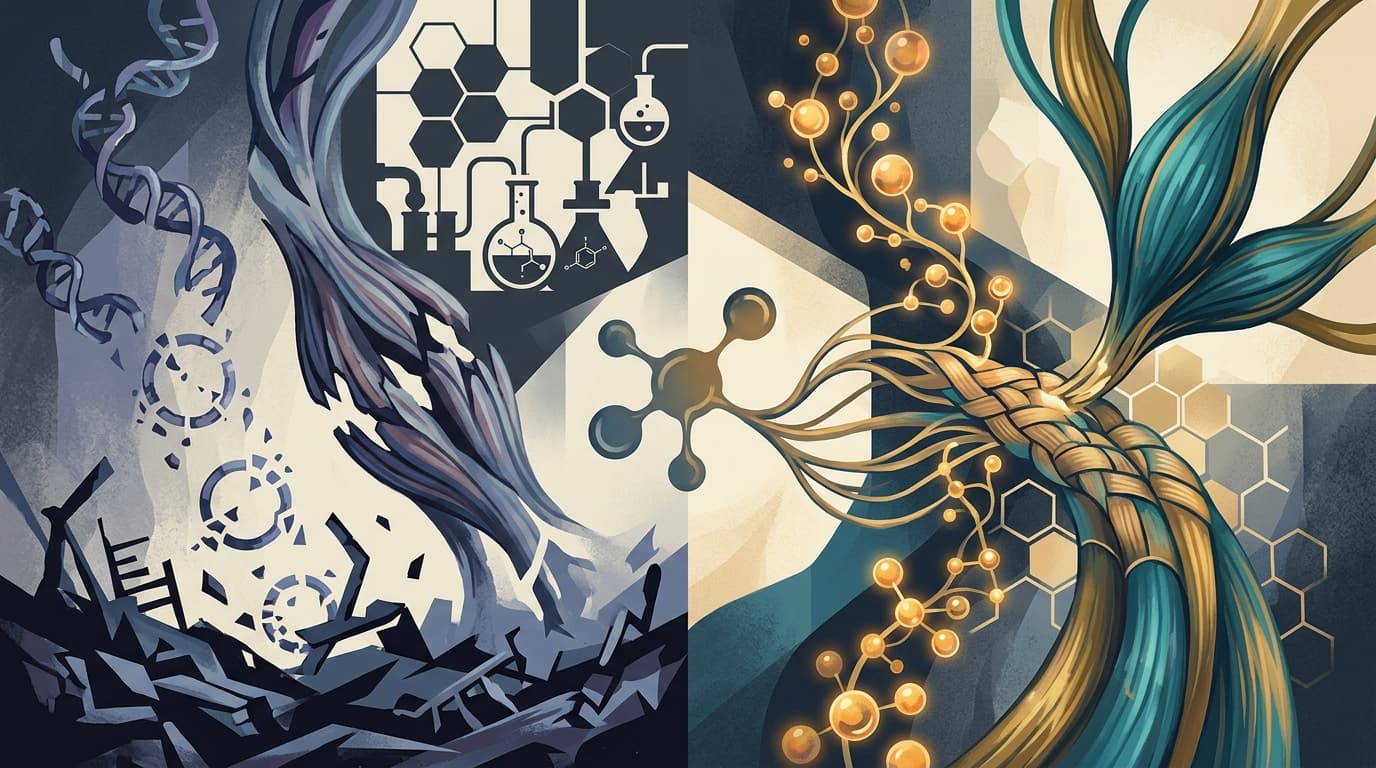

For the first time in any clinical trial, patients with FSHD gained muscle mass instead of losing it. Epicrispr's one-shot epigenetic therapy just delivered a result that no drug has ever achieved in this devastating muscular dystrophy.
Imagine a disease where your muscles slowly melt away, year after year, and every drug ever tested just watches it happen. That's been the reality for people living with facioscapulohumeral muscular dystrophy (FSHD), one of the most common forms of muscular dystrophy on the planet. It affects roughly 1 in 8,000 people, gradually stealing the ability to raise your arms, smile, or walk.
There are no approved treatments. Not one. Doctors can offer physical therapy, pain management, and the occasional surgery to pin a shoulder blade in place. But nothing that slows the disease, let alone reverses it.
Until, possibly, now.
Epicrispr Biotechnologies reported something in June 2026 that no company has ever been able to claim in FSHD: patients on their experimental therapy gained muscle mass. Not stabilized. Not "declined less than expected." Actually gained.
The therapy is called EPI-321, and it's currently in a small Phase 1/2 trial (the earliest stage of human testing, focused primarily on safety). Three patients who received a single IV infusion were evaluated at six months. All three showed increases in lean muscle volume, averaging about 370 milliliters of new muscle, or roughly 0.8 pounds.
That might sound modest. But in a disease where every prior clinical trial has shown patients losing muscle over time, gaining any at all is like watching a river flow uphill. Some individual muscles showed volume increases of up to 15%.
If you hear "CRISPR" and think "gene editing," you're half right. EPI-321 uses CRISPR's targeting system (think of it as a GPS for your genome), but it doesn't cut DNA. Instead, it carries an epigenetic tool: an enzyme that adds chemical tags called methyl groups to a specific region of your DNA.
Here's why that matters. FSHD is caused by a gene called DUX4 that's supposed to be locked away, silent. In healthy people, a region of chromosome 4 called D4Z4 is heavily methylated, which keeps DUX4 switched off. In FSHD patients, that methylation is lost. DUX4 wakes up, starts producing a toxic protein in muscle cells, and those cells die.

Biogen closed its $5.6 billion Apellis acquisition and almost immediately gutted the biotech's research pipeline, keeping only two approved drugs. It's a playbook Big Pharma has run for decades, and the cost isn't always measured in dollars.

Join thousands of biotech professionals who start their day with our free, daily briefing.

EPI-321 is designed to put the lock back on. Its CRISPR-based system navigates to the D4Z4 region and re-methylates it, essentially telling DUX4 to sit down and shut up. Because it never cuts the DNA, it avoids the mutation risks that come with traditional CRISPR editing. Think of it less like surgery on your genome and more like flipping a light switch back to "off."
The whole thing is delivered via a single intravenous dose using an AAV vector (a harmless virus that's good at getting into muscle cells). One shot, potentially lasting years.
Before anyone gets too excited, let's talk about what this data doesn't prove. The muscle volume findings come from just three patients. The trial has no placebo group, so there's no direct comparison to untreated patients. Six months of follow-up is a blink in a disease that unfolds over decades.
Nine patients total have been dosed across two dose levels (a lower dose of 2×10¹³ viral particles per kilogram and a higher dose of 4×10¹³), and no serious adverse events have been reported. That's reassuring but early; the trial includes five years of safety monitoring for good reason. AAV-based gene therapies have a complicated history with liver problems and immune reactions that sometimes show up later.
The company also reported that a blood biomarker linked to DUX4 activity declined in a pattern consistent with the muscle gains, which suggests the therapy is working through its intended mechanism rather than some random fluke. But again: three patients.
FSHD has been a graveyard for drug developers. The most high-profile failure came from Fulcrum Therapeutics, whose small-molecule drug losmapimod crashed in a Phase 3 trial and was abandoned in late 2024. That program tried to suppress DUX4 indirectly by blocking a signaling pathway called p38. It didn't work well enough.
The current front-runner in the space is Avidity Biosciences, whose antibody-siRNA conjugate del-brax (AOC 1020) is the furthest along, with late-stage clinical testing and a potential accelerated approval pathway based on biomarker data. Arrowhead Pharmaceuticals (partnered with Sarepta) is running a Phase 1/2 trial of its RNAi therapy ARO-DUX4. Roche tested a myostatin-targeting antibody (emugrobart) in FSHD patients in a Phase 2 trial but decided not to advance the program further.
All of these programs are trying to either silence DUX4 or build muscle through alternative pathways. But none of them has yet reported what Epicrispr just did: actual muscle growth in human patients.
More data from the trial is expected at the World Muscle Society meeting in September 2026, which should include longer follow-up and results from patients who received the higher dose. Epicrispr aims to complete the primary portion of the Phase 1/2 study by mid-2027, though the full trial, including five years of safety follow-up, extends into the early 2030s.
The FSHD Global Research Foundation called the findings an "important scientific milestone" while acknowledging the small sample size. That's about the right temperature: cautiously thrilled.
For Epicrispr, the next big question isn't just "does it keep working?" but "does gaining muscle actually make patients stronger and more functional?" Regulators will eventually need to see improvements in things like arm reach, walking ability, and quality of life, not just MRI images showing bigger muscles.
But for a disease with zero approved therapies and a decades-long track record of clinical failure, showing that muscles can grow instead of wither is something close to extraordinary. It's only three patients. It's only six months. And it might be the most important data point FSHD research has ever produced.
Lantheus' cancer imaging agent had flawless clinical data and a clean safety profile. The FDA rejected it anyway, and the reason has nothing to do with science. It's a cautionary tale about the hidden risk that keeps torpedoing biotech approvals.