The First Real Cure for Hepatitis B Just Dropped 30 Years of Silence
For 30 years, chronic hepatitis B had no real cure, just lifelong pills. GSK and Ionis just dropped Phase 3 data for a six-month therapy that could change that for 254 million patients worldwide.
Imagine being told you have a disease that affects a quarter-billion people, and the best medicine can do is manage it. Forever. No finish line, no graduation day, just pills for the rest of your life and a prayer that your liver holds up.
That was chronic hepatitis B. For 30 years, the treatment playbook barely changed. Until last Tuesday.
The Drug That Broke the Drought
GSK and Ionis Pharmaceuticals announced that bepirovirsen, their experimental hepatitis B therapy, nailed its Phase 3 trials. Both of them. The drug achieved statistically significant functional cure rates in two massive studies (called B-Well 1 and B-Well 2) that enrolled over 1,800 patients across 29 countries.
A "functional cure" means something very specific here: the virus becomes undetectable in a patient's blood and stays that way for at least 24 weeks after they stop taking the drug. That's the part that matters. Current treatments suppress the virus, sure. But you can never stop taking them. Bepirovirsen is designed as a six-month course. Take it, finish it, move on with your life.
For context, existing therapies achieve a functional cure rate of roughly 1%. Bepirovirsen beat that by a statistically significant margin across both trials, with even better results in patients who started with lower levels of hepatitis B surface antigen (HBsAg), the key protein the virus uses to evade your immune system.
GSK hasn't released the exact percentages yet. Full data is expected at a scientific congress later this year. But the company is already projecting significant commercial potential, which tells you they're not sitting on mediocre numbers.
How a Molecule Fights a Virus Three Ways at Once
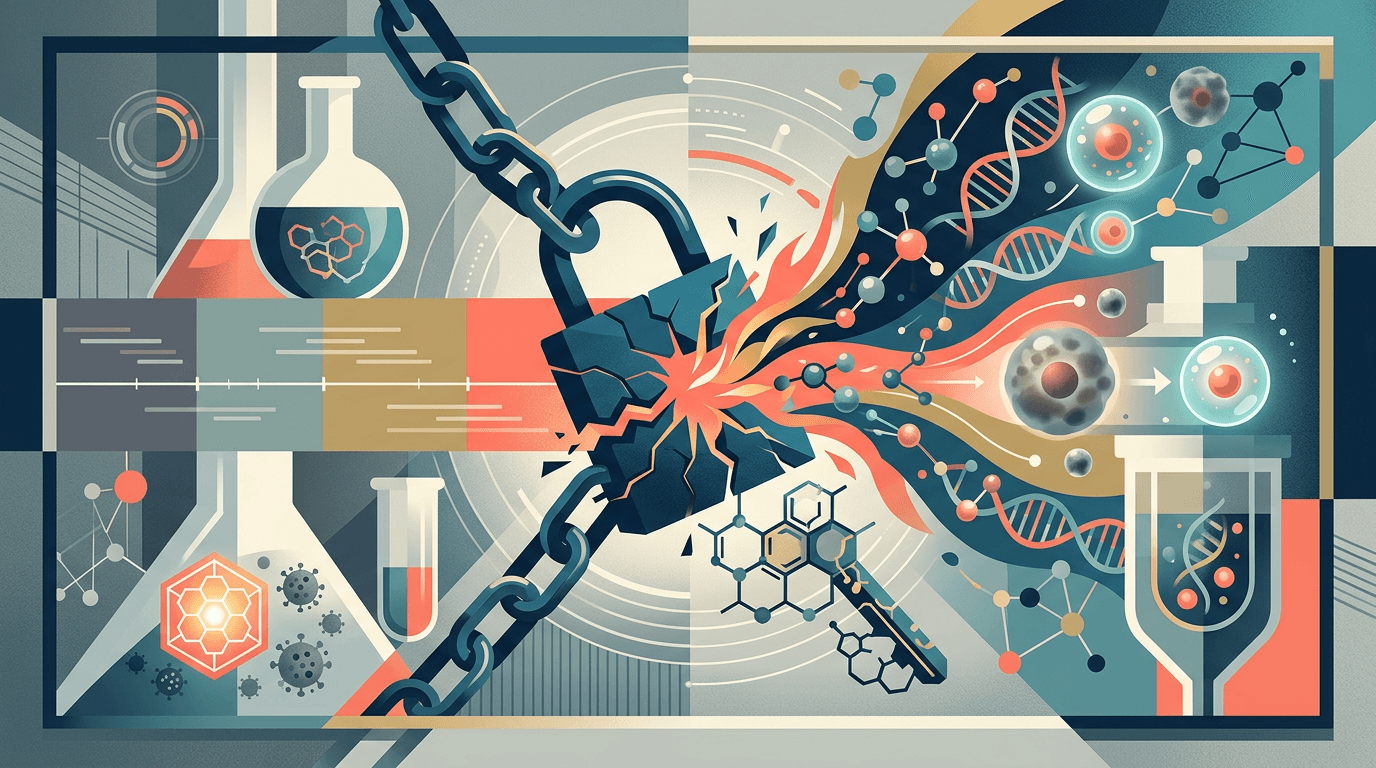
Most antiviral drugs do one thing: they block the virus from copying itself. Think of it like putting a padlock on a photocopier. The virus can't replicate, so the infection stays contained. That's what current hepatitis B drugs (called nucleos(t)ide analogues) do. They're effective padlocks, but the moment you remove them, the copier fires right back up.
Get tomorrow's biotech intelligence before your competitors.
Join thousands of biotech professionals who start their day with our free, daily briefing.
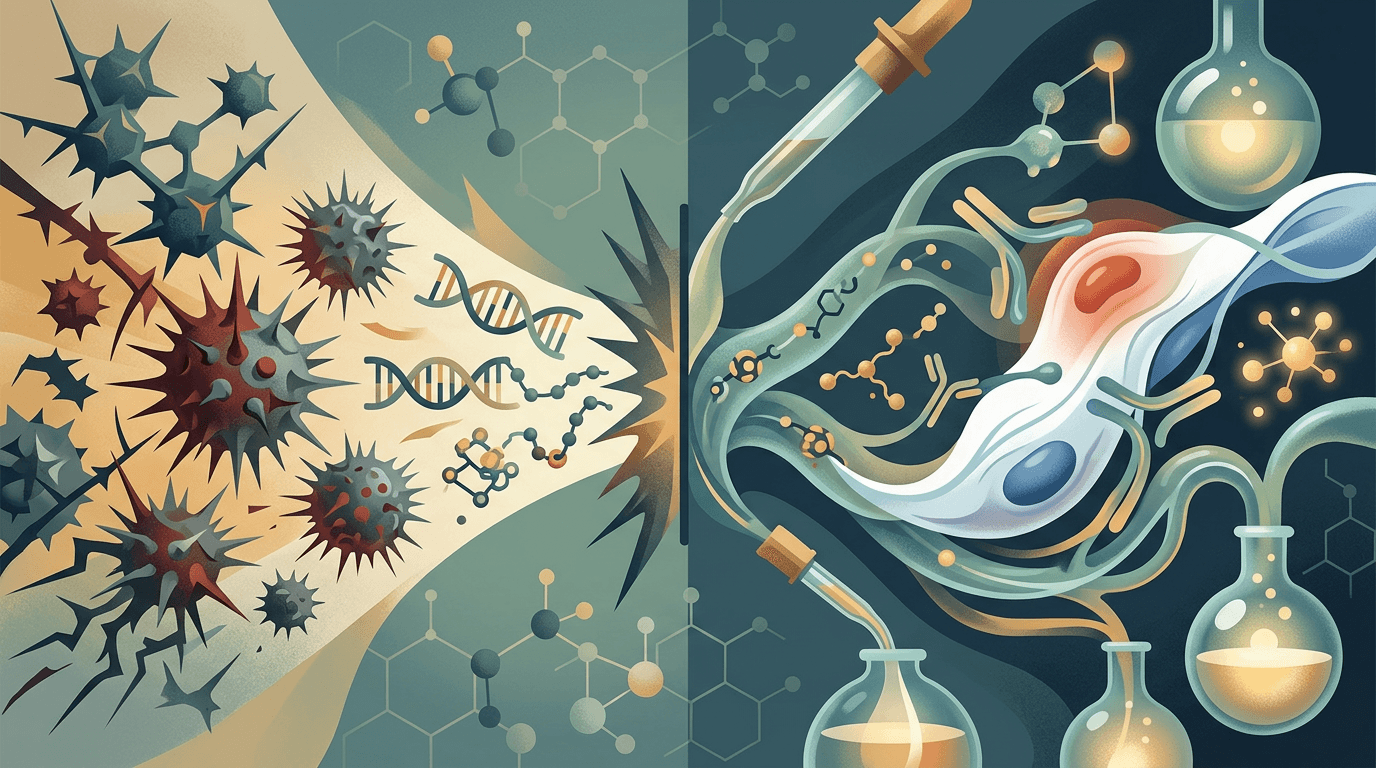
Bepirovirsen takes a completely different approach. It's an antisense oligonucleotide (ASO), which is essentially a tiny, custom-built strand of genetic material designed to latch onto the virus's own RNA. Think of it as a molecular GPS tracker that finds the virus's instruction manual and shreds it before it can be read.
But it doesn't stop there. Bepirovirsen does three things simultaneously:
Blocks viral DNA replication, preventing the virus from making copies of itself.
Suppresses HBsAg production, stripping away the protein shield that helps the virus hide from the immune system.
Stimulates the immune system (likely through a pathway called toll-like receptor 8), essentially waking up the body's own defenses to hunt down infected liver cells.
It's the triple-threat approach: jam the copier, rip off the disguise, and call in reinforcements. That combination is what makes a finite treatment possible. By the time the six-month course ends, the immune system has learned to keep the virus in check on its own.
A Disease That's Been Hiding in Plain Sight
Chronic hepatitis B doesn't get the attention it deserves. It infects an estimated 254 million people worldwide. It is a leading cause of liver cancer. It kills about 1.1 million people every year, which breaks down to 3,500 deaths per day.
And yet, only 13% of people with chronic hepatitis B have even been diagnosed. Fewer than 3% are receiving treatment. Those numbers are staggering. A meta-analysis covering 1.7 million patients across 50 countries found that about one-quarter of patients fall off the care pathway at every single step: testing, assessment, treatment initiation, and long-term retention.
Part of the problem is that current drugs require lifelong adherence. If you're living in a region with limited healthcare infrastructure (and most hepatitis B patients are), staying on medication forever is a tall order. A six-month cure changes the math entirely.
The Business of Curing 254 Million People
Let's talk money, because this is where it gets interesting for GSK.
The global hepatitis B therapeutics market sits at roughly $2.48 billion in 2025, but analysts project it could balloon to $6.25 billion by 2032. The functional cure segment specifically is expected to command over 65% of the market by 2034. If you're GSK, you didn't just find a new drug; you found a new category.
GSK originally licensed bepirovirsen from Ionis back in 2019 for $25 million upfront plus up to $262 million in milestones. Ionis stands to earn remaining milestones plus royalties of 10-12% on sales.
Regulatory filings are already underway as of Q1 2026. Bepirovirsen has FDA Fast Track designation in the U.S., Breakthrough Therapy designation in China, and SENKU designation in Japan. Those aren't just labels; they're fast passes through the regulatory queue, which means this drug could reach patients faster than typical timelines suggest.
The Competition Is Playing Catch-Up
Bepirovirsen isn't the only horse in this race, but it's comfortably in the lead.
China's Amoytop Biotech got its pegylated interferon alfa-2b drug Pegbing approved in October 2025, the first hepatitis B therapy explicitly targeting functional cure. It achieved a 31.4% clinical cure rate at 24 weeks post-treatment in trials. That's a real number, and it's impressive.
Then there's AusperBio, whose ASO candidate AHB-137 is in Phase 3 trials. Early Phase 2a data showed a 30% functional cure rate at 24 weeks post-treatment in certain patient subgroups.
But the bigger names you might expect to be competing (Gilead, Johnson & Johnson, Assembly Biosciences, Arbutus Biopharma) are either focused on earlier-stage candidates or lack Phase 3 functional cure data entirely. Gilead has selgantolimod in development and faces patent expiry on Vemlidy, its existing hepatitis B drug. The others are still working through earlier clinical stages with capsid inhibitors and RNA interference therapies.
Bepirovirsen's advantages are clear: Phase 3 data in hand, regulatory filings underway, and a triple-action mechanism that nobody else has matched. GSK is also positioning it as a "backbone" therapy, meaning future combination regimens could be built on top of it. That's a smart long-term play to stay ahead even as the field catches up.
What Comes Next
The full dataset from B-Well 1 and B-Well 2 will be presented at a major scientific congress (likely the EASL Congress in May 2026) and submitted for peer-reviewed publication. That's when we'll see the actual cure rate percentages, the durability data, and the granular safety profile.
Speaking of safety: the trials showed an acceptable tolerability profile consistent with earlier studies. No red flags so far, which is critical for a drug intended to treat hundreds of millions of people, many of whom are otherwise relatively healthy.
If approvals come through on the accelerated timelines those regulatory designations suggest, bepirovirsen could be available to patients before most people realize hepatitis B was even curable.
The Bigger Picture
For three decades, hepatitis B treatment was a holding pattern. Effective enough to keep the virus at bay, but never good enough to let patients walk away. The economic toll of that stagnation is projected at $784 billion in lost global productivity between 2022 and 2050.
Bepirovirsen doesn't just represent a new drug. It represents a new category of treatment: finite therapy that frees patients from lifelong medication. If the full data holds up to scrutiny (and GSK's confidence suggests it will), this could be one of the most significant infectious disease breakthroughs in a generation.
Sometimes, thirty years of silence ends with a bang.
5 min read
Teva Just Borrowed $400M Without Giving Up a Single Share
Teva just secured $400 million from Blackstone without issuing a single share, using a royalty deal to fund a blockbuster IBD drug that could generate up to $5 billion in peak sales. It's the latest sign that royalty financing is reshaping how pharma funds its biggest bets.