

Kyowa Kirin just killed its most promising eczema drug after cancer cases emerged in clinical trials. The culprit? A mechanism that was supposed to be its biggest advantage may have been disabling the body's cancer defenses all along.
Imagine training for a marathon for years, rounding the final corner, seeing the finish line, and then your legs give out. That's roughly what just happened to Kyowa Kirin.
On March 3, the Japanese pharma company pulled the plug on all clinical trials for rocatinlimab, a drug it had been developing for moderate-to-severe atopic dermatitis (the kind of eczema that makes daily life miserable). The reason? New cancer cases showed up in study participants. Specifically, three malignancy cases, including two linked to Kaposi's sarcoma, a rare cancer typically associated with immune suppression.
This wasn't some early-stage experiment. Kyowa Kirin had just regained full control of the program from partner Amgen in late January 2026. It was gearing up for a U.S. regulatory submission based on positive Phase 3 data. The company was sprinting toward the finish line, and the finish line moved.
To understand why this drug mattered, you need to understand what makes it different. Most eczema biologics go after cytokines, the chemical messengers that drive inflammation. Dupixent blocks IL-4 and IL-13. Adbry targets IL-13. They're essentially intercepting the mail.
Rocatinlimab took a completely different approach. It targeted OX40, a receptor sitting on the surface of activated T cells (the immune cells that drive the allergic response in eczema). Think of OX40 as a "stay alive and keep fighting" signal for T cells. By blocking that signal and actively destroying the cells carrying it, rocatinlimab didn't just intercept the mail; it shut down the post office.
That mechanism is what made the drug exciting. In Phase 2 trials, patients saw significant improvements in their eczema scores, and here's the kicker: the benefits persisted even after patients stopped taking the drug, lasting up to 56 weeks post-treatment. That durability was unlike anything else in the space.
But that same mechanism is also, apparently, what made the drug dangerous.

For 30 years, chronic hepatitis B had no real cure, just lifelong pills. GSK and Ionis just dropped Phase 3 data for a six-month therapy that could change that for 254 million patients worldwide.


Join thousands of biotech professionals who start their day with our free, daily briefing.
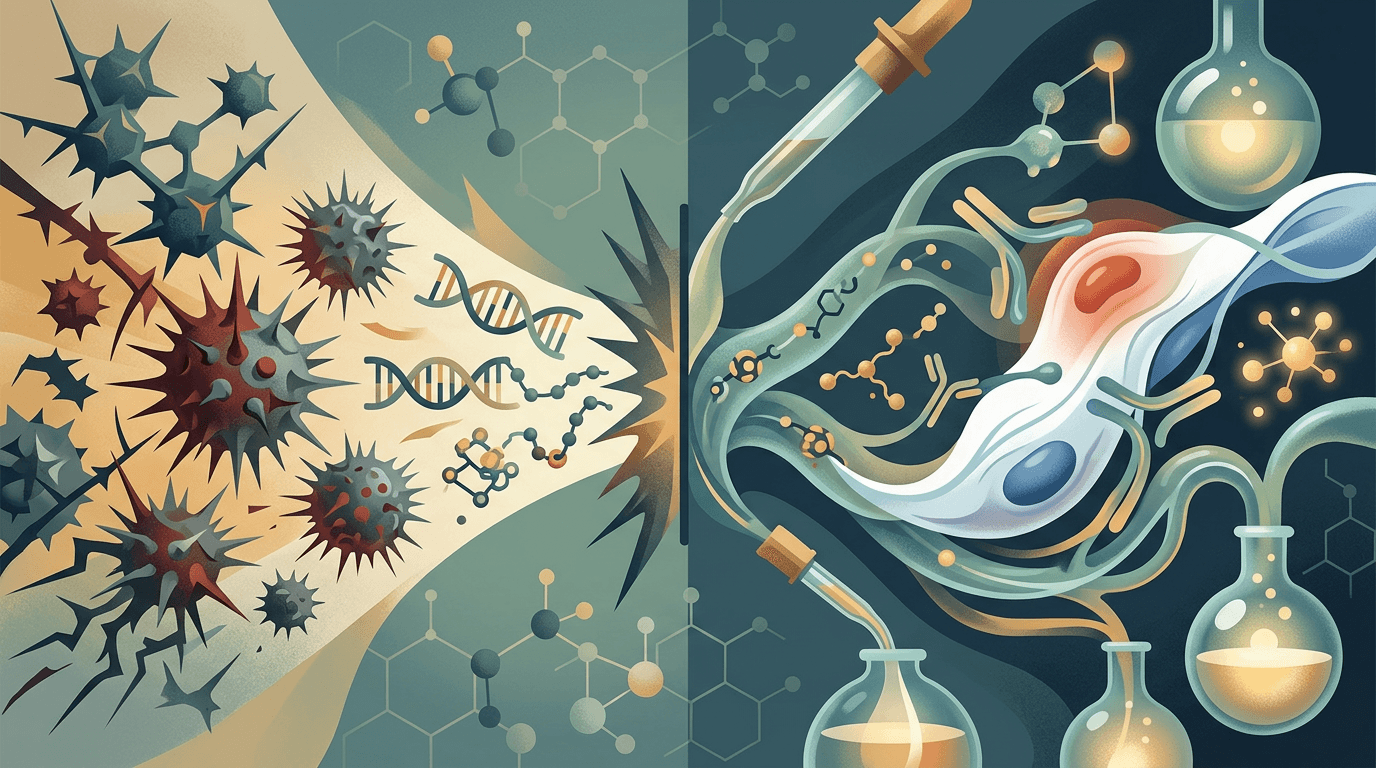
OX40 doesn't just keep inflammatory T cells alive. It plays a critical role in tumor surveillance, the immune system's ability to find and destroy cancer cells before they become a problem. OX40 signaling helps expand tumor-fighting T cells, boosts their ability to kill, and counters the suppressive environment that tumors try to create.
So when you build a drug that blocks OX40 and depletes the T cells expressing it, you're not just calming down eczema. You're potentially disabling one of the body's key cancer defense mechanisms. It's like turning off your home security system because the alarm keeps going off at 3 a.m. The noise stops, sure, but now you've got no protection against actual intruders.
The three malignancy cases identified in the safety review were small in number, and Kyowa Kirin noted they remained below expected background rates. But the biological plausibility of the connection (the science says this could happen, and now it appears to be happening) was enough to tip the scale. Both Kyowa Kirin and Amgen concluded that the potential risks outweigh the benefits.
The cancer signal wasn't the only storm cloud. Amgen had already walked away from its collaboration on rocatinlimab in late January 2026, citing "strategic priorities" and prior questions about efficacy and tolerability. At the time, Kyowa Kirin framed the split as an opportunity, reclaiming full rights and pressing forward independently.
That independence lasted about five weeks.
In hindsight, Amgen's exit looks less like a strategic pivot and more like reading the writing on the wall. When your partner breaks up with you right before the big event, maybe the event wasn't going to go well anyway.
Kyowa Kirin's stock dipped 2.72% on the news, falling to 2,731 JPY. The relatively modest decline suggests investors may not have been pricing in rocatinlimab as a core revenue driver.
The atopic dermatitis market is enormous and growing fast. Over 110 drugs from more than 100 companies are in development. It's one of the most competitive spaces in all of biopharma.
Dupixent from Sanofi and Regeneron remains the undisputed heavyweight, with broad approvals that now include children as young as six months. Adbry from LEO Pharma holds its own in the IL-13 space, and Eli Lilly's recently approved lebrikizumab is gaining ground. North America alone accounts for roughly 45% of the global market.
Rocatinlimab's exit doesn't just remove one competitor. It raises uncomfortable questions about the entire OX40-targeting approach for inflammatory diseases. Other companies working on OX40 and OX40L pathways (including drugs like amlitelimab, which blocks the OX40 ligand rather than the receptor itself) will inevitably face heightened scrutiny from regulators and investors.
The broader pipeline includes more than 10 OX40-pathway therapies in various stages of development. Every single one of them just inherited a new burden of proof.
Drug development is a brutal business. You can have great Phase 2 data, a novel mechanism, durable responses, and a clear path to market, and then a safety signal emerges that rewrites the entire story. Rocatinlimab worked. The biology was elegant. The clinical results were promising.
But "promising" doesn't matter if the drug might cause cancer.
Kyowa Kirin says it will continue analyzing the full dataset and provide updates. Investigators and regulators are being notified, and safety follow-up for all trial participants is underway. For now, though, rocatinlimab joins a long and humbling list of drugs that proved one uncomfortable truth: the immune system doesn't let you turn off one switch without consequences somewhere else.
For patients with severe eczema who were hoping for something truly different, the search continues. The post office, it turns out, needs to stay open.
Teva just secured $400 million from Blackstone without issuing a single share, using a royalty deal to fund a blockbuster IBD drug that could generate up to $5 billion in peak sales. It's the latest sign that royalty financing is reshaping how pharma funds its biggest bets.