The FDA Just Slammed the Door on Cheap Ozempic Knockoffs
The FDA is shutting down the booming market for cheap, compounded versions of Ozempic and Mounjaro. Billions in revenue are headed back to Novo Nordisk and Eli Lilly, but millions of patients could lose their most affordable option.
For millions of Americans, the path to affordable weight-loss drugs just got a whole lot narrower.
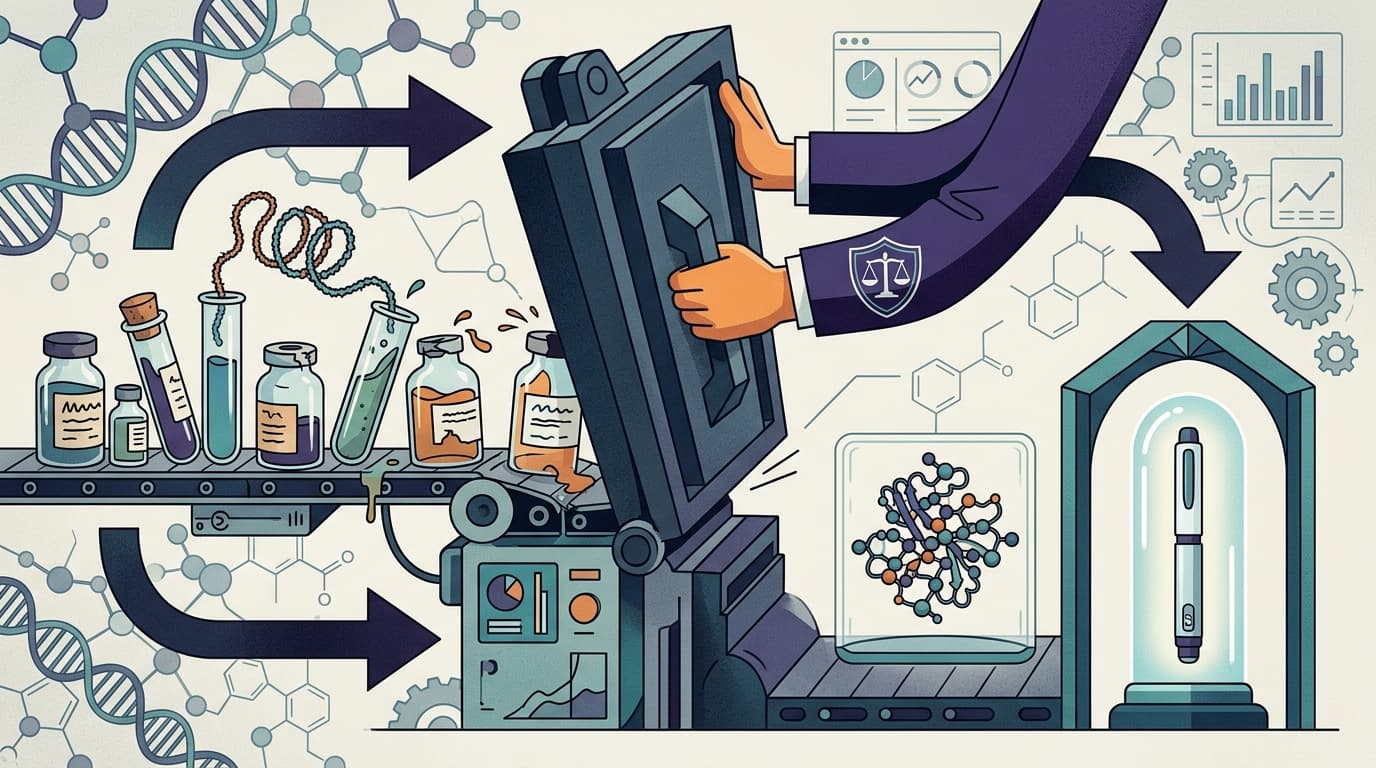
The FDA announced on February 6, 2026 that it will take "decisive steps to restrict GLP-1 APIs" used by compounding pharmacies and telehealth companies to churn out budget versions of blockbuster drugs like Ozempic, Wegovy, Mounjaro, and Zepbound. Translation: those $300-a-month semaglutide shots your coworker found on a telehealth app? The government wants them gone.
And the agency isn't being subtle about it. The FDA specifically called out mass-marketed compounded GLP-1 products and warned it would use "all available compliance and enforcement tools," including seizure and injunction, against companies that don't fall in line.
How We Got Here
To understand why this matters, you need a quick history lesson on compounding. Think of it like this: when a brand-name drug is in short supply, the FDA lets specialty pharmacies cook up their own versions. It's a safety valve for shortages, not a permanent loophole.
Semaglutide and tirzepatide (the active ingredients in Ozempic/Wegovy and Mounjaro/Zepbound, respectively) landed on the FDA's drug shortage list back in 2022-2023. That opened the floodgates. Compounding pharmacies and telehealth platforms started pumping out cheaper alternatives, and a cottage industry bloomed practically overnight.
The problem? The shortages ended. Tirzepatide came off the shortage list in October 2024. Semaglutide followed in February 2025. The FDA gave compounders a grace period to wind down: 60 days for traditional pharmacies, 90 days for larger outsourcing facilities. By May 2025, those grace periods had expired.
But many compounders kept going anyway. Some changed their salt forms. Others leaned on creative legal arguments. A few just hoped nobody was watching.
The FDA was watching.
A Crackdown With Teeth
The July 2026 guidance isn't the FDA's first swing at this. It's more like the fifth or sixth, and each one has landed harder than the last.
Get tomorrow's biotech intelligence before your competitors.
Join thousands of biotech professionals who start their day with our free, daily briefing.
Back in April 2026, the agency proposed permanently excluding semaglutide, tirzepatide, and liraglutide from the 503B bulks list. That's the regulatory list that allows large outsourcing facilities to compound drugs from raw ingredients in bulk. Without it, the primary legal pathway for large-scale GLP-1 compounding simply evaporates.
The FDA's reasoning was blunt: it "tentatively finds no basis to conclude that there is a clinical need" for outsourcing facilities to compound these drugs from bulk ingredients.
On the enforcement side, the numbers tell the story. The agency sent at least 55 warning letters to telehealth companies in 2026 alone over misleading GLP-1 advertising, on top of more than 50 letters to compounders in 2025. It set up import alerts to detain sketchy GLP-1 ingredients at the border. It even banned the use of experimental peptides like retatrutide and cagrilintide in compounding.
And the branded manufacturers aren't sitting on the sidelines either. Novo Nordisk and Eli Lilly are actively filing lawsuits and sending cease-and-desist letters to compounders, targeting trademark infringement, patent issues, and false advertising claims.
The Outsourcing Facilities Association tried to fight back in court, arguing the FDA's shortage decisions were arbitrary. They lost. Twice.
Follow the Money
This isn't just a regulatory story; it's a financial one with a very large price tag.
Eli Lilly's tirzepatide franchise (Mounjaro plus Zepbound) generated roughly $36.5 billion in 2025, making up 56% of the company's total revenue. Lilly is guiding for $82-85 billion in total 2026 sales, implying about 25-27% growth. Wall Street loves this trajectory.
Novo Nordisk is in a trickier spot. Despite holding nearly 60% of the global branded GLP-1 obesity volume share, the company is guiding for a 5-13% sales decline in 2026, squeezed by lower U.S. prices and patent expirations in markets like China and Brazil.
Put together, Wall Street consensus projects that semaglutide and tirzepatide products will generate a combined $400 billion in incremental U.S. revenue from 2025 to 2030. Every dollar flowing through a compounding pharmacy is a dollar not flowing to Novo or Lilly. So you can bet both companies are cheering the FDA's crackdown, even if they frame it as a patient-safety issue.
The Affordability Elephant in the Room
And here's where it gets uncomfortable. The FDA is right that compounded drugs aren't reviewed for safety or quality before they're sold. The agency has documented more than 1,700 adverse events tied to compounded semaglutide and tirzepatide as of May 2026. Dosing errors, substandard ingredients, misleading labels: real problems affecting real patients.
But compounded GLP-1s at $150-$300 a month have been a lifeline for people who can't afford branded versions, which can run over $1,000 monthly without insurance. The Obesity Action Coalition summed up the tension perfectly: it has "long advised" members against compounded GLP-1s on safety grounds, while simultaneously calling out manufacturers for pricing that is simply "too expensive."
More than 20 healthcare organizations, including the Obesity Action Coalition and The Obesity Society, sent a joint letter urging the FDA to enforce compounding rules now that shortages are resolved. Their logic is sound: mass-produced, unregulated drugs are risky. But even in that pro-enforcement letter, advocates acknowledged that compounded versions have been critical for patients who can't access or afford the real thing.
Dr. Michael Snyder, a bariatric surgeon and obesity specialist, put it plainly: removing these drugs from the bulks list will "significantly lower the availability of compounded GLP-1s." Other obesity medicine experts say brand-name prices will come down eventually, but "not soon."
What Happens Next
Small, traditional pharmacies (called 503A pharmacies in regulatory speak) can still compound GLP-1s for individual patients with a documented medical need, like an allergy to an ingredient in the branded version. But the days of telehealth platforms shipping out thousands of copycat injections per month are numbered.
For patients, the advice from clinicians is practical: check your insurance formulary (the list of covered drugs) frequently, because coverage is expanding. Look into manufacturer discount programs. Talk to your doctor about alternatives.
For Novo Nordisk and Eli Lilly, this is a massive win. Billions of dollars in revenue that had been leaking to compounders are being redirected back to the branded channel. Lilly, with its stronger growth trajectory and patent protection stretching into the late 2030s, is especially well positioned.
For the compounding industry, the writing is on the wall. The FDA holds the legal high ground after winning in court. The branded manufacturers are on the offensive. And the regulatory pathway for large-scale GLP-1 compounding is being systematically dismantled, brick by brick.
The GLP-1 gold rush for compounders is over. The only question now is whether the branded drugmakers will step up on price before more patients get priced out entirely.
Clinical & Regulatory
4 min read
The Drug That Worked Perfectly and Still Failed
AstraZeneca and Ionis' gene-silencing drug eplontersen did everything right biologically in a massive ATTR cardiomyopathy trial, yet still failed to keep patients alive or out of the hospital. The reason why could reshape how the entire industry thinks about combination therapy.