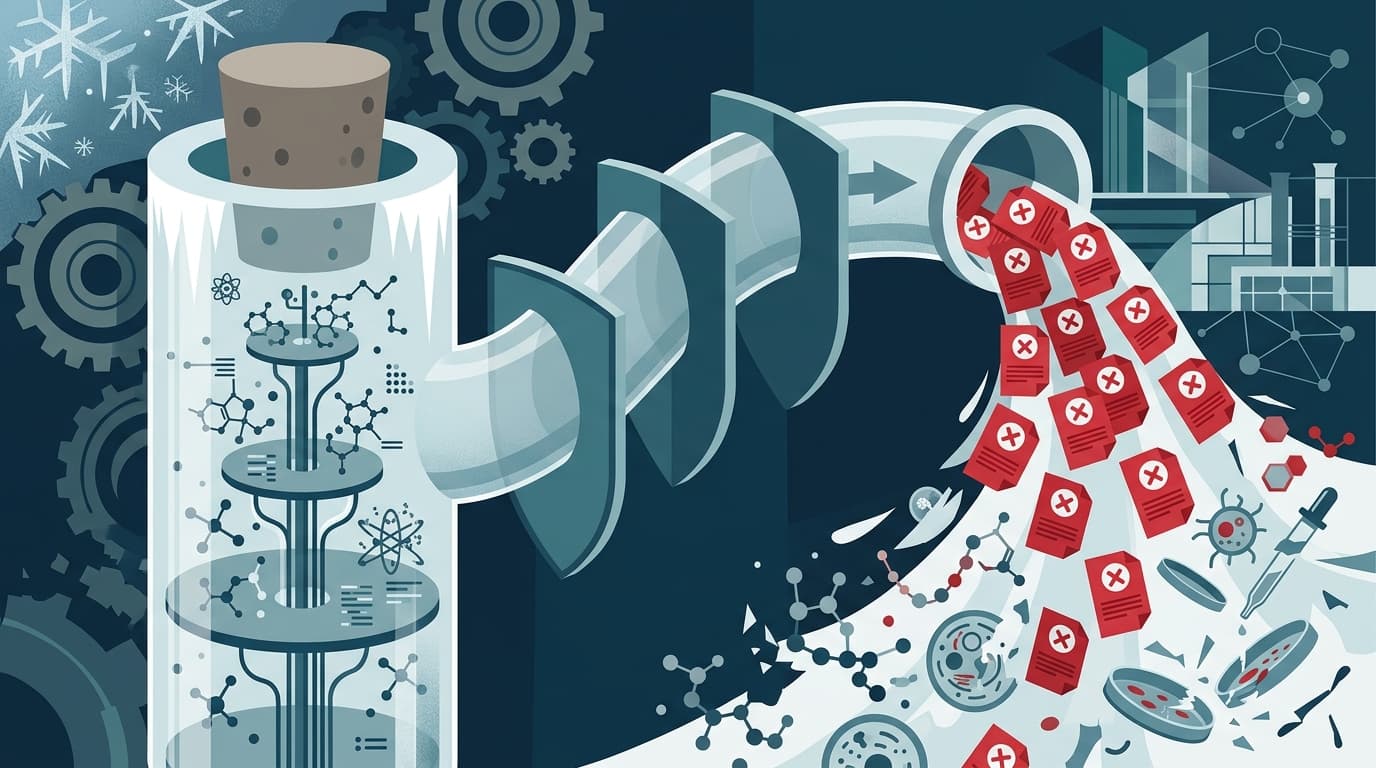

The FDA went dark on drug rejection letters for three months after a pharma company challenged its transparency policy. Then 14 of them appeared on the public database at once, raising urgent questions about the future of regulatory disclosure in biotech.
Imagine your landlord stops returning your calls for three months. No explanation, no timeline, just radio silence. Then one morning, you wake up to 14 certified letters stuffed in your mailbox.
That's roughly what happened to the biotech world last week.
The FDA posted 14 complete response letters (CRLs) to its public database at once. A CRL is the agency's formal way of saying "we can't approve your drug right now," along with a list of what went wrong. Think of it as a detailed rejection letter, not a vague "it's not you, it's me."
Normally, these letters would trickle out in real time. The FDA had been publishing them shortly after sending them to drug companies, part of a "radical transparency" push launched under former Commissioner Marty Makary in 2025. But in April 2026, the whole system went dark.
An unnamed pharmaceutical company filed a citizen petition (through the law firm Covington & Burling) arguing that the FDA's CRL publication practice was unlawful. The petition claimed the policy violated decades of agency practice by exposing confidential commercial information. It asked the FDA to stop publishing immediately and give companies 10 days to contest any future disclosures.
The FDA hit pause. For roughly three months, from April through early July, no new CRLs appeared on the public portal. Drug rejections still happened (Swedish Orphan Biovitrum's gout therapy got turned down in late June, for instance), but the letters stayed locked away.
Then, without much fanfare, 14 of them showed up at once.
To understand the significance, you need to know how things worked before Makary's transparency initiative. For decades, CRLs were treated like classified documents. The FDA sent them to drug companies, and that was it. If the public ever learned what was inside, it was because the company chose to share (often in a flattering press release) or because someone filed a Freedom of Information Act request and waited months for a heavily redacted photocopy.

The FDA just approved an at-home starting dose for Leqembi, letting Alzheimer's patients skip the infusion center entirely. It's not just a convenience upgrade; it could unclog the biggest bottleneck holding back the first drug to actually slow the disease.


Join thousands of biotech professionals who start their day with our free, daily briefing.

This created a massive information gap. A biotech company could receive a devastating rejection letter citing serious safety concerns, then put out a press release saying something like "FDA requested additional data" and leave it at that. Investors were essentially playing poker while the company could see all the cards.
The transparency initiative changed the game in two waves. In July 2025, the FDA published more than 200 historical CRLs for drugs that had eventually been approved. Two months later, the agency went further: it released 89 CRLs for drugs that were never approved (pending, withdrawn, or abandoned applications) and committed to publishing all future CRLs in real time.
For the first time, investors and analysts could read the FDA's actual words instead of relying on corporate spin. It was the regulatory equivalent of switching from a company's Instagram to their unfiltered security camera footage.
The three-month blackout threatened to undo all of that progress.
The citizen petition at the center of this fight raises a legitimate legal tension. Federal regulations (specifically 21 C.F.R. § 314.430) restrict the FDA from publicly disclosing data from unapproved drug applications, including whether the application even exists, unless the company has already acknowledged it publicly.
The petition argues that publishing CRLs for unapproved drugs violates these rules. The FDA, on the other hand, has pointed to a presidential Executive Order directing agencies to release data that has "a clear and substantial effect on important public policies or important private sector decisions."
The agency has 180 days to formally respond to the petition, putting the deadline around October 17, 2026. Until then, the legal status of the entire CRL publication program remains in limbo. The FDA hasn't explained why the 14 letters were posted despite the announced pause; possible explanations range from an operational lag (letters queued before the pause took effect) to ambiguity about which CRLs the pause actually covers.
If you own biotech stocks, this matters more than you might think.
The transparency initiative fundamentally changed how quickly and accurately the market prices regulatory risk. When a CRL is public, analysts can distinguish between fixable problems (a labeling tweak, a minor manufacturing issue) and thesis-breaking ones (the drug doesn't work, or it causes serious harm). That distinction is worth billions in market cap across the sector.
During the three-month blackout, investors were back to relying on company narratives. That's like asking the student to grade their own exam. Some companies are honest about it; others aren't. Historical evidence suggests the gap between what companies say about their CRLs and what the letters actually contain can be substantial.
The batch release of 14 letters at least partially restores that visibility. Among the identified rejections: a July 9 CRL for camrelizumab plus rivoceranib (from Jiangsu Hengrui/Elevar Therapeutics) for liver cancer. The full details of all 14 are available through the FDA's openFDA database, though they're redacted to protect trade secrets and personal information.
The timing of this controversy coincides with a broader shift at the FDA. Makary resigned on May 12, 2026, after roughly 14 months marked by what legal analysts have called "podium policy": announcing major regulatory changes through press releases, podcasts, and social media rather than formal rulemaking. It was attention-grabbing but legally fragile; policies adopted outside formal pathways are easier for future leaders to reverse.
The new acting commissioner (an attorney by training) has taken a noticeably different approach. Press releases now feature quotes from a wider range of agency officials rather than centering on one personality. The volume of public announcements has dropped. Comment periods on pilot programs have been extended. It's less TED Talk, more law review.
For the biotech industry, the question isn't just whether the CRL transparency program survives the citizen petition. It's whether the FDA can build a durable, legally defensible framework for disclosure that doesn't swing with every change in leadership.
Fourteen letters might not sound like a lot. But they represent something larger: a test of whether the FDA's experiment in radical transparency will stick or get quietly rolled back under legal pressure.
The October deadline for the citizen petition response looms. If the FDA sides with the petitioner, the public CRL database could shrink back to its pre-2025 opacity. If it defends the policy, expect the unnamed pharma company to challenge the decision in court.
Either way, the three-month silence was a reminder that transparency isn't a switch you flip once. It's a commitment you have to keep making, even when it's inconvenient. Especially when it's inconvenient.
Chinese biotech companies inked $110 billion in out-licensing deals in just six months, a record that puts 2026 on pace to demolish last year's total. Every major Western pharma company is now shopping in China, and the carts keep getting bigger.