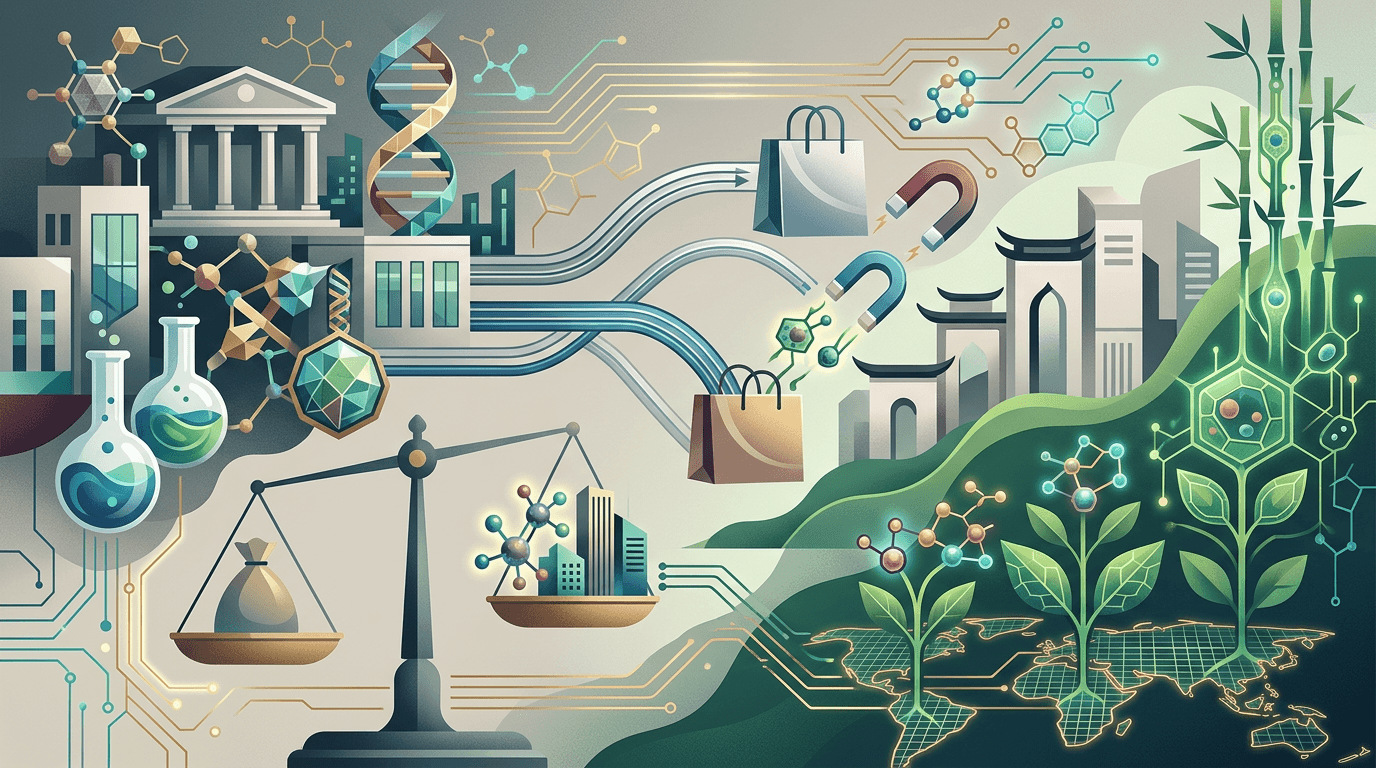
Chinese biotech companies inked $110 billion in out-licensing deals in just six months, a record that puts 2026 on pace to demolish last year's total. Every major Western pharma company is now shopping in China, and the carts keep getting bigger.
$110 Billion in Six Months
Imagine walking into a mall and spending $110 billion before lunch. That's essentially what global pharma did in China during the first half of 2026.
Chinese innovative drug out-licensing deals (where Chinese companies sell the rights to their drugs to foreign buyers) hit $110 billion between January and June, according to data from China's National Medical Products Administration reported by state broadcaster CCTV. That's a record. It covers 81 deals in just six months, already reaching 80% of the full-year 2025 total.
To put it plainly: the world's biggest drug companies are treating China like a pharmaceutical Costco. They're buying in bulk, they're paying premium prices, and they keep coming back for more.
The Deals That Rewrote the Record Books
The individual transactions are staggering. AstraZeneca paid up to $18.5 billion (with $1.2 billion upfront) for a portfolio of eight obesity and diabetes programs from CSPC Pharmaceutical. It's the largest single out-licensing deal ever from a Chinese company.
Bristol Myers Squibb locked up 13 early-stage programs from Hengrui for up to $15.2 billion, covering oncology, blood disorders, and immunology. Pfizer grabbed 12 cancer programs from Innovent Biologics for up to $10.5 billion. Eli Lilly licensed Innovent's obesity drug mazdutide for $350 million upfront (plus up to $8.5 billion in milestones).
These aren't one-off splurges. They represent a pattern. Pfizer, AstraZeneca, Merck, BMS, GSK, AbbVie, Novartis, Lilly, Sanofi: basically every major Western pharma company now has a significant China licensing strategy.
From Knockoff King to Innovation Factory
Here's what makes this so remarkable. A decade ago, the flow of drugs went almost entirely in one direction. Western companies sold their medicines into China. Chinese firms mostly made generics (copycat versions of existing drugs).
Get tomorrow's biotech intelligence before your competitors.
Join thousands of biotech professionals who start their day with our free, daily briefing.
That script has completely flipped. China's share of global innovative drug candidates jumped from 8% in 2018 to roughly 30% by 2026. Meanwhile, the U.S. share dropped from 47% to 36%. In 2025, China actually surpassed the U.S. in deals worth $1 billion or more, with 35 compared to America's 33 or 34.
One stat captures the shift better than any other: one-third of new compounds in U.S. pharma pipelines now originate from Chinese companies. Two years ago, that figure was just 12%.
Why Now? The Patent Cliff Is a Big Part of It
Global pharma has a problem, and it rhymes with "batent bliff." Many blockbuster drugs are losing patent protection in the next few years, which means generic competition and cratering revenues. Companies need new drugs, and they need them fast.
Building a drug from scratch in the U.S. takes forever and costs a fortune. China offers a shortcut. Clinical trials there are dramatically cheaper, and the timeline from early discovery to human testing runs 50 to 70% faster than in the West. China's regulatory agency, the NMPA, slashed clinical trial approval timelines from 60 working days to just 30 in 2025.
The math is simple: why spend a decade and billions discovering a drug internally when you can license a validated, sometimes late-stage asset from a Chinese biotech for a fraction of the cost and time?
The Money Is Getting Serious
This isn't just about deal count. The economics have shifted dramatically. The average deal size in early 2026 hit around $1.3 billion, up 76% from 2025 and roughly six times the average in 2021. Average upfront payments (the cash paid on signing day, before any milestones) reached about $77.7 million, roughly double the 2025 average.
In Q1 2026 alone, at least 12 deals had upfront payments exceeding $100 million. Chinese biotechs aren't just getting bigger deals; they're getting more cash upfront, which signals real confidence from buyers.
Analysts at BofA Securities think overall licensing value could double again within 18 to 24 months. Macquarie Capital is more cautious, projecting 40 to 50% growth in 2026. But even the bears are bullish by historical standards.
China's Secret Weapon: Policy on Steroids
This didn't happen by accident. Beijing has been systematically building the conditions for exactly this outcome.
In January 2025, the State Council released a sweeping reform roadmap with an explicit goal: make China a "pharmaceutical powerhouse" by 2027 to 2035. The reforms span everything from faster approvals to stronger patent protections (including a new patent linkage system and patent term extensions) to expanded reimbursement for innovative therapies.
The NMPA added 114 new drugs to the National Reimbursement Drug List in 2025, bringing it to 3,253 products. A brand-new Category C was created specifically for expensive, cutting-edge treatments like CAR-T cell therapies. Regional free trade zones in places like Jiangsu got special fast-track programs for biopharma R&D and manufacturing.
All of this makes Chinese drug assets more valuable, more protectable, and more attractive to foreign buyers. It's like China built a factory, a showroom, and a highway to the global market all at once.
The Elephant in the Room: Geopolitics
Yes, there's tension. The U.S. has debated measures like the Biosecure Act that could complicate China partnerships. Regulatory and IP risks remain real concerns for Western companies doing deals across the Pacific.
But the numbers tell a clear story: pharma companies are accepting those risks because the assets are too good to ignore. When Pfizer writes a $650 million upfront check to Innovent, or AstraZeneca commits $1.2 billion to CSPC, they've clearly decided the reward outweighs the risk. To hedge, many are using regional licensing structures (buying rights outside of China only) and spreading bets across multiple Chinese partners.
What Happens Next
China is becoming a dominant player in antibody-drug conjugates (ADCs), one of the hottest areas in cancer treatment, as well as in obesity drugs, bispecific antibodies, and AI-driven drug discovery platforms. The biggest Western pharma companies aren't just buying individual drugs anymore; they're licensing entire platforms and multi-asset portfolios.
The first half of 2026 produced $110 billion in deals. If the current pace holds (and most analysts think it will accelerate), 2026 could easily blow past 2025's full-year record of roughly $137.7 billion.
For global pharma, the question is no longer whether to license from China. It's how much, how fast, and how to manage the complexity. The shopping spree isn't slowing down. If anything, the carts are getting bigger.
Clinical & Regulatory
5 min read
Ebola Has No Vaccine. Oxford Just Changed That.
Congo's Ebola outbreak just spread to two new provinces, and here's the problem: the approved vaccines don't work against this strain. Oxford is racing to change that with the first-ever human trial of a Bundibugyo-specific vaccine, built on the same platform as the AstraZeneca COVID shot.