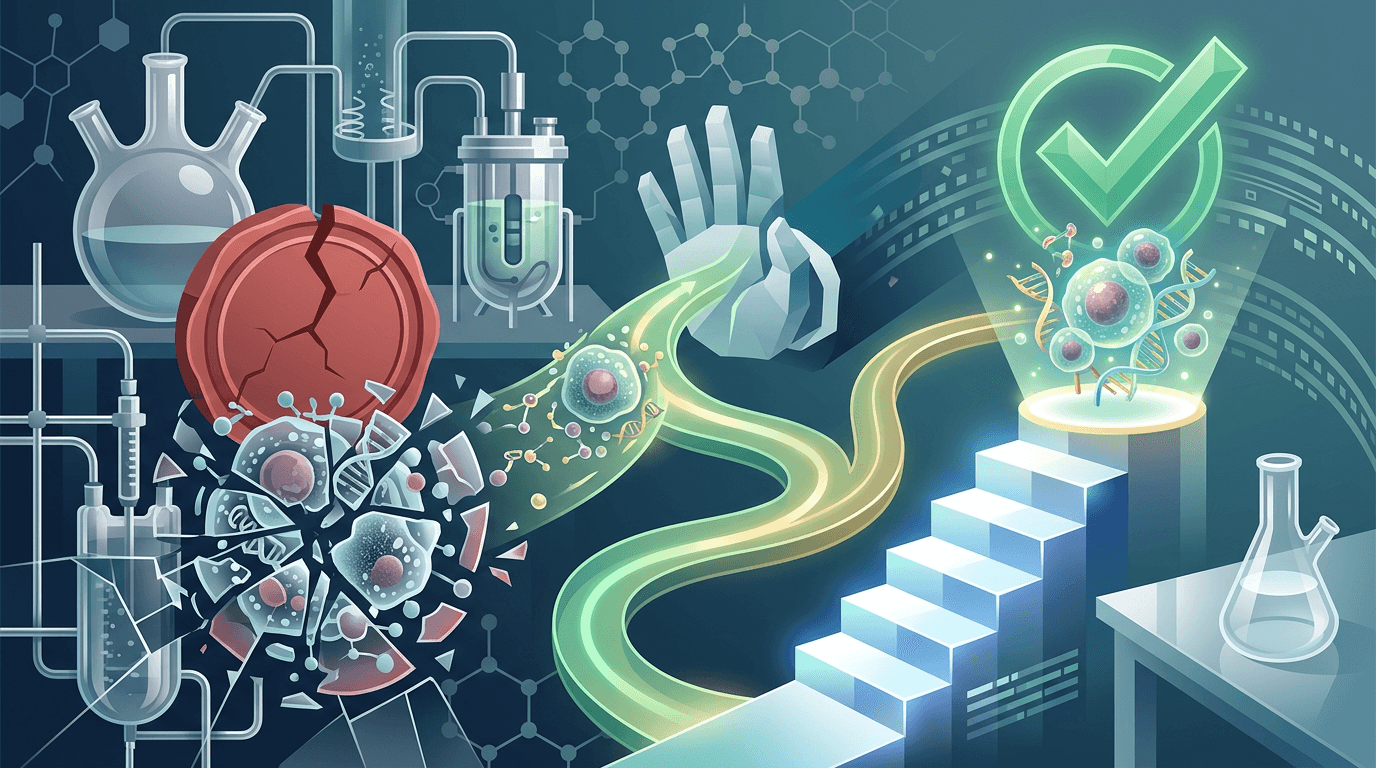

The FDA rejected Capricor's cell therapy for Duchenne muscular dystrophy last summer, citing insufficient evidence. Now the agency has reversed course, lifting its rejection and resuming review with new Phase 3 data in hand. The August 2026 decision could bring the first treatment targeting DMD's deadliest feature: heart failure.
Last July, the FDA looked at Capricor Therapeutics' cell therapy for Duchenne muscular dystrophy and said no. Not enough evidence, the agency argued. Manufacturing questions lingered. The rejection stung, especially for families watching their boys lose the ability to lift a fork or hug a parent.
Eight months later, the FDA changed its mind. On March 10, the agency lifted its prior rejection letter, resumed its review of the drug called deramiocel, and set a new decision deadline of August 22, 2026. No new issues flagged. No extra hoops to jump through. Just: we're back at the table.
For a rare disease community that's been burned by false hope before, this is a genuinely significant moment.
Duchenne muscular dystrophy (DMD) is one of the cruelest diagnoses in medicine. It's a genetic disorder, almost exclusively affecting boys, caused by the absence of a protein called dystrophin. Think of dystrophin as the shock absorber in your muscles. Without it, every movement causes microscopic damage that the body can't repair.
Kids with DMD typically lose the ability to walk by their early teens. Their hearts weaken. Their lungs struggle. Most don't survive past their 30s. It affects roughly 1 in every 3,500 to 5,000 male births, making it rare enough to be overlooked but common enough that thousands of families live with it every day.
There are approved treatments, including exon-skipping drugs and a gene therapy called Elevidys. But none of them cure the disease. None of them work for every patient. And critically, none of them directly address the heart damage that ultimately kills most Duchenne patients. That's the gap deramiocel is trying to fill.
Deramiocel (also known as CAP-1002) isn't a gene therapy or a traditional drug. It's a cell therapy made from cardiosphere-derived cells, which are special cells harvested from donor heart tissue. Patients receive them intravenously, like a standard infusion, every three months.

The world's biggest drugmakers cut their antibiotic pipelines by 35% in five years, even as superbugs grow deadlier. A new report reveals a dangerous retreat from the drugs modern medicine can't function without.


Join thousands of biotech professionals who start their day with our free, daily briefing.
The cells don't permanently embed themselves in the body. Instead, they act more like a traveling repair crew: they show up, calm down inflammation, slow muscle breakdown, and kickstart the body's own regeneration processes. Then they move on. It's less "installing new parts" and more "sending in a cleanup team" that reduces the damage accumulating in both skeletal and cardiac muscle.
What makes this approach unique in the DMD world is that it targets both the arms-and-legs deterioration and the heart failure. Most existing therapies only tackle one or the other.
Capricor originally filed its application based on data from a Phase 2 trial called HOPE-2. The results looked promising: patients showed significantly slower decline in upper limb function (measured by a test called PUL 2.0, which tracks things like lifting objects and reaching). The study hit its primary endpoint with a p-value of 0.05.
But the FDA wasn't convinced. In the Complete Response Letter (the agency's formal way of saying "try again"), regulators cited a lack of substantial evidence of effectiveness based on the Phase 2 trial's prespecified primary endpoint. There were also unresolved manufacturing questions. Capricor pushed back, arguing the data supported approval, but the letter stood.
The timing made it especially controversial. Former CBER director Vinay Prasad had been scrutinizing rare disease approvals more broadly, and some in the patient community felt the rejection reflected an overly strict interpretation of the evidence for a devastating pediatric disease with few options.
Capricor didn't just resubmit the same application and hope for a different answer. They came back with something new: topline results from HOPE-3, a Phase 3 trial enrolling 106 patients across 16 clinical sites.
HOPE-3 was everything regulators want to see. Randomized, double-blind, placebo-controlled. Four infusions over 12 months. And the results were strong. The trial met its primary endpoint for upper limb function, and every secondary endpoint controlled for statistical rigor also hit significance. That included improvements in both skeletal muscle function and cardiac measures.
The HOPE-2 open-label extension (where patients from the earlier trial kept receiving treatment) added even more ammunition. After three years, treated patients showed significantly less decline in upper limb function compared to an external natural history dataset. Their heart function, measured by left ventricular ejection fraction, stabilized rather than deteriorating.
Capricor bundled all of this into a Class 2 resubmission filed in late 2025. The FDA reviewed it, found no outstanding issues, and reopened the case.
If deramiocel gets approved, it would be the first therapy specifically addressing DMD cardiomyopathy (the heart damage component of the disease). That's not a small thing. Heart failure is the leading cause of death in Duchenne patients, and right now, doctors manage it with standard cardiac drugs that weren't designed for this population.
The drug also carries a stack of regulatory designations that signal its importance: Orphan Drug status, Regenerative Medicine Advanced Therapy (RMAT) designation, and Rare Pediatric Disease designation. That last one means Capricor could receive a Priority Review Voucher upon approval, a transferable asset worth hundreds of millions of dollars on the open market.
Capricor's stock has reflected cautious optimism. Shares were trading in the mid-$20s in early March, with after-hours trading hitting $30.75 on March 9 (the day before the FDA announcement).
This story matters beyond one company and one drug. The FDA's willingness to lift a Complete Response Letter and restart a review based on new Phase 3 data sends a message to the entire rare disease space: a rejection isn't necessarily the end of the road.
For Duchenne families, the calculus is painfully simple. Every month without effective treatment means more muscle lost, more function gone, more milestones missed. The disease doesn't pause while regulators deliberate.
August 22 is now circled on a lot of calendars. If the FDA says yes this time, it won't just be a win for Capricor. It'll be a lifeline for kids running out of time.
ARPA-H just launched the Delphi program to build tiny, Lego-like biosensor "chiplets" that track hormones, inflammation, and medication levels in real time. It could be the biggest leap from Fitbit-grade wellness tracking to actual clinical diagnostics, and researchers have until April 8 to pitch.