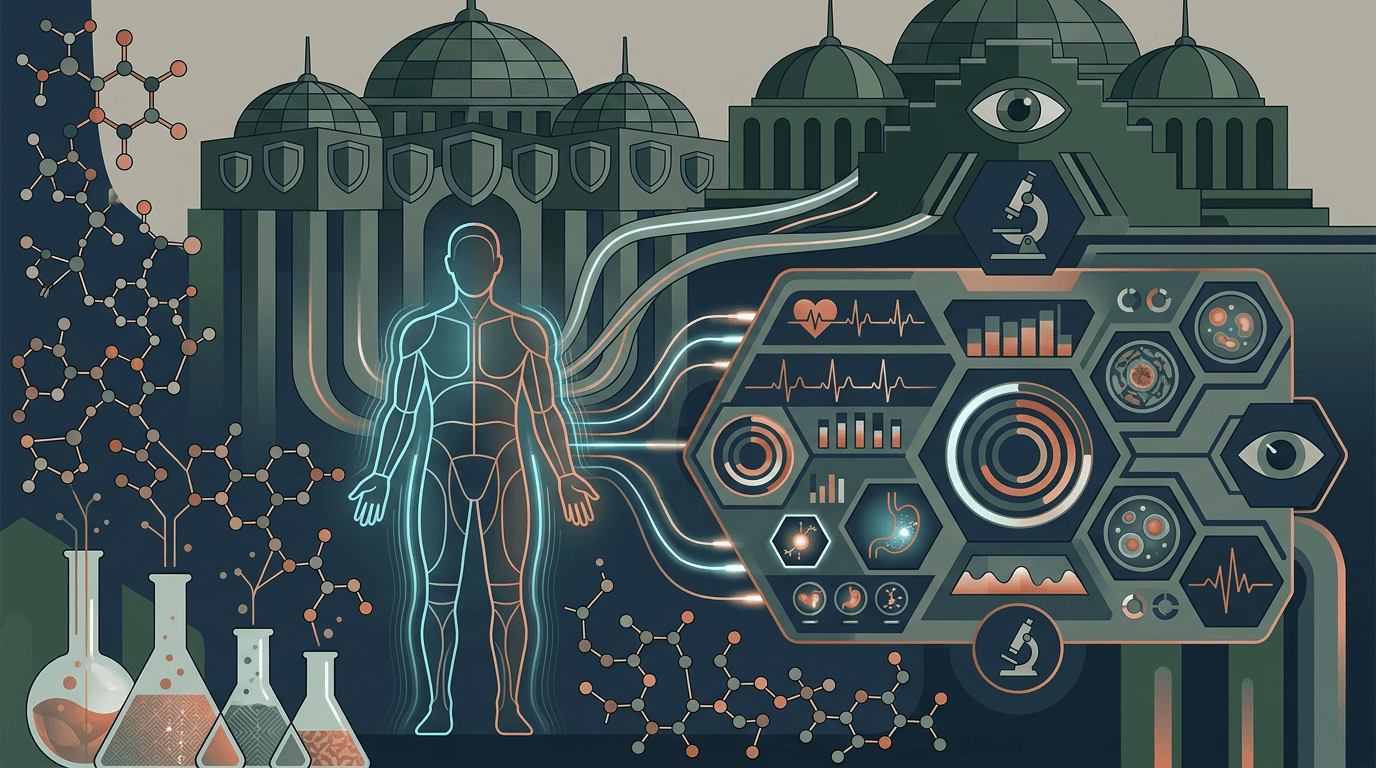

ARPA-H just launched the Delphi program to build tiny, Lego-like biosensor "chiplets" that track hormones, inflammation, and medication levels in real time. It could be the biggest leap from Fitbit-grade wellness tracking to actual clinical diagnostics, and researchers have until April 8 to pitch.
Right now, the fanciest wearable on your wrist can tell you how many calories you burned and whether your heart rate spiked during that work email. Useful? Sure. But imagine a tiny sensor that tracks your hormones, inflammation levels, and even how much medication is floating through your bloodstream, all in real time. That's not science fiction anymore. It's a government program with a deadline.
On March 10, ARPA-H (the Advanced Research Projects Agency for Health, basically DARPA's younger sibling focused on medicine) launched something called the Delphi program. Its mission: build cheap, modular biosensors that go way beyond step counts. We're talking devices that could detect diabetes, depression, and dozens of other conditions before you ever feel a symptom.
The pitch window is already open. Initial proposals are due April 8, 2026.
The core idea behind Delphi is beautifully simple. Instead of building one massive, expensive sensor that does everything, ARPA-H wants researchers to create tiny components called "chiplets" that snap together like Lego blocks. Need to monitor glucose and cortisol? Snap those two chiplets together. Want to add medication tracking? Click in another piece.
Delphi's chiplets aim to be small, flexible, affordable, and endlessly reconfigurable.
The program manager, Paul E. Sheehan, Ph.D., framed the ambition in personal terms. He described a future where people can "know themselves" through secure, continuous data about what's actually happening inside their bodies. Not just surface-level metrics, but the deep biological signals that drive health decisions.
Delphi isn't a moonshot with a vague timeline. ARPA-H laid out a structured three-phase plan spanning 4.5 years, and each phase raises the stakes.
Phase 1 gives teams two years to build prototype components and figure out how to manufacture them at scale. Think of this as the "prove it works on the bench" stage.

The world's biggest drugmakers cut their antibiotic pipelines by 35% in five years, even as superbugs grow deadlier. A new report reveals a dangerous retreat from the drugs modern medicine can't function without.


Join thousands of biotech professionals who start their day with our free, daily briefing.

Phase 2 runs 18 months and moves into early testing inside living systems (in vivo experiments, for the science nerds). This is where chiplets have to survive contact with actual biology, not just a lab.
Phase 3 is the one-year sprint to the finish: human factors testing and clinical trials. Can real people wear these things comfortably? Do the readings hold up when someone's sweating through a workout or sleeping on their side?
There's a clever twist baked into the structure. At each phase transition, teams must add new biomarkers to their sensor lineup. ARPA-H calls these "remixes." It's like a cooking competition where the judges keep throwing in surprise ingredients; you can't just perfect one dish and coast.
Delphi doesn't exist in a vacuum. ARPA-H is building an entire portfolio of biosensor programs, and the combined investment tells a story about where federal health R&D is heading.
Take OCULAB, a parallel program that funds four research teams (including a group at MIT) to develop sensors that literally sit inside your tear duct. These tiny devices analyze tear chemistry to monitor conditions like dry eye disease, diabetes, and depression.
Delphi's exact funding hasn't been disclosed yet; it will depend on the quality of proposals that come in. That's serious money for sensor technology that could eventually cost pennies per chiplet to produce.
The agency also runs REACT, a program led by the same Paul Sheehan, which develops implantable bioelectronic systems for automated monitoring and drug delivery in chronic conditions. If REACT is the "living pharmacy" inside your body, Delphi is the "living dashboard" on your skin.
Let's zoom out. The wearable health market is already crowded with consumer gadgets tracking steps, sleep, and heart rate. So why should a government biosensor program matter to the biotech world?
Because there's a massive gap between consumer wellness trackers and clinical-grade diagnostics. Your Apple Watch can flag an irregular heartbeat, which is genuinely useful. But it can't tell your doctor whether your inflammation markers are creeping up, whether your antidepressant is at the right level in your blood, or whether your immune system is gearing up for a flare.
That's the gap Delphi targets. The program aims to create sensors that bridge consumer convenience with clinical depth. Imagine a patch on your arm that feeds real-time biomarker data to your care team, adjusting treatment before you even feel worse. It's the difference between checking the weather once a day and having a live radar on your phone.
This also aligns with a broader push at HHS. Secretary Robert F. Kennedy Jr. has publicly advocated for widespread wearable use by decade's end, envisioning a future where tracking glucose and pulse is as routine as checking your phone. The FDA has even piloted programs that could waive certain premarket requirements for devices collecting real-world data.
Before we get too starry-eyed, some reality checks.
Miniaturization is brutally hard. Shrinking a lab-grade sensor into something comfortable enough to wear all day, while maintaining accuracy, remains one of the biggest unsolved problems in biomedical engineering. Flexible materials, power management, and wireless data transmission all have to work simultaneously in a package smaller than a Band-Aid.
Real-world accuracy is a different beast than lab accuracy. A sensor that performs beautifully in controlled conditions might struggle when someone's running a fever, sweating profusely, or just living their normal, messy human life. Phase 3's human factors testing will be the moment of truth.
And then there's the question of data security. Continuous biological monitoring generates incredibly intimate information. Sheehan emphasized that the data would be "secure," but the details of how that security works will matter enormously as these devices move toward real patients.
ARPA-H is betting that the future of health monitoring isn't a bigger, fancier smartwatch. It's a constellation of tiny, modular chiplets that read your body's deepest signals and snap together like building blocks. The Delphi program gives researchers 4.5 years and potentially north of $100 million to prove it.
If it works, we're looking at a fundamental shift: from reactive medicine (you feel sick, you go to the doctor) to proactive, continuous care that catches problems before they become crises. If it doesn't, well, at least your Fitbit still counts steps.
Proposals are due April 8. The race to build biology's dashboard is officially on.
AbbVie and Regeneron dropped obesity drug data on the same day, and neither is trying to be the next Ozempic. One showed nearly 10% weight loss in just 12 weeks through a completely different mechanism; the other posted 19% weight loss with dramatically fewer side effects than Zepbound.