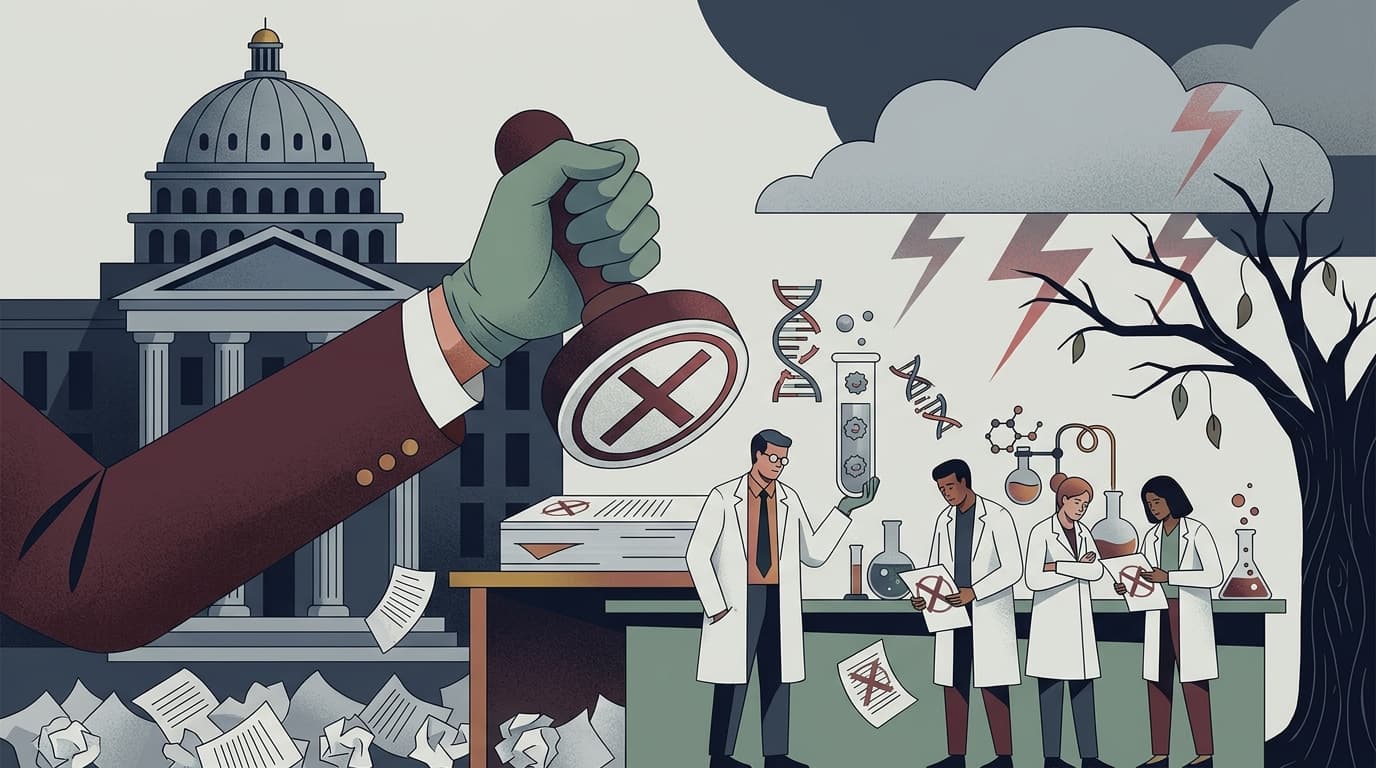

The FDA rejected Replimune's melanoma gene therapy RP1 for the second time, citing the same trial design flaws it flagged five years ago. The decision sends a chilling message to every company betting on oncolytic virus therapies with single-arm studies.
Imagine spending years building a house, submitting the blueprints to the city inspector, getting rejected, tweaking the plans, resubmitting, and hearing: "No. Same problems." That's roughly where Replimune finds itself after the FDA rejected its melanoma gene therapy for the second time on April 10, 2026.
The drug in question is vusolimogene oderparepvec, mercifully nicknamed RP1. It's an oncolytic immunotherapy, which means it's a genetically engineered virus (herpes simplex, specifically) designed to infect and destroy cancer cells while revving up the immune system. Think of it as a biological Trojan horse: the virus sneaks into tumors and blows them up from the inside, then signals the immune system to finish the job.
Replimune wanted to sell RP1, combined with Bristol Myers Squibb's checkpoint inhibitor nivolumab (Opdivo), for patients with advanced melanoma who'd already failed other immunotherapies. The FDA said no. Twice. And the stock dropped roughly 20% on the news.
At the center of this saga is the IGNYTE trial, a Phase 1/2 study that tested RP1 plus nivolumab in 140 melanoma patients whose cancer had progressed after prior treatment. The results, on paper, looked genuinely impressive: a 32.9% overall response rate, including a 15% complete response rate. Responses lasted a median of 33.7 months. For patients who'd already failed frontline immunotherapy, those are numbers worth paying attention to.
So why did the FDA slam the door?
Because IGNYTE was a single-arm trial, meaning every patient got the same treatment. There was no comparison group. No control arm. It's like claiming your new diet pill works because people lost weight, without checking whether they also started going to the gym. The FDA couldn't tell how much of the benefit came from RP1 and how much came from the nivolumab it was paired with.
The agency had been waving this red flag for years — raising concerns about study design flaws, patient heterogeneity (the enrolled patients were too different from each other to draw clean conclusions), and the inability to attribute responses to the actual drug being tested.

Biotech IPOs raised $1.7 billion in Q1 2026, the biggest quarter since 2021, with median deal sizes more than doubling. But the real story isn't just the money coming back; it's about which companies are getting funded and what Eli Lilly's aggressive shopping spree tells us about what's next.


Join thousands of biotech professionals who start their day with our free, daily briefing.

After the first rejection in July 2025, Replimune didn't go quietly. The company met with the FDA, ran additional analyses on RP1's mechanism of action, compared outcomes to prior treatments, and even gathered early data from its ongoing Phase 3 trial, IGNYTE-3. Twenty-two investigators signed an open letter urging the FDA to reconsider. Replimune resubmitted its application in October 2025.
The FDA assembled a new review team, pulling in the Office of Therapeutic Products and the Oncology Center of Excellence for a fresh look. That team unanimously reached the same conclusion: the data weren't sufficient to prove RP1 actually works.
The early Phase 3 data? Dismissed. Only 10% of planned patients had been enrolled, there was no duration-of-response data, and the progression-free survival analysis hadn't been pre-specified (meaning it was essentially an afterthought, not part of the original study plan). The FDA characterized these results as too immature to matter.
For Replimune, this was the regulatory equivalent of turning in extra credit and still failing the exam.
RP1's rejection isn't just a Replimune problem. It's a signal flare for the entire oncolytic virus space.
Right now, only one oncolytic virus therapy is FDA-approved in the United States: Amgen's T-VEC (Imlygic), greenlit back in 2015 for melanoma. The field has been promising "next-generation" viral therapies for a decade, but the regulatory path remains brutally narrow. Dozens of companies are developing oncolytic virus therapies, and the market is projected to hit $0.29 billion in 2026. That sounds like growth until you realize most of that value still rests on a single approved product.
The FDA's message is clear: if you're going to combine your experimental therapy with an already-approved drug, you need a randomized controlled trial to prove your addition matters. Single-arm studies, no matter how promising the numbers look, won't cut it. This sets a high bar for dozens of companies chasing similar approvals with similar trial designs.
Replimune isn't dead yet, but it's on life support. The company had previously warned in SEC filings that another rejection could effectively end RP1's development. Its confirmatory Phase 3 trial (IGNYTE-3), which randomizes patients to RP1 plus nivolumab versus standard care with an overall survival endpoint, is still ongoing. That leaves a long wait ahead.
The stock tells the story. Shares that once traded in double digits have been hovering in the low single digits, with recent prices ranging from roughly $1.75 to $8.80 depending on the timeframe. Analyst opinions are split: some still see 100%+ upside potential, while multiple firms downgraded the stock after the first rejection.
For Replimune, the math is unforgiving. Burning cash for years while waiting on Phase 3 data, with a stock price in the basement and two FDA rejections on the books, is the biotech equivalent of running a marathon with a broken ankle. You can keep going. The question is whether you should.
The oncolytic virus field sits at an awkward crossroads. The science is genuinely exciting: engineering viruses to selectively destroy cancer cells while training the immune system is one of oncology's most creative ideas. RP1's IGNYTE data showed real, durable responses in patients who had run out of options, with three-year survival rates of 54.8% and a safety profile that was remarkably clean (no treatment-related deaths).
But exciting science and approvable science are two different things. The FDA isn't questioning whether oncolytic viruses can work; it's demanding proof that they do work, in properly controlled studies that separate signal from noise. Until companies in this space design trials that meet that standard, we'll keep seeing promising data followed by rejection letters.
Replimune bet big on a single-arm trial being enough. The FDA called that bluff. Twice.
Neurocrine Biosciences is spending $2.9 billion to acquire the only approved drug for a rare hunger disorder most people have never heard of. The deal says a lot about where biotech's biggest bets are heading.