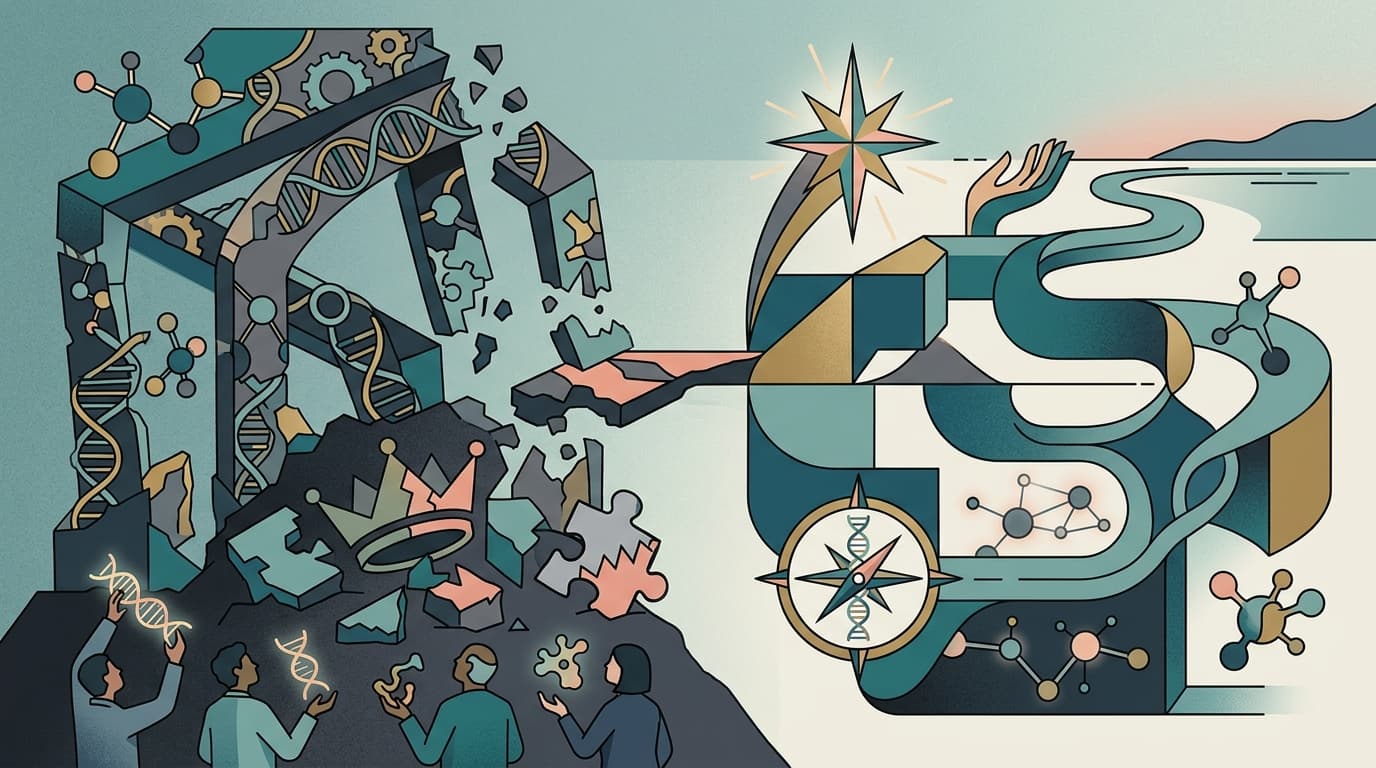
The FDA Just Admitted Its Rare Disease Playbook Is Broken
The FDA just launched a major initiative to overhaul how it regulates rare disease drugs, admitting that its one-size-fits-all approach doesn't work for tiny patient populations. The question now: can the agency deliver real change, or is this just another well-intentioned framework?
The One-Size-Fits-All Problem
Imagine trying to fit every student in a school into the same size uniform. Kindergartners drowning in fabric. Seniors bursting at the seams. That's basically how the FDA has been regulating rare disease drugs for decades: applying the same evidentiary standards designed for blockbuster drugs with thousands of trial participants to diseases that might affect a few hundred people on Earth.
On October 14, 2026, the agency finally said "enough." The FDA launched its Rare Disease Framework Initiative, an ambitious effort to rebuild how it evaluates, reviews, and approves drugs for rare conditions. The goal is straightforward: stop forcing rare disease developers to play a game with rules that were never written for them.
What's Actually Changing?
The initiative aims to make FDA decision-making more clear, consistent, and predictable for rare diseases. In practice, that means tailoring evidence requirements to what's "reasonably attainable" for a given disease, rather than holding every program to the same clinical trial blueprint.
Think of it this way. If you're studying a disease that affects 50,000 people, you can recruit a big randomized trial. If your disease affects 200 people scattered across 30 countries, that traditional playbook falls apart. The FDA is acknowledging this reality and promising to build something better.
Specifically, the framework calls for:
Earlier patient input at defined milestones in the development process
Risk-based approaches to manufacturing review and pre-approval inspections
Greater use of innovative statistical methods and novel trial designs
Shared resources and better training for FDA reviewers handling rare disease applications
These changes could come through new regulations, updated guidance documents, or internal process overhauls. The agency hasn't committed to a specific vehicle yet, which is worth watching.
Get tomorrow's biotech intelligence before your competitors.
Join thousands of biotech professionals who start their day with our free, daily briefing.
Why Rare Disease Developers Have Been Pulling Their Hair Out
The core tension in orphan drug development has always been this: FDA still requires rigorous evidence of safety and effectiveness, even when the patient population is tiny. Orphan drug designation gives you tax credits and seven years of market exclusivity after approval, but it doesn't lower the scientific bar.
That creates a brutal Catch-22. You need substantial evidence, but you can't generate substantial evidence when your entire patient population could fit in a mid-size restaurant.
The specific headaches are well-documented. Small, geographically scattered patient pools make traditional randomized trials nearly impossible. Many rare diseases lack validated endpoints (the measurements that prove a drug works). Natural history data, which tells you what happens to patients without treatment, is often thin or nonexistent. And genetic diversity within a single rare disease can blur treatment effects across an already tiny study group.
In 2025, some rare disease submissions reportedly faced denials with feedback described as stricter or contradictory, adding fuel to sponsor frustration. The regulatory environment has felt, to many developers, like a moving target.
The Numbers Tell the Story
Despite these challenges, rare disease drugs have become a massive share of FDA's output. In 2024, 26 of 50 novel CDER drug approvals carried orphan designation. That's 52% of all new drugs approved that year, and it reflects a trend that's been building for years.
The pipeline is enormous and growing. But the approval process hasn't kept pace with the science, and that's the gap the new framework is trying to close.
For context, the FDA says it has approved hundreds of drugs for rare diseases since the Orphan Drug Act passed in 1983. Yet most of the roughly 7,000 known rare diseases still have no approved treatment. The math is stark: a lot of progress, but an ocean of unmet need.
The Innovation Toolkit
One of the most promising aspects of the initiative is its emphasis on trial design creativity. The FDA is signaling openness to approaches that rare disease sponsors have been experimenting with (and sometimes fighting for) over the past few years.
Adaptive designs let researchers modify a trial mid-course: adjusting sample size, dropping failing arms, or enriching the patient population based on interim results. Single-arm trials with external controls use natural history data or historical records as a comparison group when randomizing patients to placebo isn't practical or ethical. Cross-over and randomized withdrawal designs allow within-patient comparisons, which can be powerful when your whole study fits in a single clinic.
Digital and decentralized trial methods are gaining traction too. Remote symptom tracking, e-consent, and home biomarker collection can reduce the burden on patients who may live hours from the nearest trial site. For diseases where patients number in the low hundreds worldwide, every logistical barrier you remove matters.
The Reaction: Cautious Applause
The early response from industry and patient groups has been positive, with an asterisk. The National Organization for Rare Disorders (NORD) called it an "important and welcome step forward." The Rare Foundation went further, describing it as an "extraordinary inflection point" for the rare disease community. The FDA Law Blog labeled the effort "thoughtful, ambitious, and laudable."
But seasoned biotech observers are waiting to see receipts. The initiative is still a public process exercise, not a finalized rule. An October 28 public meeting will gather stakeholder input, and the real test comes afterward: can the FDA translate good intentions into concrete operational changes?
Amy Comstock Rick, quoted in Biopharma International, emphasized that the framework should improve consistency and predictability for sponsors and patients. That's the crux of it. Rare disease developers don't necessarily want a lower bar; they want to know what the bar actually looks like before they spend years and hundreds of millions of dollars trying to clear it.
What Comes Next
The FDA has been building toward this moment through a series of incremental steps. CDER launched its Accelerating Rare Disease Cures (ARC) Program in 2022. The Rare Disease Endpoint Advancement Pilot, announced in 2022, and a Rare Disease Innovation Hub launched in 2024, improving cross-center coordination and endpoint development. The new framework represents an attempt to consolidate all of these efforts under one strategic umbrella.
For biotech companies with rare disease programs, the stakes are enormous. A more predictable regulatory pathway could change everything from how they design early-stage trials to how they pitch investors. Venture capital and public market interest in rare disease companies often hinges on perceived regulatory risk; reduce that risk, and you unlock capital.
The biggest question is whether the FDA can deliver flexibility without sacrificing rigor. Patients with rare diseases deserve drugs that actually work, not just drugs that squeaked through a relaxed approval process. The agency will need to thread a very fine needle: making development feasible while keeping the science honest.
If it works, this could reshape orphan drug development for a generation. If it stalls in bureaucratic limbo, it becomes another well-intentioned report gathering dust on a shelf. The rare disease community has heard promises before. This time, they're watching closely to see if the FDA follows through.
4 min read
The Bladder Cancer Drug That Just Got a Bigger Playground
The FDA just widened Anktiva's bladder cancer label to include high-grade papillary tumors, and it could reshape ImmunityBio's entire commercial story. Here's why a seemingly incremental regulatory update is actually a franchise-defining moment.