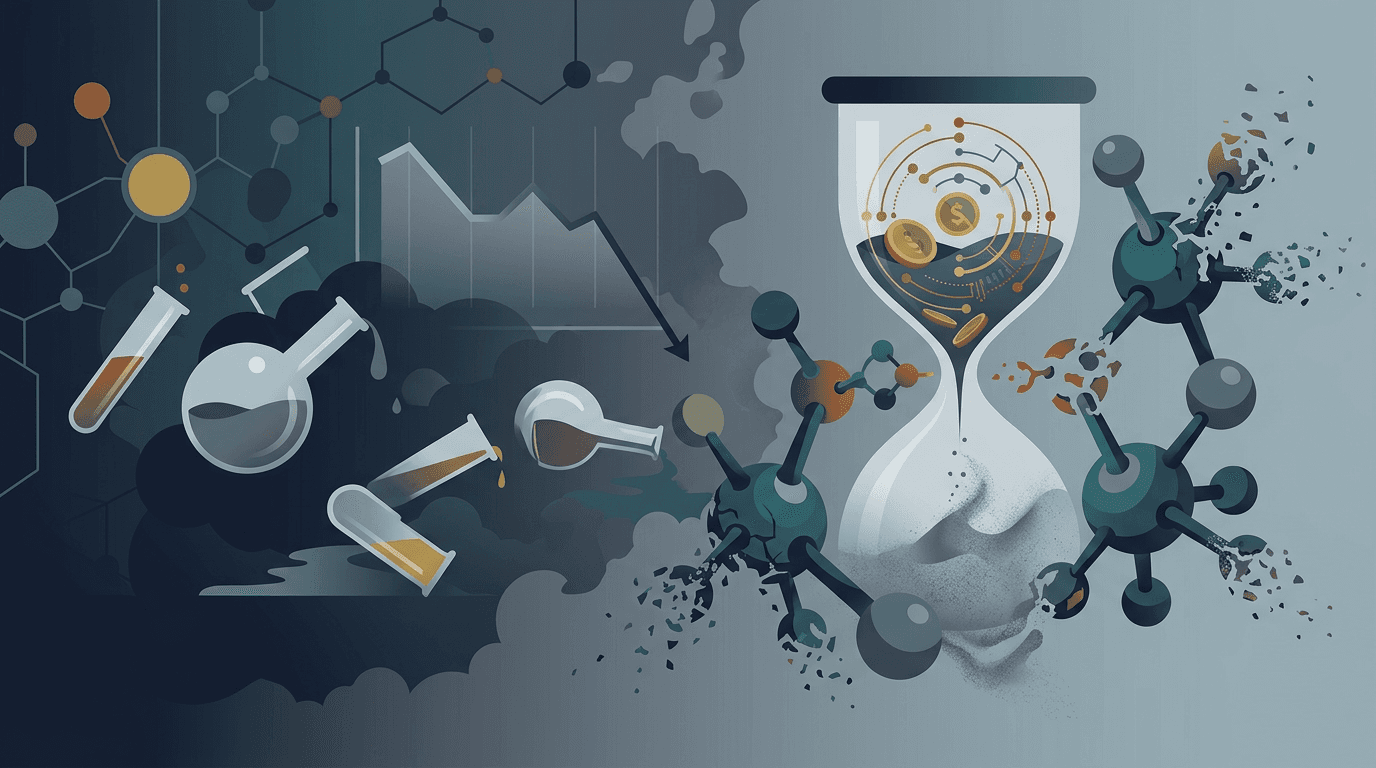
A tiny San Diego biotech spent six years building a molecular glue platform, only to shut down in a field where Big Pharma is pouring billions. The science was hot; the funding wasn't.
Six years. Five preclinical programs. Up to 10 employees. Zero dollars left.
That's the final scorecard for f5 Therapeutics, a San Diego-based biotech that bet everything on one of the hottest ideas in drug development: molecular glues. The company quietly shut down this month, becoming another cautionary tale about the gap between scientific promise and financial survival.
What makes this story interesting isn't that a small biotech ran out of money. That happens all the time. It's that f5 died in a field that's absolutely booming.
A Quick Primer on Molecular Glue
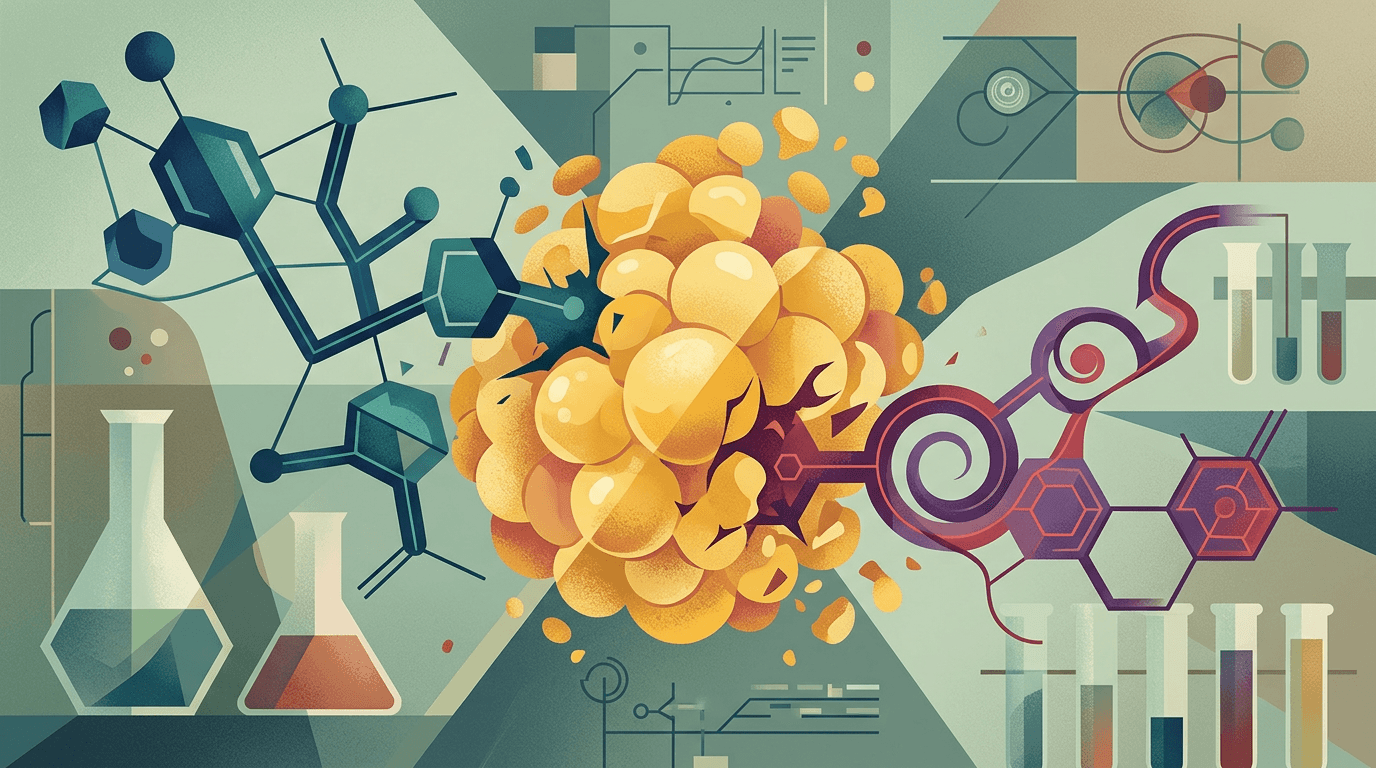
Imagine your body has a garbage disposal system for proteins. Normally, it only chews up proteins that are tagged for destruction. Molecular glues are tiny molecules that trick the system into tagging proteins it would otherwise ignore, essentially sticking a "destroy me" label on disease-causing proteins that were previously untouchable.
This is a big deal because roughly 80% of the proteins linked to disease can't be reached by traditional drugs. They're what scientists call "undruggable." Molecular glues offer a backdoor.
f5 called its version of this technology NExMods (Neosubstrate Expression Modulators), and the platform was designed to find new protein targets across cancer, fibrosis, inflammation, and brain diseases. On paper, it sounded like exactly the kind of work Big Pharma would throw money at.
On paper.
The Funding Desert
f5 was co-founded by Gary Choy (CEO) and John Boylan, Ph.D., both veterans of the biotech and pharma world. Choy had commercial experience at companies like Calidi Biotherapeutics and Samumed. They weren't amateurs.
The company earned early recognition, too. San Diego's Connect program named f5 a "Cool Company" in both 2021 and 2022, a designation that's helped alumni collectively raise over $1 billion since 2015. They had backing from Viva BioInnovator and even snagged an award from French pharma giant Servier.
Get tomorrow's biotech intelligence before your competitors.
Join thousands of biotech professionals who start their day with our free, daily briefing.
But cool companies still need cash. And the Series A that f5 was chasing never materialized.
In a LinkedIn post announcing the shutdown, Choy was blunt about the environment: "The past few years have been brutal for early-stage biotech, with funding for young platforms at multi-year lows and dozens of startups shut" down. (The post trails off in available records, but the message is clear enough.)
Here's what's wild about that statement: he's not wrong, and he's not alone. Early-stage biotechs have been getting squeezed across the board, as investors chase later-stage, de-risked assets instead of betting on discovery platforms. For a 10-person company without clinical data, the fundraising landscape has been a desert.
Meanwhile, the Molecular Glue Party Rages On
This is the twist that makes f5's closure sting. The broader molecular glue space isn't just surviving; it's thriving.
In 2024 alone, Big Pharma poured over $10 billion into molecular glue deals. Takeda signed a $1.2 billion agreement with Degron Therapeutics. Merck inked a deal worth over $2.55 billion with Proxygen. Novartis expanded its partnership with Monte Rosa Therapeutics. Novo Nordisk got in the game for cardiometabolic targets.
The momentum has carried into 2025 and 2026. SEED Therapeutics dosed its first patient in a Phase 1 trial for solid tumors. Neomorph is advancing its own pipeline with backing from Deerfield and AbbVie.
So this wasn't a field in decline. It was a field where the big fish kept eating, and the small fish starved.
Why Small Beats Big (Until It Doesn't)
Molecular glues have a structural advantage over their older cousin, PROTACs (proteolysis-targeting chimeras). Think of PROTACs as bulky two-handed tools: they grab both the target protein and the garbage disposal simultaneously using a chemical linker. They work, but they're big, clunky molecules that struggle to get absorbed into the body.
Molecular glues, by contrast, are sleeker. They're smaller, easier to swallow as a pill, and behave more like traditional drugs. That's why pharma companies love them.
But discovering new molecular glues has historically been more art than science. Many of the early breakthroughs happened by accident through broad screening experiments. The field is now shifting toward rational, high-throughput design methods (think: letting computers and automated chemistry systematically hunt for glues instead of stumbling onto them). Companies with the resources to build those platforms are winning.
f5 was trying to build exactly that kind of platform. They advanced five preclinical programs within their first year and explored creative approaches like Degrader Antibody Conjugates, which swap the toxic payload on cancer-targeting antibodies for a molecular glue instead. It was clever science. But clever science with 10 employees and no Series A is a hobby, not a company.
The Uncomfortable Math
About 80 companies are now working on roughly 90 molecular glue drug candidates globally, according to 2026 industry reports. That's a crowded room, and it's getting more competitive by the quarter.
For a tiny startup, the math was brutal. You need millions to generate the preclinical data that attracts a pharma partnership. You need a pharma partnership (or a fat Series A) to fund the next round of experiments. And you need those experiments to work on a timeline that keeps your investors happy before the money runs out. It's a treadmill that speeds up every year.
f5 couldn't keep pace. Not because the science was bad, but because the capital markets didn't care about promise. They wanted proof.
What This Really Means
f5 Therapeutics won't be the last small biotech to shut down in a hot therapeutic area. If anything, the molecular glue space is entering a Darwinian phase where platform scale, pharma partnerships, and deep pockets matter more than a cool idea and a talented founding team.
The irony is thick: molecular glues work by forcing two proteins together that wouldn't normally interact. f5 couldn't force its own connection between great science and the capital it needed to survive.
For the broader field, the outlook remains strong. Between the billions flowing in from pharma, the expanding clinical pipelines, and the shift toward rational drug design, molecular glues are becoming one of biotech's most exciting frontiers.
But for the ten or so people who built f5 over six years, that's cold comfort. Sometimes the science works and the business doesn't. In biotech, that happens more often than anyone likes to admit.
4 min read
The Government Wants to Turn Your Body Into a Dashboard
ARPA-H just launched the Delphi program to build tiny, Lego-like biosensor "chiplets" that track hormones, inflammation, and medication levels in real time. It could be the biggest leap from Fitbit-grade wellness tracking to actual clinical diagnostics, and researchers have until April 8 to pitch.