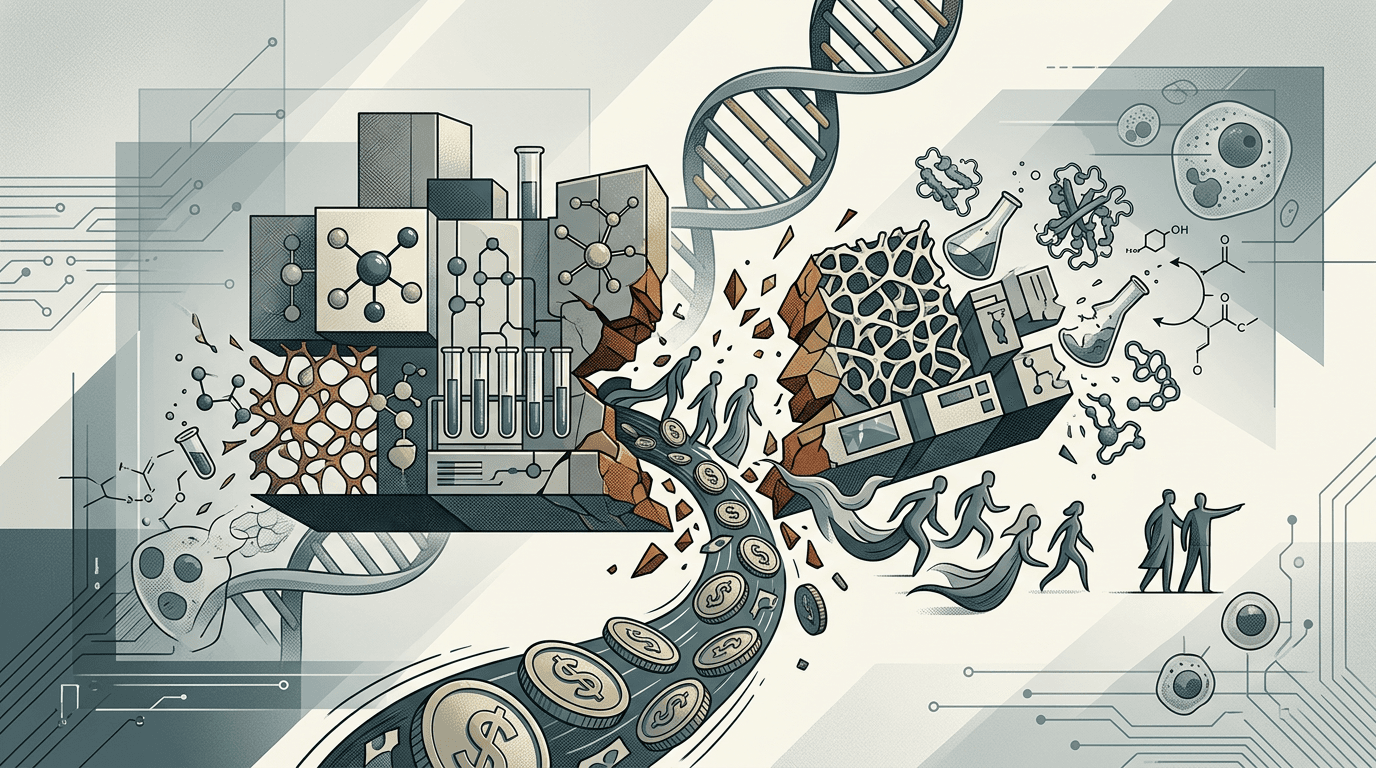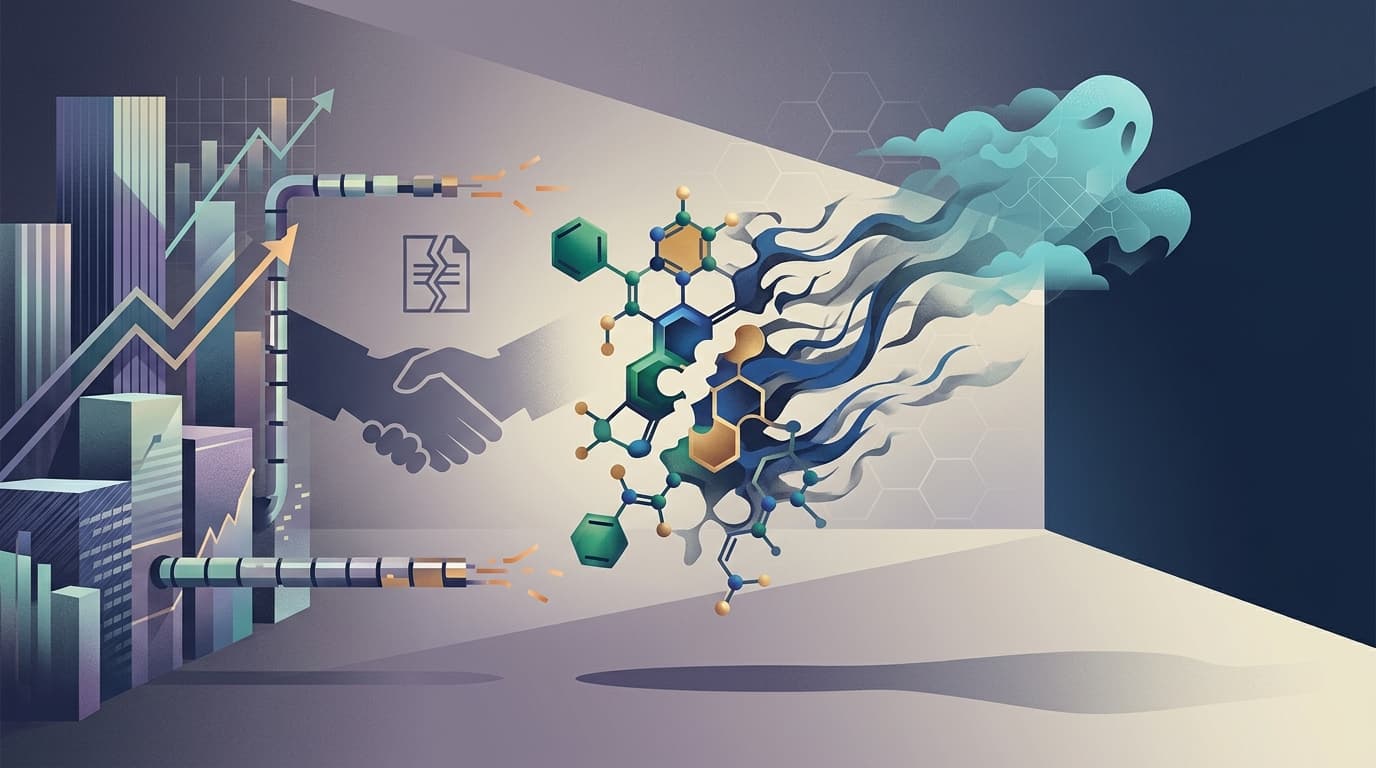

Esperion Therapeutics is leaving Nasdaq after a decade-long stock collapse, even as its cholesterol drugs post triple-digit revenue growth. Healthcare PE firm ARCHIMED is paying a 58% premium in a deal worth up to $1.1 billion, and the reasons why say a lot about what's broken in small-cap biotech.
Imagine buying a house for $100,000 and watching its value crater to $730. That's essentially what happened to Esperion Therapeutics shareholders over the past decade. The cholesterol drug company once traded at $100 per share back in 2015. By October 2023, it had bottomed out at $0.73.
Now Esperion is leaving public markets entirely. Healthcare investment firm ARCHIMED is taking the company private at $3.16 per share, a deal announced on May 1, 2026, that values the company at up to $1.1 billion. The stock had been trading around $2 the day before the announcement, meaning shareholders are getting a 58% premium to walk away.
But walk away from what, exactly? And why would a private equity buyer want a company that public investors seemingly gave up on?
This is where the story gets interesting. Esperion's drugs (NEXLETOL and NEXLIZET, both based on a cholesterol-lowering molecule called bempedoic acid) are growing like crazy. Think of bempedoic acid as the alternative for people who can't tolerate statins. It works through a different mechanism, targeting an enzyme called ACL instead of the one statins go after.
The commercial traction is real. Revenue for the first nine months of 2024 hit $263.2 million, up a staggering 213% from the same period in 2023. More than 90% of commercial and Medicare plans now cover the drugs.
So why was the stock languishing below $3? Public markets are impatient. Esperion was still unprofitable and had burned through years of investor goodwill during a painfully slow commercial launch. The stock's decade-long decline created a credibility problem that no quarterly earnings beat could fix overnight.
ARCHIMED's offer is structured like a bet on the future. Shareholders get their $3.16 per share in cash at closing, plus something called contingent value rights (CVRs): basically IOUs tied to future sales performance.
The CVR math works like this: if U.S. net sales of bempedoic acid products exceed $350 million in calendar year 2027, shareholders split an additional $40 million. If sales land between $300 million and $350 million, they get a prorated payout on a sliding scale. The total CVR pool could reach $100 million.

Merck just committed up to $1 billion over a decade to blanket its entire 75,000-person organization in Google's agentic AI. It's the largest operational AI rollout in pharma history, and it signals that the industry's flirtation with artificial intelligence has become a full commitment.


Join thousands of biotech professionals who start their day with our free, daily briefing.
For context, the business was already doing $263 million in revenue through just nine months of 2024. Hitting $350 million in full-year 2027 sales isn't some fantasy; it's a reasonable trajectory if growth continues at even a fraction of recent rates.
Esperion's situation is a textbook case of the "public market penalty." When you're a small-cap biotech that spent years disappointing investors, every quarter becomes a referendum on your existence. Analysts had a $16 price target from H.C. Wainwright, yet the stock couldn't break $4. The disconnect between the business reality and market perception had become a prison.
Going private lets ARCHIMED do what public market investors wouldn't: be patient. They can reinvest in the commercial launch without worrying about quarterly EPS. They can expand the Daiichi Sankyo partnership (which already covers Europe, Asia, and Latin America) without explaining the short-term margin impact to analysts on an earnings call.
The deal also reflects a broader industry pattern. Biopharma M&A reached $292.55 billion in 2025. Nearly one quarter of biotech acquisitions last year used CVRs to bridge valuation gaps, exactly the structure ARCHIMED chose here.
Esperion isn't alone. Smaller biopharma companies are finding public life increasingly inhospitable. The IPO window has been mostly shut; only three biopharma IPOs priced in Q1 2026, raising $1.7 billion total. Follow-on financings are tough. Investor patience is thin.
Private equity firms see opportunity in this mismatch. They can buy commercial-stage businesses at depressed public valuations, strip out the overhead of being a public company, and run them for cash flow. It's like buying a profitable restaurant that happens to have terrible Yelp reviews: the food is good, the customers are coming back, but the narrative is broken.
For Esperion specifically, the Daiichi Sankyo partnership provides a built-in growth engine. A 2024 amendment worth $125 million expanded the collaboration to include potential triple-combination products. The franchise is approved in 39 countries.
The deal needs shareholder approval and regulatory clearance under the Hart-Scott-Rodino Act. Closing is expected in Q3 2026, at which point Esperion will delist from Nasdaq.
Debt financing comes from Pharmakon Advisors, and importantly, the transaction has no financing condition. Translation: the money is committed. This isn't one of those deals that falls apart because the buyer can't get a loan.
For long-suffering Esperion shareholders, this is bittersweet. A 58% premium sounds great until you remember the stock was above $100 seven years ago. But for the company itself, going private might be exactly what it needs. Sometimes the best move for a business that's finally working is to stop performing for an audience that stopped watching.
Gilead Sciences is unwinding its once-massive oncology alliance with Arcus Biosciences after key lung cancer trials hit a futility wall. With over a billion dollars already invested and a string of recent acquisitions reshaping its cancer strategy, this breakup says as much about where oncology is heading as where it's been.