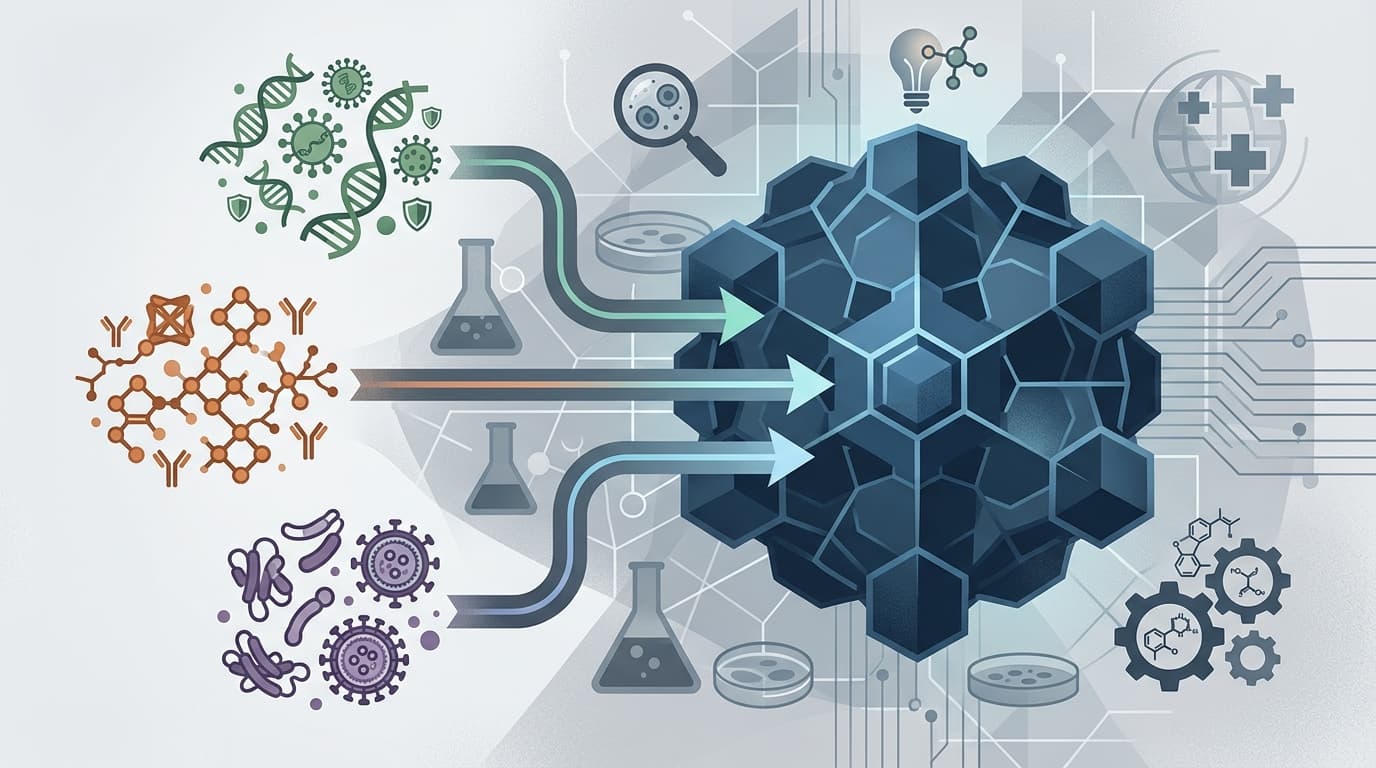

Eli Lilly dropped up to $3.8 billion to acquire three vaccine companies in a single day, targeting everything from shingles to Epstein-Barr virus. It's the biggest bet on vaccines by a non-vaccine company in years, and it signals a radical strategic shift.
Eli Lilly has never been a vaccine company. It's the house that insulin built, the pharma giant riding a GLP-1 rocket ship through the obesity gold rush. So when Lilly announced on May 26 that it's acquiring three vaccine developers simultaneously for up to $3.8 billion, the natural reaction was: wait, what?
The deals span Curevo (shingles vaccines), LimmaTech Biologics (bacterial vaccines), and a firm literally called Vaccine Company (viral vaccines, including one targeting Epstein-Barr virus). All cash. All structured as upfront payments plus milestone-based payouts. And all pointing toward a single, ambitious thesis: that preventing infections today can stop chronic diseases tomorrow.
This isn't a toe in the water. It's a cannonball.
Lilly didn't just buy one vaccine maker; it bought an entire starter kit. Each acquisition targets a different corner of infectious disease, using a different technology platform.
Curevo is the most clinically advanced of the bunch. Its lead candidate, amezosvatein, is a next-generation shingles vaccine designed to compete with GSK's Shingrix, the current market leader. In a Phase 2 trial of over 800 participants, amezosvatein matched Shingrix's immune response while cutting side effects like fatigue, chills, and injection-site pain by more than half. Phase 3 is next. Lilly is paying up to $1.5 billion for Curevo.
Vaccine Company (yes, that's the real name) brings a nanoparticle-based platform and a prophylactic vaccine for Epstein-Barr virus, or EBV. Nearly everyone on Earth carries EBV, but there's no approved vaccine for it. That matters because EBV has been linked to multiple sclerosis and several cancers. Think of this as a bet that stopping a common virus could prevent rare, devastating diseases years later. Price tag: up to $1.55 billion, the largest of the three deals.
LimmaTech Biologics, a Swiss biotech spun out of GlycoVaxyn in 2015, focuses on vaccines against drug-resistant bacteria: and gonorrhea. Its lead program, LTB-SA7, is in Phase 1 for staph infections. This one is the earliest-stage play, and the deal reflects that: up to .

The FDA just proved it can watch clinical trial data in real time, not months after the fact. AstraZeneca and Amgen are the first guinea pigs in an initiative that could cut drug development timelines by up to 40%.

Join thousands of biotech professionals who start their day with our free, daily briefing.

So why is the company best known for Mounjaro and Zepbound suddenly obsessed with vaccines?
Daniel Skovronsky, Lilly's Chief Scientific and Product Officer, said the acquisitions "reflect a deliberate strategy to prevent disease at its source rather than treat its consequences." He pointed to decades of evidence linking common infections to later neurological disease, cancer, and infertility.
That framing is key. Lilly isn't positioning these as traditional vaccine plays (inject, prevent acute illness, move on). It's arguing that vaccines are upstream interventions against chronic diseases, the kind of conditions Lilly already treats. An EBV vaccine that reduces MS risk doesn't just prevent a viral infection; it potentially removes patients from the neurology pipeline entirely. A staph vaccine that prevents surgical-site infections saves hospitals billions.
It's a clever strategic narrative. Whether the science delivers on that promise is a different question entirely.
This move didn't come out of nowhere. Earlier, Lilly recruited Peter Marks, the former head of the FDA's Center for Biologics Evaluation and Research (the division that oversees vaccines), to lead molecule discovery and infectious disease efforts at Lilly Research Laboratories. Marks said he aims to "advance the development of infectious disease products for public health."
Hiring the guy who used to approve vaccines, then buying three vaccine companies? That's not a coincidence. That's a playbook.
Zoom out, and this vaccine triple-play fits a broader pattern. Lilly has been on an acquisition tear since 2023, using GLP-1 cash flows to build new franchises far beyond diabetes and obesity.
The receipts: Morphic Holding for $3.2 billion (oral immunology for IBD). Scorpion Therapeutics for up to $2.5 billion (oncology). Verve Therapeutics for up to $1.3 billion (gene editing for cardiovascular disease). Ventyx Biosciences for $1.2 billion (immunology). By one estimate, Lilly has spent roughly $21 billion on M&A during its recent spree.
The logic is straightforward: GLP-1s won't be king forever. Patents expire. Competitors catch up. Lilly is essentially taking its obesity profits and spreading them across oncology, immunology, neuroscience, gene editing, and now infectious disease. It's the pharmaceutical equivalent of not putting all your eggs in one basket, except the basket cost $21 billion.
Vaccines are a different beast from small molecules and injectable peptides. The global vaccine market hit about $88.9 billion in 2025 and is projected to reach $211.6 billion by 2034, but it's dominated by entrenched players: GSK, Sanofi, Pfizer, and Merck. These companies have decades of manufacturing expertise, established distribution networks, and deep relationships with public health agencies worldwide.
Lilly has none of that. What it does have is cash, a massive manufacturing buildout across four new U.S. sites, and a direct-to-patient infrastructure through LillyDirect. The question is whether those assets translate to vaccine commercialization, which involves government contracts, cold-chain logistics, and advisory committee politics that look nothing like selling a diabetes drug.
There's also a timeline problem. LimmaTech's lead program is in Phase 1. Vaccine Company's EBV candidate still needs to prove it can actually prevent long-term diseases like MS, a trial that could take years, maybe a decade. Even Curevo, the most advanced asset, still needs a pivotal Phase 3 trial before it can challenge Shingrix. Most of the $3.8 billion headline is milestone-based for a reason: a lot has to go right.
Lilly just made one of the largest coordinated vaccine bets by a non-vaccine company in recent memory. The strategic vision is bold and intellectually compelling: use vaccines to stop chronic diseases before they start, then leverage Lilly's scale to deliver them globally.
But vision and execution are two very different things. These are early-stage assets in a market where Lilly has zero track record. The milestone-heavy deal structures suggest Lilly knows it's buying potential, not certainty.
For a company that turned a diabetes drug into the obesity revolution, though, betting against Lilly's ambition hasn't been a winning strategy lately. The vaccine industry just got a very wealthy, very motivated new entrant. Whether the incumbents should be worried or amused is the $3.8 billion question.
Astellas Pharma's biggest drug generates over 40% of its revenue and loses U.S. patent protection in 2027. The company just laid out an aggressive plan to buy, partner, and cut its way through the storm, and it's adding serious heat to an already competitive biotech M&A market.