The FDA Just Started Watching Clinical Trials Like Live TV
The FDA just proved it can watch clinical trial data in real time, not months after the fact. AstraZeneca and Amgen are the first guinea pigs in an initiative that could cut drug development timelines by up to 40%.
For about 60 years, the FDA has reviewed drug trials the same way. Companies run studies, collect mountains of data, clean it all up, package it into submissions that can stretch millions of pages, and then ship it off to regulators. The FDA cracks open the binder (metaphorically) and starts reading. Months pass. Sometimes years.
That model just got its first serious challenge.
The FDA announced it has successfully received and validated real-time data from a live clinical trial, marking the first proof that a radically different approach to drug oversight actually works. Instead of waiting for the final report card, regulators can now watch the test as it happens.
Netflix, but for Clinical Data
Think of traditional drug development like mailing a DVD box set to the FDA after the entire season has been filmed, edited, and packaged. The agency binge-watches it later and decides whether to renew.
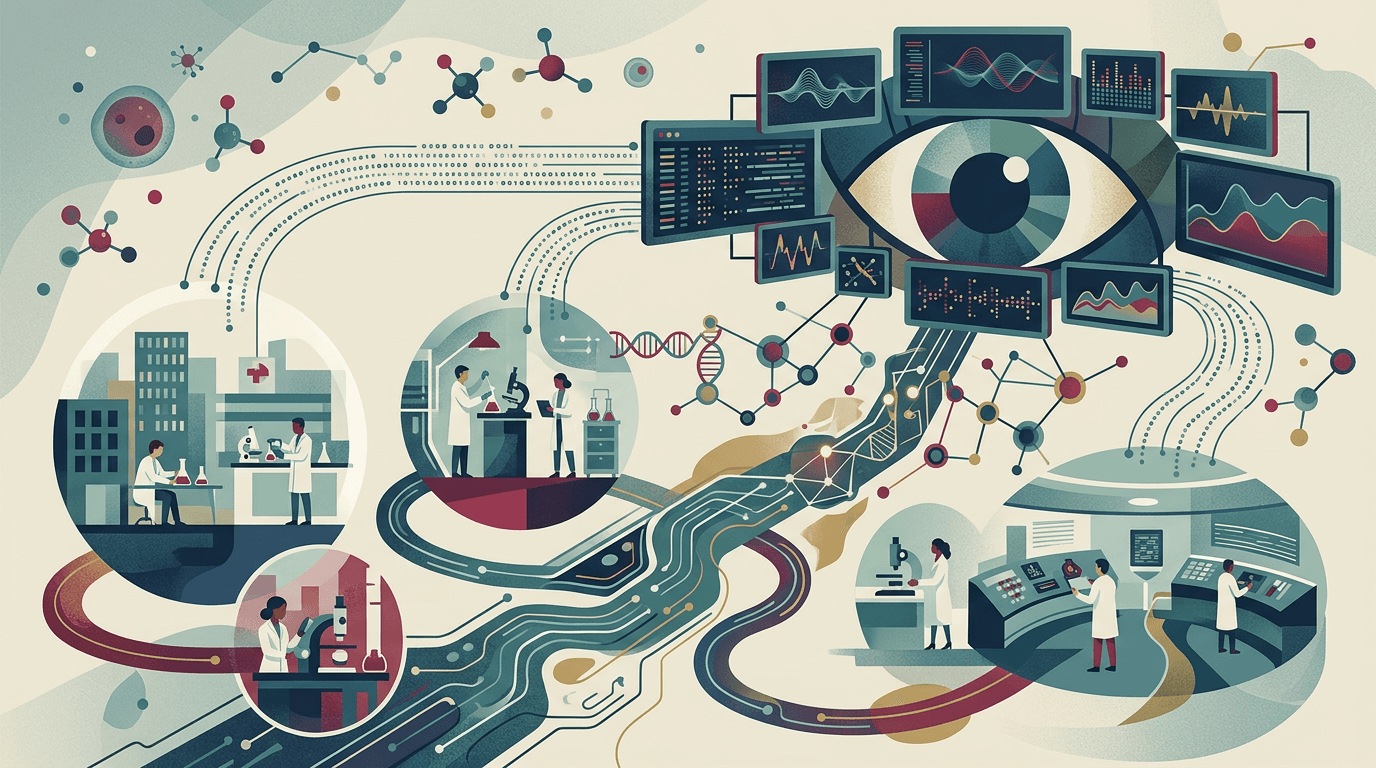
The new model? It's more like a live stream. The FDA gets to see key safety events and treatment responses as they happen in the trial, transmitted through a secure cloud platform. A patient gets hospitalized? The FDA knows. A tumor shrinks? They see it.
The initiative is called Real-Time Clinical Trials (RTCT), and it launched with two proof-of-concept studies: one from AstraZeneca and one from Amgen. Both are in cancer. Both are early-stage. And at least one has already proven the technology works.
FDA Commissioner Marty Makary has described about 45% of the time between Phase 1 and regulatory submission as "dead time," spent on paperwork and administrative tasks rather than actually testing drugs in patients. RTCT is designed to attack that dead time head-on.
The Two Trials Leading the Charge
The AstraZeneca study, called TRAVERSE, is a Phase 2 trial testing a chemo-free cocktail of three drugs (acalabrutinib, venetoclax, and rituximab) in patients with treatment-naïve mantle cell lymphoma, a type of blood cancer. It's enrolling roughly 100 patients across North America, Europe, and Australia.
Get tomorrow's biotech intelligence before your competitors.
Join thousands of biotech professionals who start their day with our free, daily briefing.
The early numbers are eye-catching. Among the first 12 patients who completed induction treatment, all 12 achieved a complete response with no detectable residual disease. In a broader group of patients still on treatment, 95.4% hit that same benchmark of undetectable cancer. These are early, immature results, but they caught the FDA's attention for a reason beyond efficacy.
TRAVERSE is the trial where the FDA confirmed it can receive and validate real-time signals through the platform built by Paradigm Health. That's the technical milestone that matters most right now. The plumbing works.
Amgen's contribution is STREAM-SCLC, a Phase 1b trial testing tarlatamab (Imdelltra) in limited-stage small cell lung cancer. Tarlatamab is a bispecific T-cell engager (basically a molecule that grabs cancer cells with one arm and immune cells with the other, forcing them to shake hands violently). It already has full FDA approval for extensive-stage disease, where it showed a 40% response rate. Now Amgen wants to push it into earlier-stage patients.
STREAM-SCLC is still selecting its trial sites, so it's a step behind TRAVERSE on the real-time data front. But the FDA has already agreed with Amgen on exactly which safety and efficacy signals will be streamed and at what thresholds.
How the Sausage Gets Made (in Real Time)
The technical backbone of this whole initiative is Paradigm Health's Study Conduct Platform. It sits between clinical trial sites, drug companies, and the FDA, acting as a translator and filter.
Critically, the FDA isn't getting a fire hose of raw patient data. Before each trial begins, the sponsor and FDA agree on a specific set of pre-defined signals: safety red flags (think serious side effects, hospitalizations, dose-limiting toxicities) and efficacy markers (tumor responses, disease milestones). Only those signals flow through the platform in near real time.
This distinction matters. The system is designed for focused, regulatory-relevant information, not an overwhelming data dump that would drown reviewers.
The result? Data that used to take months to reach the FDA now arrives in days. And because reviewers build familiarity with the dataset during the trial, they won't be starting from scratch when the formal application eventually lands on their desk.
Why 20–40% Faster Isn't Just a Talking Point
FDA Chief AI Officer Jeremy Walsh has said that real-time monitoring combined with AI tools could reduce overall clinical trial timelines by 20 to 40%. To understand why that number is plausible, you need to appreciate how much wasted time exists in the current system.
After the last patient finishes a trial, sponsors enter a drawn-out process: resolving data queries, locking the database, running statistical analyses, writing a Clinical Study Report, assembling the application, and finally submitting everything to the FDA. Only then does the review clock start.
With RTCT, the FDA has already been watching the movie as it was being filmed. They know the characters. They know the plot. The formal submission becomes less of a revelation and more of a formality that confirms what everyone has already been tracking.
The agency has also deployed AI tools that have compressed certain documentation tasks from about three days to just minutes. These aren't the headline-grabbing parts of drug development, but they add up.
Perhaps the biggest prize is what the FDA calls "continuous trials." Right now, there are often long gaps between Phase 1 and Phase 2, or Phase 2 and Phase 3, as companies pause to analyze, discuss, and negotiate with regulators. If the FDA can assess emerging data during enrollment, those pauses could shrink dramatically. Phase transitions could become seamless rather than stop-and-start.
The Catch (There's Always a Catch)
Not everyone is popping champagne. Analysts have raised several concerns that deserve attention.
The two-tier problem. Building a secure, high-quality, real-time data pipeline is expensive and technically complex. Large pharma companies like AstraZeneca and Amgen can afford it. A 30-person biotech running its first Phase 1? Maybe not. Critics worry RTCT could create a fast lane for big pharma and a slow lane for everyone else, widening the gap between well-resourced companies and scrappy startups.
Data quality under pressure. Streaming data in real time means the FDA might see information before it's been fully cleaned and verified. There's a risk of overreacting to noise: a spurious safety signal, an early trend that doesn't hold up. The system needs clear rules about what counts as "regulatory-grade" data in real time versus what's still preliminary.
Legal exposure. When the FDA has timestamped access to every emerging signal, it creates a detailed record of exactly when both the sponsor and the agency became aware of potential risks. In a courtroom, that paper trail could become a weapon. Lawyers on both sides will be watching this closely.
Reviewer overload. Continuous data streams mean continuous work for FDA staff. Without proper tools, triage systems, and maybe entirely new skill sets, there's a real risk of burning out the very people the system depends on.
The FDA seems aware of at least some of these issues. The initiative is explicitly positioned as additive, not a replacement for traditional submissions. The evidentiary bar for approval stays the same. And the agency has issued a Request for Information (RFI) seeking feedback from industry, with comments due May 29, 2026, selection criteria coming in July, and pilot participants chosen by August.
What This Actually Means for You
If RTCT works at scale, it doesn't just speed up approvals. It fundamentally changes the relationship between drug developers and regulators. Instead of a teacher grading a paper after it's turned in, the FDA becomes more like a coach watching practice, offering feedback before the big game.
For patients, the implications are significant: dangerous drugs could be flagged and stopped faster, and promising ones could advance more quickly. For investors, real-time FDA visibility into trial data adds a new variable to consider; regulatory risk won't just be a binary "approve or reject" decision at the end, but an evolving signal throughout development.
For the broader industry, the proof-of-concept milestone with AstraZeneca's TRAVERSE trial is the important marker. The question was never whether real-time data sharing should happen. It was whether it could happen within the FDA's infrastructure, governance constraints, and culture. That question just got its first "yes."
The FDA plans to select its next wave of pilot participants this summer. By the end of 2026, we'll have a much clearer picture of whether this is a genuine paradigm shift or a promising pilot that stalls in the bureaucratic mud. Given how fast the agency has moved so far, don't bet on the mud.
Clinical & Regulatory
4 min read
The FDA Just Asked the Internet How to Use AI in Drug Trials
The FDA just asked the public to help design an AI clinical trial pilot program, with selections planned for August 2026. This isn't a vague exploration; it's a live procurement process that could set the rules for AI in drug development for years to come.