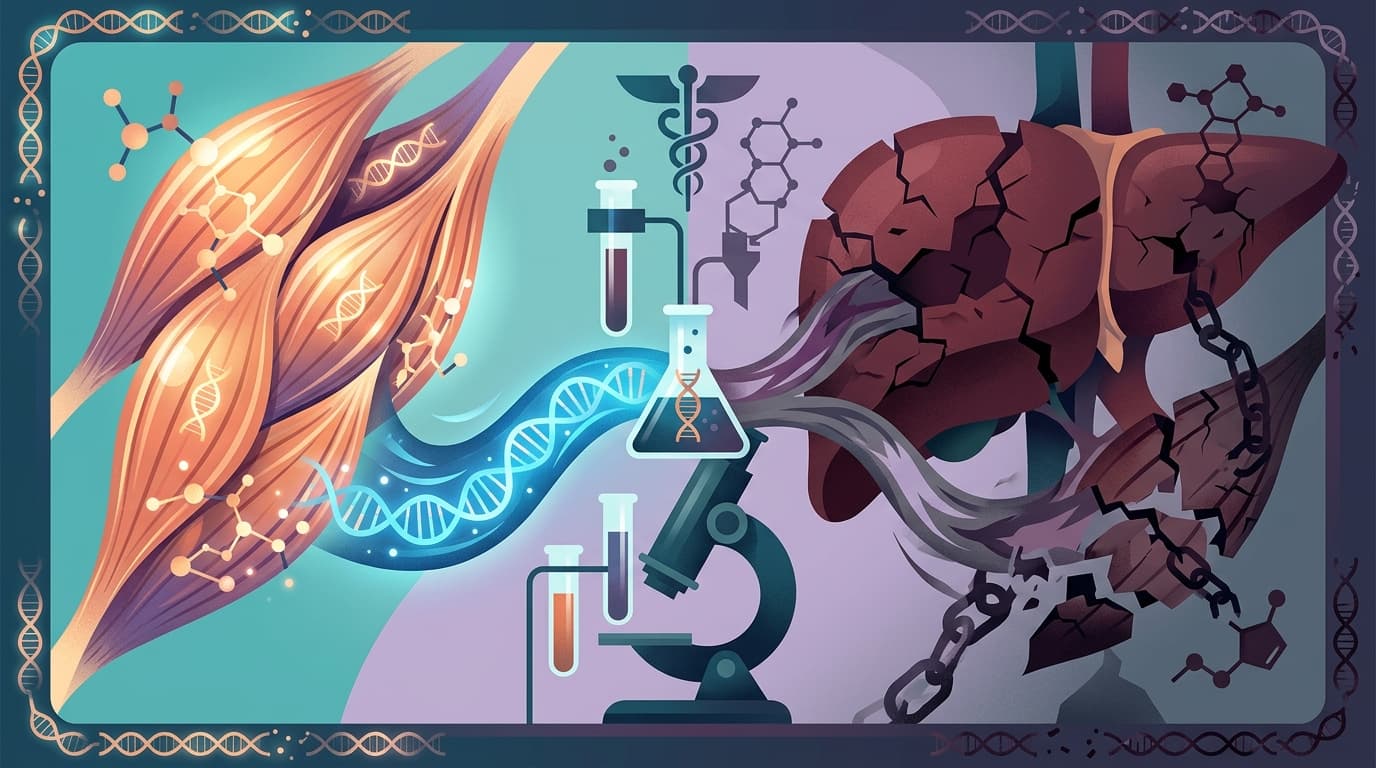
The Gene Therapy That Saved Kids' Muscles May Be Destroying Their Livers
The FDA is investigating three deaths from acute liver failure linked to Sarepta's Elevidys gene therapy and related products. The fallout includes a boxed warning, halted shipments, and hard questions about whether high-dose gene therapy can ever be safe enough for the patients who need it most.
Imagine spending $3 million on a one-time treatment to save your child's life. Now imagine learning that same treatment might cause fatal liver failure.
That's the nightmare facing families in the Duchenne muscular dystrophy (DMD) community right now. The FDA is investigating three deaths from acute liver failure in patients treated with Sarepta Therapeutics' gene therapies, including the company's flagship product Elevidys. The agency says the deaths "appear to have been caused by the gene therapy products." Not maybe. Not possibly. Appear to have been caused.
For a disease that steals boys' ability to walk, breathe, and eventually live past their 20s or 30s, Elevidys was supposed to be a turning point. Instead, it's become a cautionary tale about how far gene therapy still has to go.
Three Deaths, One Pattern
The victims paint a grim picture. Two were non-ambulatory teenage boys with DMD, roughly 15 and 16 years old, who received commercial Elevidys. The third was a 51-year-old man with limb-girdle muscular dystrophy (LGMD), a related condition, who was enrolled in a clinical trial of a different Sarepta gene therapy.
All three developed dangerously elevated liver enzymes within two months of treatment. All three were hospitalized. All three died within 90 days of their infusion. The adult LGMD patient lasted exactly 80 days.
The common thread isn't just the company. It's the technology. All three products use the same viral delivery vehicle, called AAVrh74. Think of it like a molecular FedEx truck: scientists load a therapeutic gene into an engineered virus, which delivers the cargo to muscle cells. The virus itself is supposed to be harmless. But at the doses required to reach enough muscle tissue throughout the body, the immune system sometimes treats it like a five-alarm fire.
A Turbulent History Dressed Up as Progress
To understand why this feels so devastating, you need to know how Elevidys got here. Its path to market reads like a case study in regulatory optimism.
Get tomorrow's biotech intelligence before your competitors.
Join thousands of biotech professionals who start their day with our free, daily briefing.
The FDA first approved Elevidys in June 2023 through the accelerated approval pathway. That's the fast track reserved for serious diseases where patients can't afford to wait. The catch: approval was based on a surrogate endpoint (a stand-in measurement), specifically how much micro-dystrophin protein showed up in muscle biopsies. The FDA explicitly noted that "a clinical benefit has not been established."
Translation: the drug did something measurable, but nobody could say for sure it actually helped patients function better.
Then came the confirmatory trial, called EMBARK. This was supposed to be the proof. In October 2023, Sarepta released the results. The main goal was to show that treated boys improved on a walking and movement test (the North Star Ambulatory Assessment) compared to placebo. The result: a 0.65-point difference that was not statistically significant (p = 0.24).
In plain English, the trial failed its primary test.
But here's where things get unusual. Despite the missed endpoint, the FDA's then-CBER Director Peter Marks reportedly overrode his own review team's recommendation and, in June 2024, converted Elevidys to full traditional approval for ambulatory patients. The agency also granted accelerated approval for non-ambulatory patients. The reasoning leaned heavily on secondary measurements that "numerically favored" Elevidys, even though none reached statistical significance.
It was like a student failing the final exam but getting an A in the course because the teacher liked their homework.
The FDA Draws New Lines
Now the regulatory tone has shifted dramatically. After the three deaths, the FDA moved on multiple fronts:
A boxed warning, the strongest safety alert the agency can issue, was slapped onto Elevidys for the risk of severe liver failure. This is the bold-bordered text at the very top of a drug's label, the pharmaceutical equivalent of a skull and crossbones.
The indication was narrowed. Elevidys is now restricted to ambulatory patients aged four and older. Non-ambulatory patients, the group where both DMD deaths occurred, were effectively cut off.
Clinical trials were frozen. The FDA placed Sarepta's LGMD gene therapy trials on clinical hold, concluding that participants faced "unreasonable and significant risk of illness or injury."
Distribution was halted. The FDA asked Sarepta to voluntarily stop shipping Elevidys. Sarepta initially refused. Sarepta subsequently voluntarily paused all U.S. Elevidys shipments effective July 22, 2025. (Not a great look when the regulator has to pressure your hand after patients have died.)
Perhaps most consequentially, the FDA revoked Sarepta's AAVrh74 platform technology designation. This designation had allowed Sarepta to leverage safety and manufacturing data across multiple products using the same viral vector. Losing it means each new AAVrh74 therapy will face more scrutiny, more data requirements, and longer timelines.
The Ambulatory vs. Non-Ambulatory Divide
One detail in this story deserves close attention: every confirmed fatal liver failure case involved a non-ambulatory patient.
About 140 non-ambulatory patients worldwide had received Elevidys by the time the second death was reported. Two fatal cases out of 140 translates to roughly a 1–1.5% fatality rate from liver failure alone. That's a staggering number for any therapy.
Meanwhile, among hundreds of ambulatory DMD patients treated with Elevidys, no similar fatalities have been reported. An 8-year-old ambulatory boy in Brazil did die after receiving the treatment, but both the FDA and Brazilian authorities concluded his death was unrelated to the gene therapy.
This split has shaped the FDA's response. The agency eventually recommended lifting the voluntary hold for ambulatory patients, allowing Elevidys shipments to resume for that group. Non-ambulatory patients remain on hold while the investigation continues.
Why might non-ambulatory patients be more vulnerable? Scientists don't have a definitive answer yet. But non-ambulatory DMD patients tend to be older, with more advanced disease, greater muscle loss, and more compromised organ function. Their bodies may process the massive viral payload differently. The FDA has now mandated that Sarepta conduct a post-marketing study of roughly 200 patients, followed for at least 12 months with regular liver monitoring, to start answering these questions.
A Cloud Over the Entire Gene Therapy Field
Sarepta's crisis doesn't exist in a vacuum. Across the gene therapy landscape, high-dose AAV vectors keep running into the same wall: the immune system.
Four patients died in Astellas/Audentes' trial for a different muscle disease (X-linked myotubular myopathy). A teenager died of suspected immune-related heart inflammation in a separate DMD gene therapy trial. A young patient died from cardiac arrest in the DAYLIGHT DMD trial in May 2024. Pfizer saw a death in its own DMD program linked to complement activation, a cascade of immune proteins that can shred blood vessels and organs.
The pattern is clear: when you flood the body with trillions of viral particles (doses around 10¹⁴ viral genomes per kilogram), some patients' immune systems respond with devastating force. Liver failure, kidney damage, heart inflammation, blood clotting disorders; these aren't random side effects. They're the immune system declaring war on what it perceives as an invasion.
The European Medicines Agency saw this coming. The EMA refused to approve Elevidys entirely, primarily because the EMBARK confirmatory trial failed to demonstrate clinical efficacy, while also noting safety concerns including hepatotoxicity rates around 40% in clinical trials and risks of myocarditis. European regulators essentially said the risk-benefit math didn't add up.
Wall Street's Verdict
Sarepta's stock tells the story in numbers. Shares dropped sharply through July, with the stock falling to around $12 by late July. Analyst consensus sits at a tepid "Hold." That many Sell ratings for a company with an approved gene therapy is unusual; it reflects genuine uncertainty about whether Elevidys can recover commercially.
The average price target of $24.91 suggests analysts see upside, but the range spans from $13 to $50. That's not a forecast. That's a shrug emoji.
Sarepta reports Q2 earnings on August 6, and every analyst on the call will be asking the same question: what does the safety data really look like, and how many families are still willing to roll the dice?
What Comes Next for DMD Families
The cruelest irony of this story is that the need hasn't changed. Duchenne muscular dystrophy remains a relentless, fatal disease. Corticosteroids (steroids that slow muscle inflammation) are still the standard of care, and they come with their own brutal side effects: weight gain, bone fragility, growth suppression. There is no cure.
But competitors are watching and learning. REGENXBIO's RGX-202, another micro-dystrophin gene therapy, could seek approval around early 2027. Solid Biosciences' SGT-003 has shown early results with reduced liver toxicity signals. Next-generation RNA therapies from Avidity Biosciences and Dyne Therapeutics target dystrophin production through a completely different mechanism, potentially avoiding the AAV immune problem altogether.
For Sarepta, the path forward requires proving that Elevidys is safe enough for the patients who can still receive it, while the broader field grapples with a fundamental question: can we deliver enough viral payload to fix a genetic disease without triggering the body's defenses?
Gene therapy was supposed to be the endgame for diseases like Duchenne. Three families now know it's still very much a work in progress.
Funding & Financings
5 min read
The $160 Million Bet That Could Turn One-Patient Miracles Into a Playbook
ARPA-H is spending $160 million to turn custom gene-editing miracles into a repeatable playbook for rare childhood diseases. Seven teams, five years, and a mandate to start clinical trials by year three. The science works; now the plumbing has to catch up.