Your DNA Might Predict Whether CAR-T Therapy Wrecks You
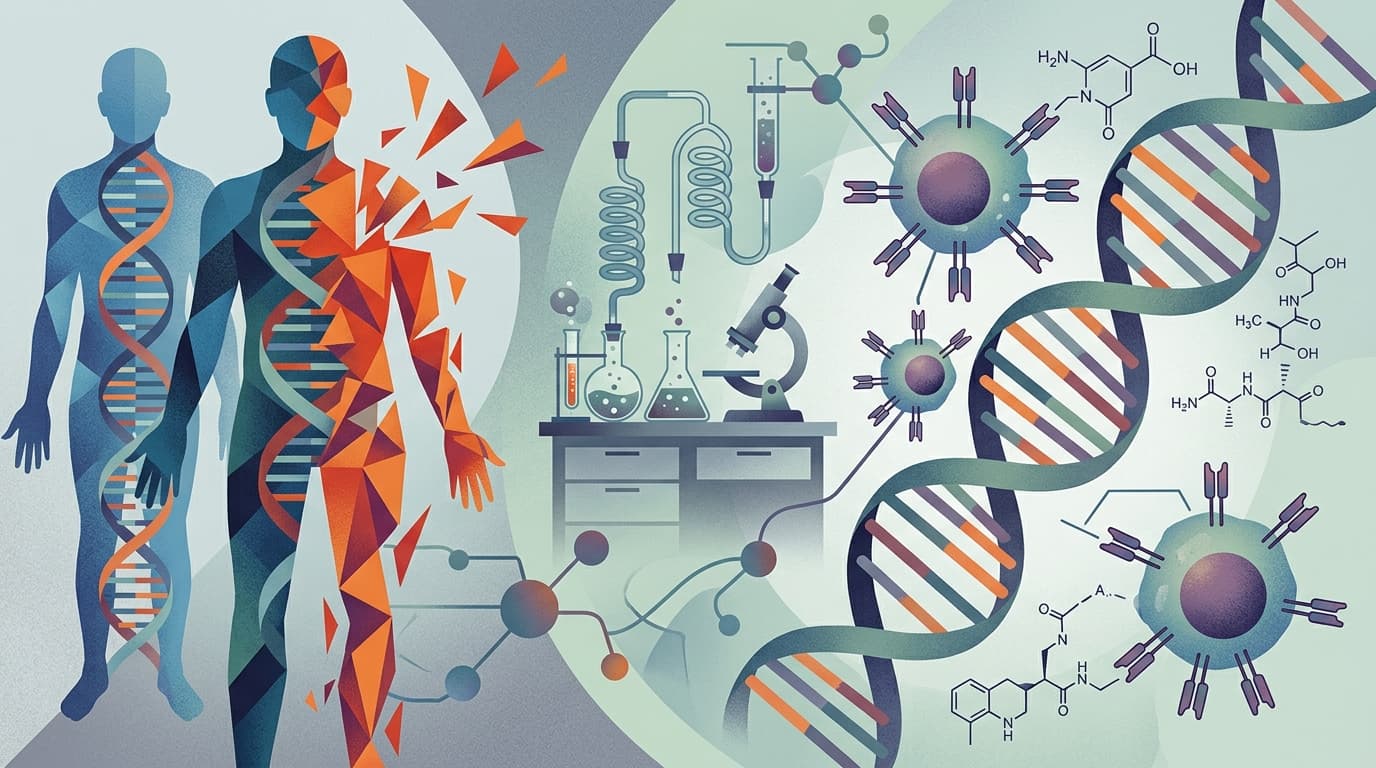
Researchers found inherited genetic markers that predict who'll face the worst side effects from CAR-T therapy, potentially enabling pre-treatment screening. The findings could reshape how doctors prepare patients for one of oncology's most powerful (and volatile) treatments.
Think of CAR-T therapy like strapping a rocket engine to your immune system. It's incredibly powerful against blood cancers, but sometimes the rocket misfires. Severe side effects hit a huge chunk of patients: inflammatory storms, brain-scrambling neurotoxicity, blood counts that crater for weeks. Until now, doctors had no reliable way to know before treatment who'd get wrecked and who'd sail through.
A new study just changed that. Researchers found that specific inherited genetic markers can predict which patients will suffer the worst side effects from Yescarta (axicabtagene ciloleucel), one of the most widely used CAR-T products. The implications are enormous: a simple genetic test before treatment could sort patients by risk, guide preventive strategies, and potentially open the door for people who were previously considered too fragile to try.
The Rocket Engine Problem
Yescarta works by reprogramming a patient's own T cells to hunt down cancer. It's approved for large B-cell lymphoma, and the response rates are genuinely impressive. But the side effects are no joke.
The two big ones: cytokine release syndrome (CRS) and ICANS (immune effector cell-associated neurotoxicity syndrome). CRS is basically your immune system throwing a house party that gets way out of control, flooding the body with inflammatory proteins. ICANS is when that inflammation hits the brain, causing confusion, tremors, difficulty speaking, and in severe cases, seizures.
Across Yescarta's pivotal trials, 78% of patients experienced some form of neurological toxicity, with 25% hitting grade 3 or higher (the serious stuff). CRS showed up in 93% of patients, though severe cases were less common at around 12%. Real-world data from the CIBMTR registry show improvement over time, with better management protocols deserving credit there.
But even with improved care, doctors are still essentially flying blind when it comes to predicting who'll face the worst reactions. That's where genetics comes in.
Get tomorrow's biotech intelligence before your competitors.
Join thousands of biotech professionals who start their day with our free, daily briefing.
The study analyzed 170 large B-cell lymphoma patients treated with commercial Yescarta, using genome-wide genotyping. Researchers built polygenic risk scores (think of them as genetic scorecards that add up the influence of many small genetic variations) for traits related to blood cells, inflammation, and immune function.
What they found is fascinating.
Patients with a higher genetic predisposition toward elevated monocyte counts (a type of white blood cell central to inflammation) had a significantly increased risk of CRS. The odds ratio was 2.49, meaning they were roughly two and a half times more likely to develop CRS of any grade compared to patients with lower monocyte scores.
Another notable finding: patients with higher genetically predicted IL-6 levels showed a lower risk of severe toxicity in this study's data, with statistically significant associations for both grade 2-4 CRS and grade 3-4 ICANS. One possible explanation? Patients whose bodies are already calibrated to handle higher IL-6 signaling may be better equipped to absorb the cytokine surge that CAR-T triggers, rather than being overwhelmed by it. It's like the difference between a seasoned bartender handling a rush versus someone working their first Friday night. However, this finding has not yet been independently replicated and warrants further investigation.
The HLH Connection
Perhaps the most clinically actionable finding involved genes linked to hemophagocytic lymphohistiocytosis (HLH), a rare but devastating condition where the immune system goes into overdrive. Using a deep-learning variant classifier, investigators found that damaging mutations in STXBP2, a gene critical for how immune cells release their toxic granules, were enriched in patients who developed severe toxicity.
Variants in another HLH-related gene, RAB27A, were linked to prolonged severe cytopenias (dangerously low blood counts lasting past day 30). Both genes play key roles in the machinery immune cells use to kill targets. When that machinery is subtly broken, CAR-T therapy can push a fragile system past its breaking point.
Separate research published in 2026 corroborated these findings and added two more players to the roster. ADAMTSL3 variants appeared protective against treatment-related toxicity in two independent trial cohorts. And PTPN22 variants were associated with enhanced CAR-T cell expansion, which boosts tumor-killing power but could also amplify inflammatory side effects.
Beyond Predicting Trouble
The germline study didn't stop at toxicity. It also identified genome-wide significant variants linked to survival outcomes, including loci near genes called SPOCK1, SLC28A2-AS1, and DUOX1 that correlated with progression-free and overall survival. Higher genetic risk scores for reticulocyte levels (immature red blood cells) predicted prolonged severe cytopenias at day 30, with a statistically significant association.
The takeaway is clear: host genetics aren't background noise in CAR-T therapy; they're a major signal. The authors concluded that germline genetic aberrations relevant to myeloid cell biology can predict both toxicity and efficacy, and they advocate for germline screening as part of patient selection.
What This Could Actually Look Like in Practice
Right now, doctors stratify CAR-T risk using clinical tools like the CAR-HEMATOTOX score, which relies on baseline blood counts, ferritin, and CRP. They monitor cytokine levels in the first 36 hours after infusion. They watch for fevers. These tools work, but they're reactive rather than predictive.
Adding a genetic layer could change the game. Imagine a pre-treatment workup that includes a targeted gene panel (STXBP2, RAB27A, ADAMTSL3, PTPN22) plus polygenic risk scores for monocyte count, IL-6, and reticulocyte levels. High-risk patients could receive more aggressive prophylactic steroids or tocilizumab, modified conditioning regimens, or intensified ICU-level monitoring. Lower-risk patients might qualify for outpatient CAR-T protocols, reducing costs and hospital burden.
This isn't theoretical daydreaming. The use of anakinra (an IL-1 blocker) for refractory CRS and ICANS has already surged across recent treatment eras. As genetic profiling identifies which inflammatory pathways dominate in specific patients, targeted interventions could replace the current one-size-fits-all approach.
The Bigger Picture
Only about 3.9% of patients with advanced cancer currently qualify for any approved CAR-T therapy, and just 20% of those eligible actually receive it. If genetic screening can make CAR-T safer and more predictable, it could help expand that eligible population, particularly for patients with comorbidities, older age, or conditions like CNS lymphoma (where the FDA recently removed Yescarta's prior exclusion).
The pharmacogenomics of CAR-T is still in its research phase; no validated clinical panel exists yet. But the signal is strong, the biology makes sense, and the need is urgent. For the roughly one in five Yescarta patients who currently face severe neurotoxicity, knowing their risk beforehand isn't just a nice-to-have. It's a potential lifeline.
The era of "give the cells and hope for the best" may finally be ending. Your DNA might have something to say about it first.
5 min read
The Only Drug That Can Save These Babies Is Being Pulled Off Shelves
Pfizer just recalled lots of the only drug recommended to treat syphilis in pregnant women, compounding a shortage that's already lasted years. With congenital syphilis cases at historic highs, public health officials are calling it a preventable tragedy in slow motion.