
For 40 years, scientists called the RAS cancer gene "undruggable." Revolution Medicines just showed Phase 3 data that nearly doubled survival in pancreatic cancer patients, and the implications stretch far beyond one disease.
For decades, RAS was the villain oncologists couldn't catch.
This family of mutated genes drives roughly one in five human cancers. It fuels pancreatic tumors, colorectal cancer, lung cancer, melanoma, and more. Scientists identified RAS as a major cancer culprit back in the early 1980s, and for the next three decades, every attempt to build a drug against it failed. The target earned a reputation that stuck like a tattoo: "undruggable."
That word is looking pretty outdated right now.
Revolution Medicines just dropped Phase 3 results for daraxonrasib (also known as RMC-6236) at the 2026 ASCO Annual Meeting. The data landed like a thunderbolt.
Patients with previously treated metastatic pancreatic cancer who received daraxonrasib lived a median of 13.2 months, compared to just 6.7 months on standard chemotherapy. That's nearly double. The hazard ratio for death was 0.40, meaning daraxonrasib cut the risk of dying by 60%.
To put that in perspective: in second-line pancreatic cancer, moving the survival needle by even a few weeks is considered meaningful. Doubling it is almost unheard of.
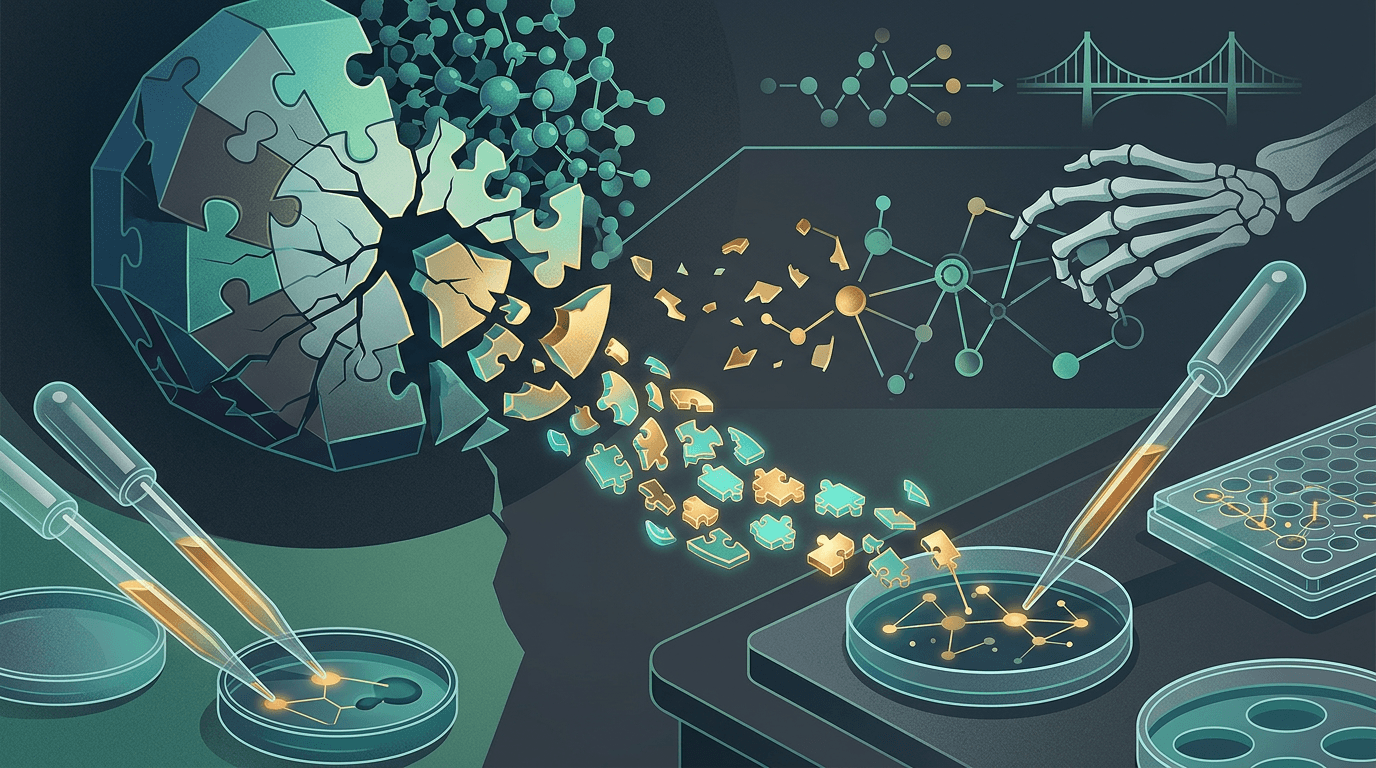
Imagine trying to pick a lock, except the lock has no keyhole. That's essentially what drug developers faced with RAS for 40 years. The protein is small, smooth, and doesn't have the kind of deep pockets where traditional drugs like to nestle in and do their work.
The first real crack appeared in 2013, when researcher Kevan Shokat discovered a hidden pocket on one specific RAS mutation called KRAS G12C. That breakthrough led to sotorasib (approved in 2021) and adagrasib (approved in 2022), the first drugs to directly target RAS in lung cancer patients.
But those drugs only worked on one mutation: G12C. That's like having a key that fits exactly one door in a building with hundreds of rooms. KRAS G12C accounts for roughly 14% of lung cancers and an even smaller slice of other tumor types. The vast majority of RAS-driven cancers, including over 90% of pancreatic tumors, carry different mutations.

A two-in-one cancer drug just did something unprecedented: it beat an established immunotherapy on overall survival in a head-to-head Phase 3 lung cancer trial. The results could reshape how we treat one of oncology's toughest cancers.


Join thousands of biotech professionals who start their day with our free, daily briefing.
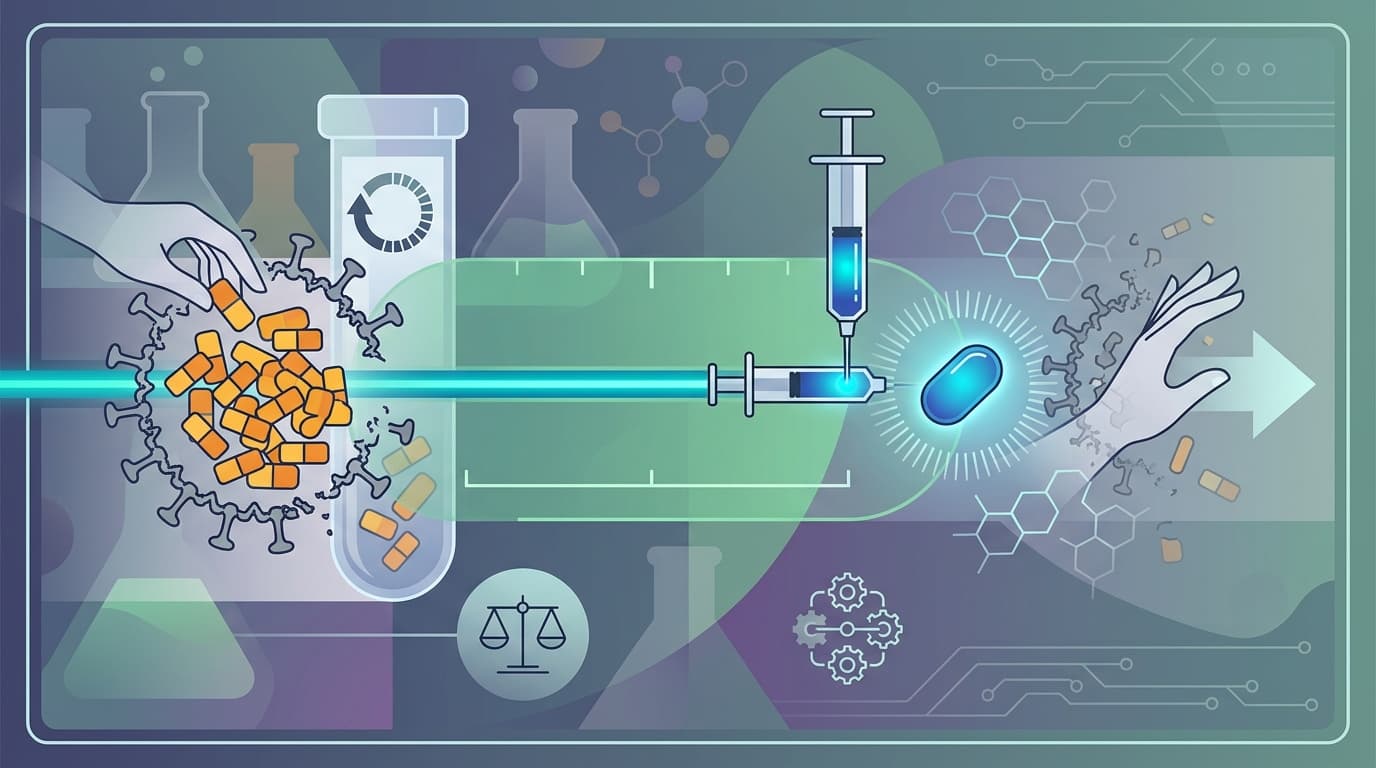
Daraxonrasib takes a fundamentally different approach. Instead of targeting just one mutant form, it's a multi-selective RAS inhibitor that works across multiple RAS mutations and even multiple RAS family members (KRAS, NRAS, HRAS). It forms a complex with a helper protein called cyclophilin A, which locks onto the active form of RAS and blocks it from sending growth signals downstream. Think of it less like picking one lock and more like jamming the entire alarm system.
The RASolute-302 trial enrolled 500 patients across North America, Europe, and Asia. All had metastatic pancreatic cancer that had already progressed on a prior chemotherapy regimen. They were randomized to either daraxonrasib (a once-daily pill) or the doctor's choice of standard chemo.
The primary analysis focused on patients with RAS G12 mutations, the most common type in pancreatic cancer. In that group, median overall survival was 13.2 months versus 6.6 months (hazard ratio: 0.40, p-value so small it's written in scientific notation). Perhaps the most jaw-dropping stat: 53.3% of daraxonrasib patients were alive at one year, compared to just 18.7% on chemo.
The response rate told a similar story. About 33% of daraxonrasib patients saw their tumors shrink meaningfully, versus roughly 12% on chemotherapy.
Jennifer J. Knox, one of the trial investigators, put it plainly: "We have a new standard of care in the second-line setting with daraxonrasib." Rachna T. Shroff called the findings a "game changer in pancreatic cancer."
Daraxonrasib isn't side-effect-free. Rash hit roughly 85 to 90% of patients, though most cases were manageable. Diarrhea, mouth sores, and nausea were also common.
But here's what matters: the drug was actually easier to tolerate than chemo by most measures. Severe side effects (grade 3 or higher) occurred in 43.6% of daraxonrasib patients versus 57.5% on chemotherapy. Only 1.2% of patients on the pill had to stop treatment due to side effects, compared to 11.2% on chemo. There was one fatal case of lung inflammation (pneumonitis) on the daraxonrasib side, a serious but rare event.
The trade-off profile is clear: more skin and gut irritation, far less of the bone marrow-crushing toxicity (severe drops in blood cell counts) that makes traditional chemo so brutal.
Pancreatic cancer is the proof of concept, but the implications stretch much further. RAS mutations show up in about 45% of colorectal cancers, 30% of lung cancers, 25% of melanomas, and significant fractions of blood cancers. Globally, that adds up to an estimated 3 to 4 million new RAS-mutant cancer cases every year.
For most of those patients, RAS status currently plays defense, not offense. In colorectal cancer, knowing you're RAS-mutant means you can't get certain drugs (anti-EGFR antibodies don't work). In melanoma, NRAS mutations lock patients out of the targeted therapies that help BRAF-mutant patients. Across the board, having a RAS mutation has meant worse outcomes with fewer options.
Revolution Medicines is already running RASolute-303, another Phase 3 trial testing daraxonrasib alone and in combination with chemo for pancreatic cancer. Earlier-phase studies are exploring the drug in colorectal cancer, lung cancer, and other RAS-driven solid tumors.
Six years ago, we had zero approved drugs that could directly hit RAS. Three years ago, we had two, both limited to a single mutation in lung cancer. Now, a multi-selective RAS inhibitor has nearly doubled survival in one of oncology's most lethal diseases.
The "undruggable" era isn't winding down. It's over.
The question now isn't whether RAS can be targeted. It's how far this approach can go, across how many cancers, and how quickly it can get to the patients who need it. For the roughly 67,000 Americans diagnosed with pancreatic cancer each year (over 90% of whom carry RAS mutations), that question couldn't be more urgent.
The Pentagon just labeled WuXi AppTec a "Chinese military company," and the ripple effects could force hundreds of biotech and pharma companies to rethink how their drugs get made. The world's largest CDMO is now at the center of a geopolitical earthquake.