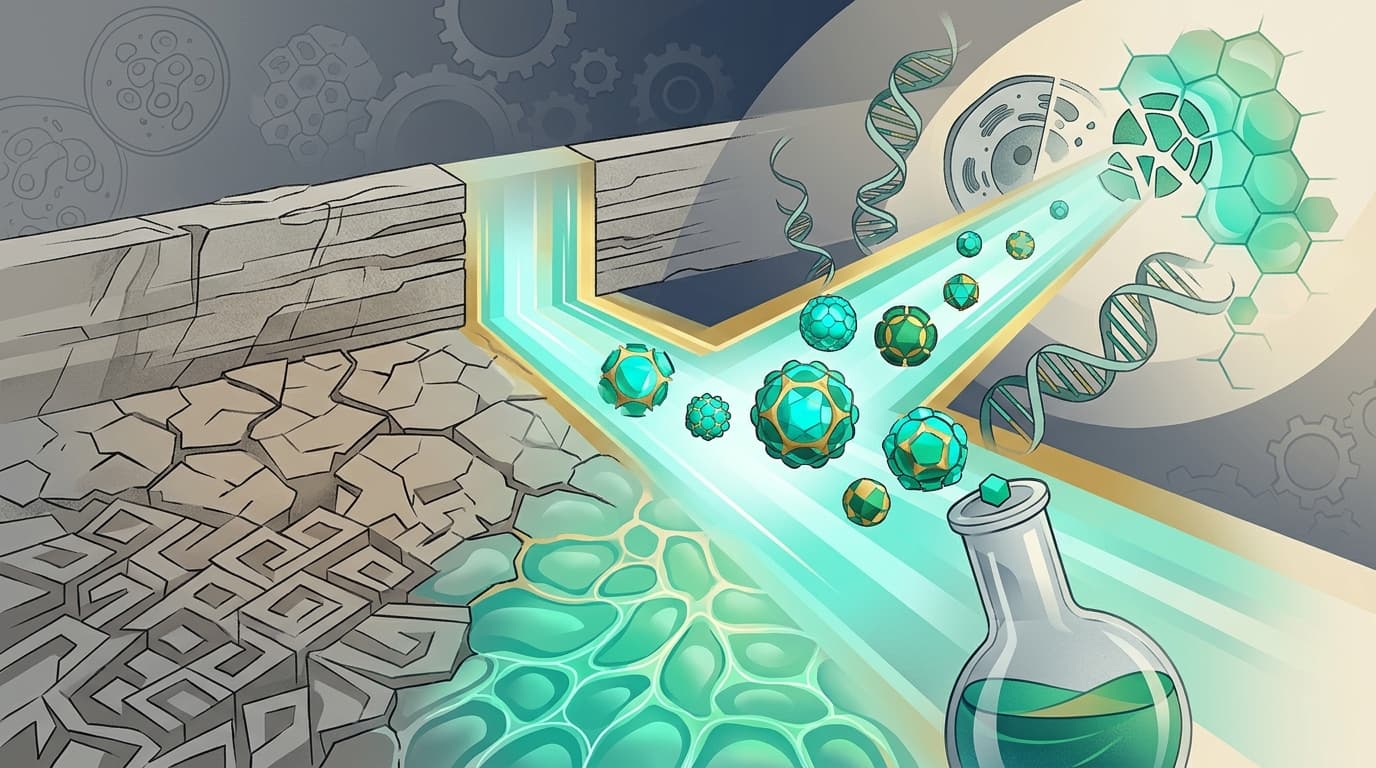

Cutaneous lupus has zero FDA-approved treatments, and patients have been stuck borrowing drugs from other diseases for decades. Biogen's litifilimab just posted 52-week data showing its skin-clearing effects actually improve over time, setting up a pivotal Phase 3 readout in 2027.
Imagine having a chronic skin condition that causes painful rashes, scarring, and hair loss. Now imagine your doctor telling you that not a single drug on the market has been specifically approved to treat it. That's the reality for people living with cutaneous lupus erythematosus, or CLE, a form of lupus that attacks the skin.
Biogen just gave those patients a reason to pay attention.
New 52-week data from Biogen's AMETHYST study show that litifilimab, the company's experimental antibody, delivered rapid and durable results in CLE patients. The numbers kept climbing even after the initial readout: 27.2% of patients treated from the start of the study achieved clear or almost clear skin at Week 52, up from 19.0% at Week 24.
That might not sound like a blockbuster headline, but context matters. These are patients who had already failed or couldn't tolerate antimalarial therapy (the go-to treatment for CLE). They were running out of options. And by another measure called CLASI-70, which tracks patients who saw at least a 70% reduction in their skin disease activity score, 28.8% hit that bar at Week 52, compared to 21.7% at Week 24.
The trend line is what matters here. Responses didn't just hold steady over a year; they actually improved. In a disease where current treatments are borrowed from other conditions and used off-label, that kind of durability is meaningful.
Most lupus drugs work downstream, trying to mop up inflammation after it's already started. Litifilimab takes a different approach: it goes upstream to the source.
Think of it like a fire. Traditional treatments spray water on the flames. Litifilimab walks back to the fuse and snuffs it out before the fire can spread.
The drug targets a protein called BDCA2 that sits on the surface of plasmacytoid dendritic cells (pDCs). These are immune cells that act as alarm bells in your body. In lupus, they're constantly ringing, flooding the system with type I interferon and other inflammatory signals that drive the disease. By binding to BDCA2, litifilimab essentially tells those alarm bells to quiet down. The result is less interferon, less inflammation, and less skin damage.

Join thousands of biotech professionals who start their day with our free, daily briefing.

No other approved drug works through this mechanism. That's what makes litifilimab first-in-class: it's not just a new brand name for an old approach. It's a genuinely new way of attacking the problem.
CLE is one of those conditions that falls into a frustrating gap in medicine. It's common enough to generate formal treatment guidelines and dermatology textbooks. But it's niche enough that pharma companies have historically looked the other way.
Right now, dermatologists treating CLE are working with a patchwork of borrowed therapies. Topical steroids. Hydroxychloroquine (yes, that hydroxychloroquine). Methotrexate. Thalidomide in severe cases. None of these were developed for CLE, and the evidence supporting their use comes from small studies and clinical experience rather than rigorous randomized trials.
For patients who don't respond to antimalarials, the options get progressively more aggressive and less well-studied. It's a bit like trying to fix a leaky roof with whatever you find in the garage: sometimes it works, but you're improvising the whole time.
The FDA seems to agree that CLE needs better options. In January 2026, the agency granted litifilimab Breakthrough Therapy Designation for the condition. That designation is essentially the FDA's way of saying, "We think this could be important; let's fast-track the conversations."
It doesn't guarantee approval, but it opens doors. More frequent meetings with regulators. Rolling review timelines. A signal to everyone watching that the agency sees unmet need here.
The earlier Phase 2 data that helped earn that designation were solid on their own: at Week 16, 14.7% of litifilimab patients achieved clear or almost clear skin versus just 2.9% on placebo. Separation from placebo showed up as early as Week 4. The new 52-week data extend that story, showing the drug's benefits don't fade with time.
Investors are treating the 52-week update as encouraging but not decisive. The Phase 2 data de-risk the program on two fronts: durability (responses keep improving) and safety (no new signals over a full year of treatment). Both are important boxes to check before a Phase 3 readout.
But that Phase 3 readout is the real event. Biogen expects topline results from the Phase 3 portion of AMETHYST in the first half of 2027. Until those data land, the stock thesis remains unresolved. The Phase 2 numbers are a trailer; Phase 3 is the movie.
Litifilimab isn't a one-off experiment for Biogen. The company is building immunology into a major strategic pillar alongside its neuroscience franchise. Litifilimab is being tested in systemic lupus (SLE) as well, with readouts expected in Q4 2026. Another lupus asset, dapirolizumab pegol, is also in late-stage development.
Beyond lupus, Biogen is pushing felzartamab into kidney-related immune diseases and expects to add six new early-stage programs across its pipeline in 2026. The company has been explicit about using partnerships, licensing, and acquisitions to fill gaps in the pipeline.
For a company long defined by multiple sclerosis and Alzheimer's, this is a deliberate pivot. Litifilimab is the highest-visibility proof point for whether that pivot can work. If the Phase 3 delivers, Biogen won't just have a new drug; it'll have validation that its immunology strategy is real.
CLE patients have been making do with borrowed medicines for decades. Litifilimab's 52-week data won't change that overnight, but they represent the strongest evidence yet that a purpose-built therapy is within reach. The drug works through a novel mechanism, responses improve over time, and the safety profile looks clean after a full year.
The next 12 months will tell us whether that promise holds up in Phase 3. For a disease with zero approved treatments, even cautious optimism feels like progress.
Hansoh Pharmaceutical just posted Phase 3 obesity data that rivals Eli Lilly's best-in-class numbers, and the weight loss curve wasn't even done climbing. The Novo-Lilly duopoly has a new problem, and it's coming from China.