
Abivax's oral Crohn's drug showed symptom relief in one week, while biologics typically take a month. Even wilder: preclinical data suggests it might also prevent the scar tissue that sends patients to surgery.
If you've ever watched someone with Crohn's disease start a new biologic, you know the drill. Infusion day. Waiting room. Four to eight weeks of hoping the drug kicks in while your gut wages war on itself. It's like ordering a fire truck that takes a month to arrive.
Abivax just showed up with a garden hose, and it might actually work faster.
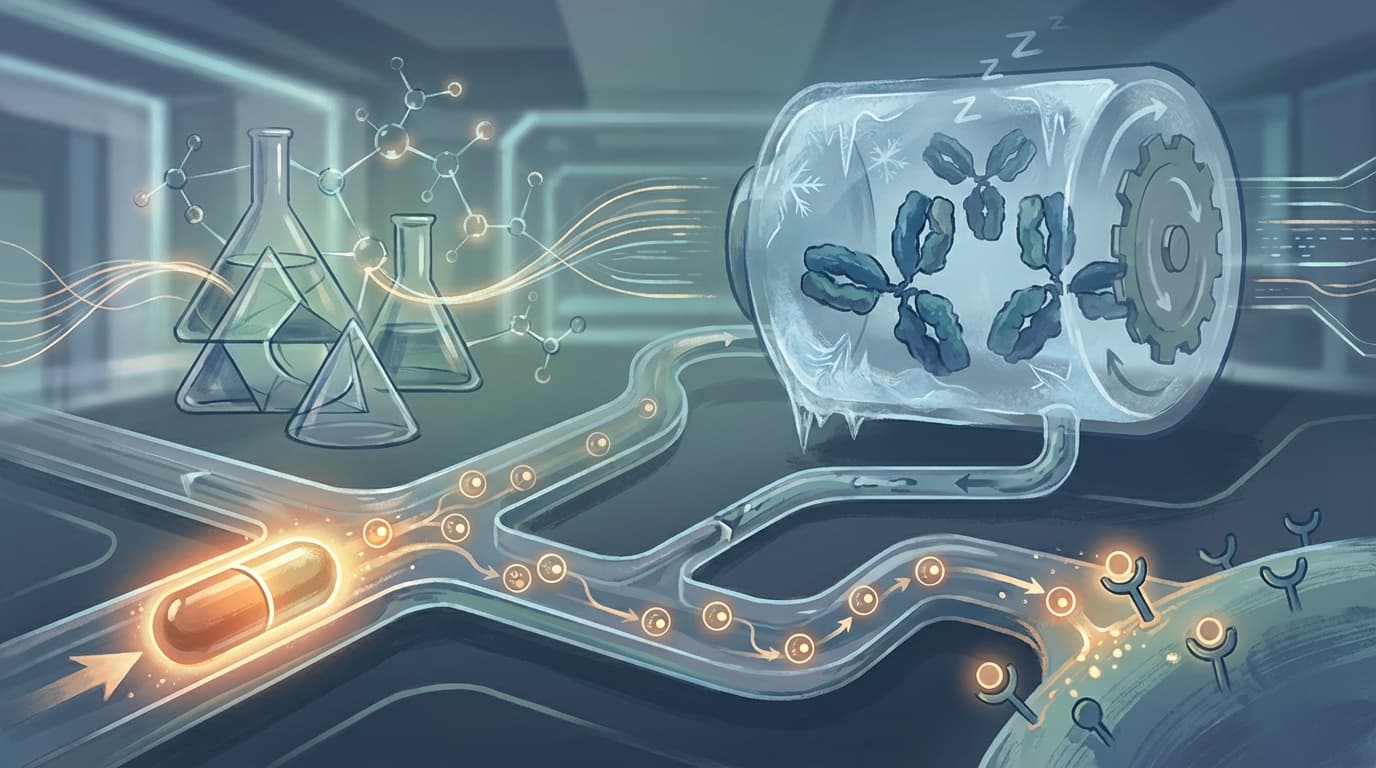
The French biotech presented data at the European Crohn's and Colitis Organization (ECCO) congress on February 21st showing that its oral drug, obefazimod, delivered symptomatic response in Crohn's patients by week one. Symptomatic remission followed by week two. Both results were statistically significant.
For context, most biologics (the injectable or infusion-based drugs that dominate Crohn's treatment today) typically need four to eight weeks before patients feel meaningfully better. Obefazimod did it in seven days. With a pill.
What makes obefazimod interesting isn't just speed. It's what the drug does under the hood.
Most Crohn's drugs tackle inflammation. That's important: inflammation is what makes patients miserable in the short term. But Crohn's has a nastier long game. Over time, chronic inflammation creates scar tissue in the gut, a process called fibrosis. Think of it like a wound that keeps healing wrong, building up layers of tough, stiff tissue that narrows the intestines.
Eventually, that scar tissue can cause strictures, blockages that often land patients on an operating table. Current drugs don't really touch fibrosis. They put out the fire but don't repair the burn damage.
Obefazimod appears to do both.
The drug works by boosting levels of a tiny molecule called miR-124, a natural regulator that's out of whack in inflamed and fibrotic tissue. When miR-124 gets turned back up, it dials down both the inflammatory signals (like IL-17A and IL-6) and TGF-β, the protein that drives scar tissue formation. It's like fixing the thermostat instead of just opening a window.

RTW Investments just agreed to hand Candel Therapeutics $100 million to launch a cancer-killing virus, but only if the FDA approves it first. The deal's clever structure and the Phase 3 data behind it could be a blueprint for small biotechs everywhere.


Join thousands of biotech professionals who start their day with our free, daily briefing.
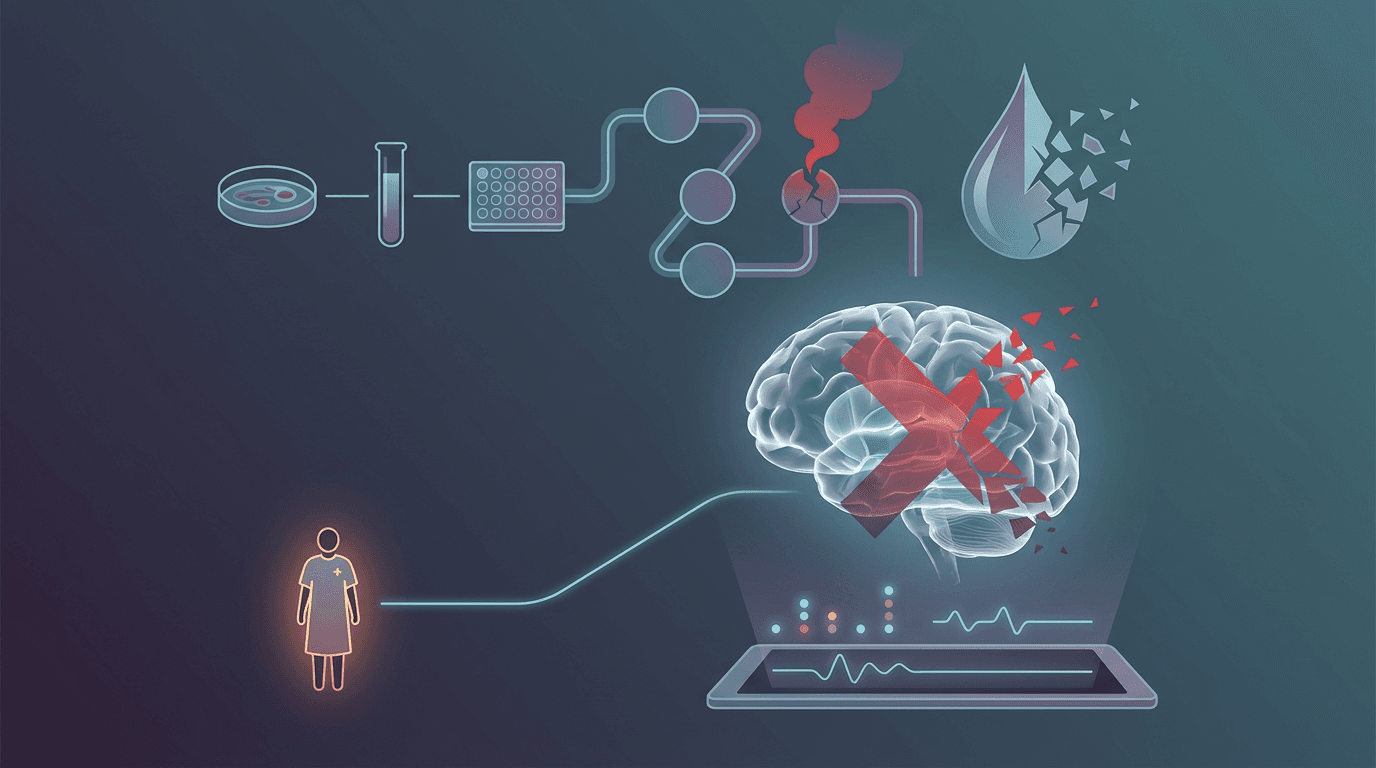
Abivax presented preclinical data (meaning it came from lab models and mice, not humans yet) showing obefazimod's anti-fibrotic punch. In a chronic mouse model of intestinal disease, the drug reduced collagen deposits (the building blocks of scar tissue) by roughly 52% with early treatment.
That alone would be notable. But the numbers on fibroblast activation were even more dramatic. A key marker called αSMA, which tells you how aggressively scar-forming cells are firing, dropped by approximately 90% with early treatment. Late treatment still managed around 50%.
For comparison, thalidomide (yes, that thalidomide, repurposed as an anti-fibrotic) only managed about a 24% reduction in collagen. Obefazimod more than doubled it.
In human fibroblast models (lab-grown human cells), the drug cut a fibrosis biomarker called Pro-C3 by roughly 50%. These aren't human trial results. They're preclinical. But they paint a picture of a drug that could eventually address one of the biggest unmet needs in Crohn's: preventing the damage that sends patients to surgery.
Speed and novel mechanisms are great, but they mean nothing if the drug wrecks you with side effects. The safety data here is encouraging.
Abivax pooled results from 1,272 patients across its Phase 3 ABTECT-1 and ABTECT-2 induction trials (these were technically ulcerative colitis trials, a closely related gut disease). Serious adverse event rates were 3.1% on the 50mg dose versus 3.2% on placebo. Read that again: the drug group had essentially the same rate of serious side effects as the sugar pill group.
The most common complaint? Headaches. Mild ones that lasted a median of two to three days. Discontinuation rates mirrored placebo too, at 4.7% versus 4.1%.
Now, an important caveat: this safety data comes from ulcerative colitis trials, not Crohn's specifically. The dedicated Crohn's trial, a Phase 2b study called ENHANCE-CD, won't report results until Q4 2026. But Crohn's and UC share enough biology that the safety signal is reassuring.
The Crohn's drug market is worth an estimated $14.68 billion in 2026 and growing fast. It's dominated by biologics and newer oral options like upadacitinib (a JAK inhibitor sold as Rinvoq) and risankizumab (an IL-23 inhibitor sold as Skyrizi). Both are effective. Neither addresses fibrosis.
That's the opening Abivax is targeting. If obefazimod can deliver on its dual promise, fast symptom relief and scar tissue prevention, it would carve out a lane that no approved drug currently occupies.
The company isn't exactly a household name. Abivax was founded in Paris in 2013, and obefazimod actually started life as an HIV drug before researchers noticed its anti-inflammatory effects. The pivot to inflammatory bowel disease has been the company's defining bet. A successful $747.5 million fundraise in 2025 suggests investors are buying the thesis. Abivax is targeting an FDA filing for obefazimod in ulcerative colitis in the second half of 2026, pending maintenance trial data.
Crohn's is further behind, still in Phase 2, so don't expect an approved Crohn's pill anytime soon. But the early signals are the kind that make gastroenterologists sit up straight.
Obefazimod isn't approved for anything yet. The Crohn's-specific trial is still enrolling. And preclinical fibrosis data, no matter how impressive, has a long history of not surviving the jump to humans.
But the combination of week-one symptom relief, a clean safety profile, and a potential shot at preventing fibrosis makes this one of the more compelling early-stage stories in gastroenterology. Most Crohn's drugs ask patients to wait a month and hope. This one showed up on day seven.
If the ENHANCE-CD results later this year confirm what the early data suggests, Abivax won't just have a drug. It'll have an argument for rethinking how we treat Crohn's from the start — targeting not just the inflammation patients feel today, but the damage that could put them in a surgeon's hands tomorrow.
Roche's oral breast cancer drug giredestrant just got its FDA date, and its secret weapon isn't the drug itself. It's the combination strategy that cut disease progression by 62% in the patients who need it most.