Intellia Therapeutics paused two late-stage CRISPR trials after a patient suffered severe liver damage, and the fallout could shake confidence across the entire gene-editing sector. One trial has been closed for enrollment, Wall Street is split, and every CRISPR company is feeling the heat.
Imagine editing a typo in a novel, only to accidentally delete an entire chapter. That's the fear that has haunted CRISPR gene editing since the technology was born. And now, for the first time in a late-stage trial, that fear has a face.
Intellia Therapeutics, the company farthest ahead in delivering CRISPR edits directly inside the human body, has paused two of its most important clinical trials. The reason: a patient suffered severe liver damage after receiving the company's lead therapy. The fallout could ripple across the entire gene-editing sector.
What Happened Inside MAGNITUDE
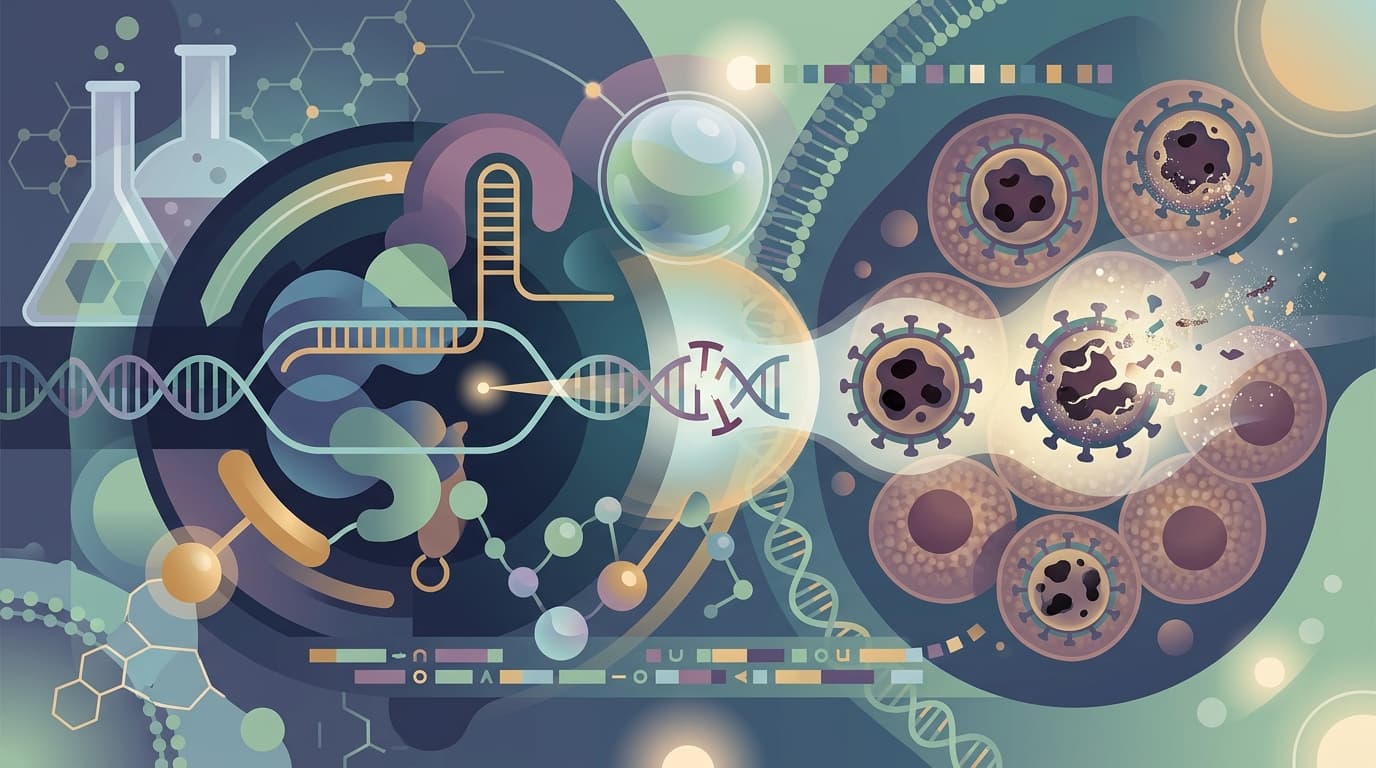
Intellia's therapy, nexiguran ziclumeran (nex-z), is designed to treat transthyretin amyloidosis, a disease where a misfolded protein gradually destroys the heart or nerves. The treatment uses CRISPR to edit liver cells and shut down production of the toxic protein. One IV infusion, one edit, potentially one cure.
Two Phase 3 trials were testing this idea. MAGNITUDE targeted patients whose hearts were failing from the disease (ATTR-CM). MAGNITUDE-2 focused on patients whose nerves were being destroyed (ATTRv-PN). Both trials were racing toward FDA approval.
Then a patient in the MAGNITUDE heart study developed Grade 4 liver transaminase elevations with increased bilirubin. In plain English: the patient's liver got hammered. Enzymes that indicate liver damage spiked to dangerous levels. The event was serious enough to require hospitalization and met the trial's own pre-defined criteria for pausing enrollment.
Some sources indicate the patient later died, though the exact relationship between the liver event and the death remains a point of debate.
The FDA Stepped In
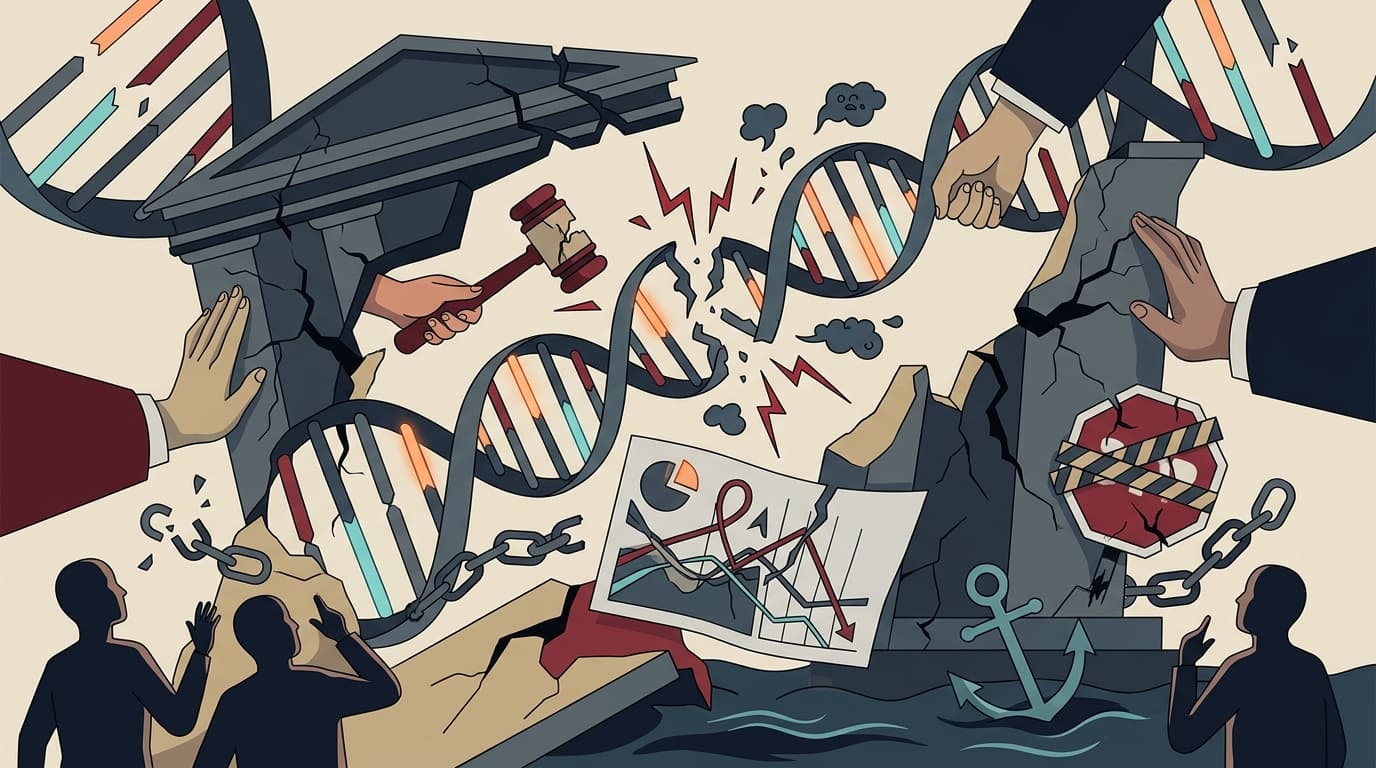
Intellia initially paused enrollment voluntarily. But the FDA went further, placing a clinical hold on both MAGNITUDE and MAGNITUDE-2 on October 29, 2025. A clinical hold is the regulatory equivalent of a stop sign: no new patients, no new doses, until the agency is satisfied the risk is manageable.
Get tomorrow's biotech intelligence before your competitors.
Join thousands of biotech professionals who start their day with our free, daily briefing.
This distinction matters. Companies pause trials all the time as a precaution. When the FDA imposes a hold, it means the agency itself has concerns serious enough to intervene. It's the difference between choosing to pull over and getting pulled over.
Intellia and the FDA eventually agreed on a set of mitigation steps to address the liver safety signal. These included enhanced liver lab monitoring, guidance for short-term steroids if liver enzymes spike after dosing, and new exclusion criteria barring patients with certain pre-existing liver problems. For the MAGNITUDE heart study specifically, the FDA also required excluding patients with recent cardiovascular instability or very weak hearts (ejection fraction below 25%).
The FDA lifted the hold on MAGNITUDE-2 in late January 2026, allowing that trial to resume enrollment. The MAGNITUDE cardiac trial remained on hold longer, but the FDA lifted the hold on March 2, 2026, and Intellia subsequently resumed enrollment activities.
Why This Is a Big Deal for All of Gene Editing
Intellia isn't just any CRISPR company. It's the most advanced pure-play in vivo CRISPR company in the world. "In vivo" means the editing happens inside the patient's body, as opposed to "ex vivo" therapies like Vertex and CRISPR Therapeutics' Casgevy, where cells are removed, edited in a lab, and put back in.
In vivo editing is the holy grail. It's simpler for patients (just an IV infusion) and potentially applicable to far more diseases. But it also carries a unique risk: you're sending molecular scissors into a living human body and hoping they only cut what you want them to cut.
The liver toxicity seen in MAGNITUDE touches the rawest nerve in the field. CRISPR's known risks include off-target edits (cutting the wrong spot), large DNA rearrangements at the intended cut site, immune reactions to the editing machinery, and inflammation from the delivery vehicle (lipid nanoparticles, in Intellia's case). No one has proven that unintended genome edits caused cancer in a patient yet. But every safety signal in a clinical trial amplifies the scrutiny on all of these theoretical risks.
Think of it like aviation safety. One crash doesn't mean every plane is dangerous. But it does mean every airline faces tougher inspections for a while, and nervous passengers might book a train instead.
Wall Street's Verdict: Confused
Analyst reactions have been all over the map, which tells you how uncertain this situation remains.
H.C. Wainwright lifted its price target from $15 to $25 and kept a Buy rating, arguing the FDA's willingness to lift the MAGNITUDE-2 hold suggests the risks are manageable. The firm bumped its estimated probability of approval from 25% to 35%. That sounds optimistic until you realize: they're still saying there's only a one-in-three chance this drug gets approved.
Evercore ISI upgraded Intellia to Outperform. Goldman Sachs cut it to Sell. If you wanted a clear signal from the Street, you didn't get one.
The stock itself has been volatile. Shares jumped about 12% the day the FDA lifted the MAGNITUDE hold, but NTLA was still trading around $11.94 in recent sessions, stuck near the bottom of its range and below its 200-day moving average. Baird raised its target from $4 to $7 while keeping a Neutral rating, which is Wall Street's way of saying "we see improvement, but we're not putting our necks out."
The core investor worry is straightforward: liver toxicity and questions about how long the treatment's effects actually last. Until those concerns are resolved with more data, the stock is likely to trade on headlines rather than fundamentals.
The Competitive Fallout
Intellia's stumble creates a strange dynamic in the gene-editing sector. On one hand, the company still has a second major program that's thriving. Its HAE therapy (lonvoguran ziclumeran, or lonvo-z) hit its Phase 3 endpoints and is in the middle of a rolling BLA submission, with a potential U.S. launch in the first half of 2027. That program was reportedly unaffected by the nex-z safety issue.
On the other hand, the clinical hold reinforces a growing investor preference for editing approaches that might be inherently safer. Beam Therapeutics, which uses base editing (think of it as using a pencil eraser instead of scissors; it changes individual DNA letters without cutting the double strand), is positioned as the precision alternative. Beam is earlier in development, but every safety scare at a CRISPR competitor strengthens its pitch.
Meanwhile, Casgevy from Vertex and CRISPR Therapeutics remains the only approved gene-editing therapy. Its ex vivo approach avoids the systemic delivery risks that tripped up Intellia, though it comes with its own burdens: patients need harsh chemotherapy conditioning before treatment.
The broader sector implication is clear. Clinical holds in gene editing tend to have outsized ripple effects because the technology is still so new, and because every edit is permanent. There's no "undo" button. Regulators, investors, and patients all know this, and a serious adverse event in one program raises the bar for every program behind it.
What Comes Next
Intellia faces a fork in the road. The polyneuropathy study (MAGNITUDE-2) is back on track but will carry the weight of extra monitoring and tighter patient selection. And the lonvo-z HAE program needs to deliver clean data and a smooth BLA review to keep the company's narrative intact.
The company has guided toward topline data from its HAELO study by the first half of 2026, with a BLA filing for that program in the second half of the year. If that goes well, Intellia can credibly argue that the nex-z liver event was a program-specific issue, not a platform-wide problem.
If it doesn't go well, the questions get much harder.
For the gene-editing field as a whole, this episode is a reality check. CRISPR is extraordinary technology. It can rewrite the code of life with a single treatment. But "extraordinary" and "safe" are two different words, and proving both at the same time is the challenge that will define this industry for the next decade.
The scissors are sharp. The question is whether we can always control where they cut.
4 min read
The Gene Editor That Might Actually Delete Hepatitis B
Precision BioSciences just showed the first clinical evidence that a gene editor can destroy cccDNA, the hidden viral reservoir that makes hepatitis B nearly impossible to cure. If it holds up, 250 million patients worldwide could finally have a path off lifelong medication.